





Written by Stanislav Sadovnikov, Founder, Magnum Estate ·
Reviewed by Magnum Estate legal & investment desk ·
Last updated 3 June 2026
"~$256-299k Median villa price (island) · $250-1,900 Land price per m² (Ubud, Seminyak) · 10-18% Gross yield, prime areas · 6.95M 2025 foreign arrivals (+9.7%)"
Key figures (2026)
Bali property prices 2026: summary
Bali property prices 2026, the short answer: built villas run from about USD 60,000 to USD 6 million, with the island median near USD 256,000-299,000 and most investor-grade villas between USD 300,000 and USD 600,000. Land ranges from under USD 250/m² in emerging areas to USD 900-1,900/m² in Seminyak. By area, built villas typically run $400-800k in Canggu/Berawa, $500-900k for an ocean-view Uluwatu 3BR, $500k-1.2M in Seminyak, $250-500k in Ubud, and as little as $100-600k in emerging belts like Seseh, Cemagi and Tabanan, where the same budget buys more land but a longer rental ramp-up. Gross rental yields run 10-18% depending on area, but net returns typically settle at 4-6% self-managed versus 10-15% under professional management, so who runs the villa matters as much as its price. Demand underpins these numbers: Bali drew 6.95M foreign visitors in 2025, up 9.7% year-on-year, keeping prime-area occupancy at 70-85%.
- Most expensive land: Seminyak/Umalas, central Canggu, Uluwatu, Ubud (in that order).
- Highest yield: Canggu/Berawa 12-18% gross; Uluwatu has the fastest land appreciation.
- Best value: Tabanan, Seseh, Cemagi and North Bali, more land per dollar.
- Gross ≠ net: net yields are ~4-6% self-managed, ~10-15% professionally managed.
- Demand: Bali drew 6.95M foreign visitors in 2025 (+9.7% YoY); prime occupancy 70-85%.

"Transparency: Magnum Estate develops property in Bali, so we have a commercial interest. This guide is educational, not investment or legal advice, verify figures independently and consult a certified Indonesian notary (PPAT) and tax advisor before buying."
Transparency
This Bali property prices 2026 guide reconciles the latest market data into one coherent price map. By 2026, Bali’s market has shifted from its post-pandemic boom into a more selective, data-driven phase: prices keep rising in prime hotspots, but the picture varies enormously by area, and the single most useful number, land price per m², is rarely quoted consistently. Below is the full map, area by area, with yields and the budget reality behind the headlines.
The 2026 market in numbers
Bali drew 6,948,754 foreign visitors in 2025, up 9.72% year-on-year, pushing prime-area villa occupancy to 70-85% (island-wide average closer to ~65%). Land values across the island appreciated roughly 15-30% over the past two years, and the island median villa price now sits near USD 256,000-299,000. You will also see a widely-cited figure that average villa listing prices jumped from about USD 321,000 to USD 484,000 in 12 months, but that reflects a shift in the mix of stock toward larger, prime-area builds, not 50% appreciation. Like-for-like price growth is closer to 7-15% a year in strong micro-markets.
Land prices in Bali per m² by area (2026)
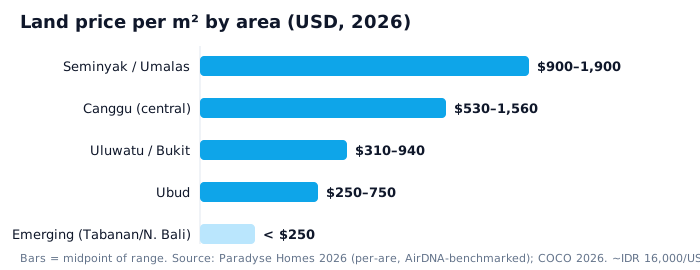
Land is quoted per are (100 m²) in Bali; converted to per-m² at ~IDR 16,000/USD, the 2026 ranking is clear and consistent, prime central zones cost the most, emerging belts the least:
| Area | Land price per m² | Per are (IDR) | Character |
|---|---|---|---|
| Seminyak / Umalas | ~$900-1,900 | IDR 1.5-3B+ | Established, high-density, premium strip |
| Canggu (central) | ~$530-1,560 | IDR 1.2-2.5B | Supply-constrained, fast appreciation |
| Uluwatu / Bukit | ~$310-940 | IDR 0.5-1.5B | Cliff-top premium; broad entry range |
| Ubud | ~$250-750 | IDR 0.4-1.2B | Lower density, rice-field & jungle |
| Emerging (Tabanan, Seseh, N. Bali) | < $250 | varies | Most land per dollar, longer horizon |
| Source: Paradyse Homes 2026 (per-are, AirDNA-benchmarked) & COCO 2026. North Bali land can be a small fraction of southern prices. |
The takeaway: for the same budget you secure far more land in Uluwatu or Ubud than in Seminyak or central Canggu, the trade-off is short-term rental demand, not just scenery. Compare the two coasts in Canggu vs Uluwatu and best areas to buy in Bali 2026.
What villas cost by area in 2026
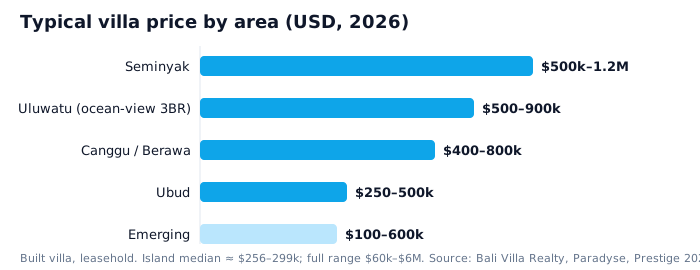
Whole-villa prices follow the same logic but blur with product type (an ocean-view Uluwatu villa can exceed a Canggu entry villa). Typical built, leasehold ranges in 2026:
| Area | Typical villa price | Gross yield | Profile |
|---|---|---|---|
| Seminyak | $500k, 1.2M | 10-14% | Most established; best exit liquidity |
| Uluwatu / Bukit | $500-900k (3BR ocean view) | 10-16% | Luxury views; fastest land appreciation |
| Canggu / Berawa | $400-800k | 12-18% | Deepest rental demand, year-round |
| Ubud | $250-500k | 10-15% | Wellness & long-stay; low volatility |
| Emerging (Seseh, Cemagi, Tabanan) | $100-600k | 6-18% | More space per dollar; growth upside |
| Build cost adds ~USD 1,000-1,800/m² for an investment-grade villa. Island median ≈ $256-299k; full range $60k, $6M. Compare these ranges against live listings of Bali villas for sale with current prices. |
See real 2026 prices, not averages
Compare live pricing and yields across Magnum Estate’s Berawa, Sanur and Uluwatu developments.
View Magnum projects
Book a free consultation
Rental yields by area: gross vs net
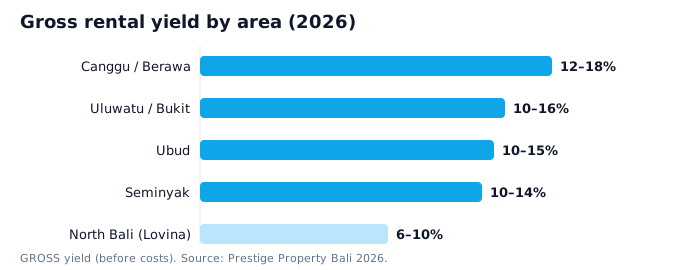
Most “8-15% yield” claims you’ll see are gross, annual rent ÷ price, before costs. What you actually keep is the net yield, after management, tax, maintenance and vacancy. This is the single biggest source of disappointed Bali investors:
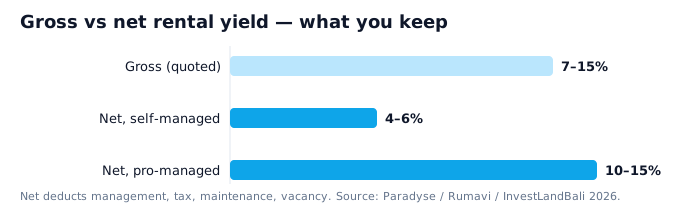
The gap between 4-6% and 10-15% net is operations: data-driven pricing, OTA distribution and cost control. Factor holding costs with our taxes & holding costs guide and see how management drives returns in our villa ROI guide.
What your budget buys in 2026
| Budget (USD) | What you can realistically get |
|---|---|
| 60k, 150k | Off-plan/co-ownership unit, or land in an emerging area |
| 150k, 300k | Villa in an emerging zone (Tabanan, Seseh) or a small Ubud villa |
| 300k, 500k | Investor-grade villa in Canggu, Ubud, or second-row Uluwatu |
| 500k, 1.2M+ | Ocean-view Uluwatu or prime Seminyak/central Canggu villa |
Methodology & sources
Figures are indicative 2026 ranges, reconciled across multiple market datasets and converted at ~IDR 16,000/USD. Land prices are stated per m² (from per-are data, 1 are = 100 m²). Individual parcels vary by road access, zoning, view and lease term. Gross yields are rent ÷ price before costs; net yields deduct management, tax, maintenance and vacancy. Always commission an independent appraisal and notary (PPAT) due diligence before purchase.
Conclusion
In 2026, Bali rewards precision over averages: know the land price per m², check it against the area’s realistic net yield, and verify zoning and title. The strongest plays pair a proven hotspot (Canggu, Seminyak, Uluwatu) with an emerging-zone position (Tabanan, North Bali) for growth.
Ready to see the real numbers?
Explore Magnum Estate’s ocean-view residences in Uluwatu, Berawa and Sanur, transparent pricing and projected net yields, or start with our overview of property investment in Bali to see what each 2026 price band is projected to return.
Uluwatu, Sky Stars
Berawa
Sanur
FAQ: Bali property prices 2026
How much does a villa cost in Bali in 2026?
Built villas range from ~USD 60,000 to USD 6 million; the island median is ~USD 256,000-299,000, and most investor-grade villas sit between USD 300,000 and USD 600,000.
How much is land per m² in Bali in 2026?
Seminyak/Umalas ~$900-1,900/m²; central Canggu ~$530-1,560; Uluwatu/Bukit ~$310-940; Ubud ~$250-750; emerging areas below $250.
Which area is most expensive?
Seminyak has the highest land price per m², then central Canggu. Uluwatu carries the highest ocean-view premium and the fastest land appreciation.
What rental yield can I expect?
Gross yields run ~10-18% in prime areas. Net is lower: ~4-6% self-managed or ~10-15% professionally managed.
Where is property still affordable?
Tabanan, Seseh, Cemagi and North Bali (Lovina): villas from ~USD 100,000-600,000 and land well below USD 250/m².
Are Bali prices still rising?
Yes, like-for-like growth ~7-15%/yr in strong micro-markets; land appreciated ~15-30% over two years.
Do property taxes hurt returns?
Annual PBB is low (~0.1% of assessed value), but transaction and rental-income taxes apply, and they differ by ownership route: compare leasehold vs freehold vs PT PMA.
References & official sources
- BPS, Statistics Indonesia / Bali: 2025 foreign arrivals (6,948,754, +9.72%), occupancy, bali.bps.go.id
- Bank Indonesia, Residential Property Price Index: official price-growth data, bi.go.id
- DJP / Ministry of Finance: PBB & transaction taxes, pajak.go.id
- ATR/BPN: land titles & zoning, atrbpn.go.id
- Market data (2026): Bali Villa Realty price guide; Paradyse Homes price-per-are study; Prestige Property Bali area/yield analysis; InvestLandBali market report.
- Magnum Estate portfolio data (net yields by project).
About the author
Stanislav Sadovnikov is the founder of Magnum Estate (PT Magnum Estate International), an award-winning full-cycle Bali real estate developer with 8 projects and 575 units since 2019 (Berawa, Sanur, Umalas, Sky Stars, Sky Royal). He writes about Bali pricing, yields, ownership rules and regulation for international buyers.