





Written by Stanislav Sadovnikov, Founder, Magnum Estate ·
Reviewed by Magnum Estate legal & investment desk ·
Last updated 3 June 2026
"59, 70+ Hospitality-managed projects (on sale) · 87% / 13% Apartments vs villas in managed stock · 70-85% Prime occupancy (island ~65%) · 31 Mar 2026 Short-term rental compliance deadline"
Key figures (2026)
Hospitality real estate Bali: summary
Hospitality real estate Bali, the short answer: the island is shifting from stand-alone private villas to hospitality-grade assets (boutique hotels, serviced villas, branded residences and resort units) run with hotel-style operations. As of March 2025 there were about 59 hospitality-managed projects (3,643 units), with 70+ now on sale. The reason investors care: same gross yield, very different net yield.
- Format shift: apartments/condos are ~87% of managed stock, villas ~13%, multi-unit, professionally run formats dominate.
- Where: Canggu/Berawa holds ~40% of managed supply; new launches push to Seseh, Pererenan, Nyanyi; Jimbaran/Uluwatu leads the luxury pipeline; Sanur is anchored by a Health & Tourism KEK.
- Gross ≠ net: gross runs ~10-18% in prime areas, but a self-managed villa nets only ~4-6%, while pro-managed hospitality assets net ~10-15%.
- Why managed wins: occupancy. Prime hospitality assets run 70-85% occupancy vs a much lower island average through data-led pricing and OTA distribution.
- Regulatory tailwind: from 31 March 2026 all short-term rentals must be fully compliant, favouring licensed, branded, hospitality-run product over informal villas.

"Transparency: Magnum Estate develops hospitality-driven property in Bali (including Berawa and Sanur), so we have a commercial interest. This guide is educational, not investment or legal advice, verify figures independently and consult a certified Indonesian notary (PPAT) and tax advisor before buying."
Transparency
This hospitality real estate Bali guide explains why the island’s most-watched investment story in 2026 is not the price of a private villa, it’s the rise of hospitality-grade assets: boutique hotels, serviced villas, branded residences and resort units operated with hotel-style services and professional management. By March 2025 Bali already had roughly 59 hospitality-managed projects (3,643 units), and 70+ developments are now actively on sale, with Canggu/Berawa alone accounting for about 40% of supply. Below is what changes for an investor when “keys and walls” become a managed operation, on operations, licensing, occupancy and the only number that matters at the end: net yield.
What “hospitality real estate” actually means in Bali
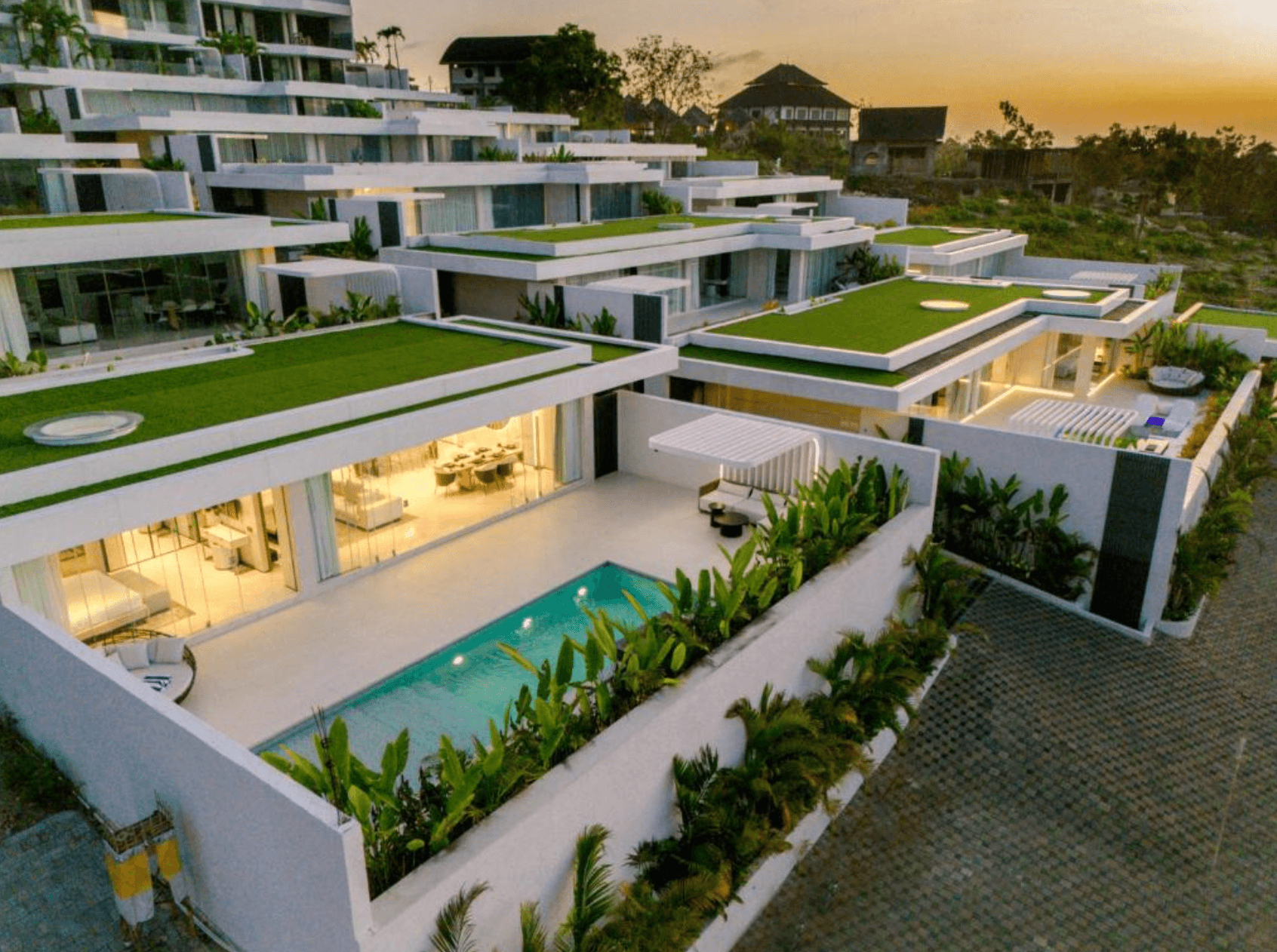
Hospitality-driven real estate refers to residential units, serviced villas, apartments, branded residences and resort units, operated with hotel-grade services, amenities and professional management, rather than a private villa that an owner books out informally. You still own the unit; an operator runs it like part of a hotel. The 2025 Horwath HTL branded-residences report describes a Bali market where apartments/condos make up about 87% of hospitality-managed stock, with villas at roughly 13%, a clear shift toward managed, multi-unit formats. Global brands including Mandarin Oriental, Anantara and Aman have announced Bali projects, confirming branded, hospitality-run residences are now mainstream rather than niche.
The 2026 market in numbers
Hospitality real estate only works if there is consistent guest demand, and the tourism numbers support it. Bali drew 6,948,754 foreign visitors in 2025, up 9.72% year-on-year (exceeding the 6.27M pre-pandemic record), plus roughly 26.6 million domestic trips. That demand pushes prime-area occupancy to 70-85% (island-wide average closer to ~65%). Digital nomads and remote workers add a structural layer of 1-6 month stays that fit serviced-apartment and branded-residence models far better than a classic holiday villa.
| Indicator (2026) | Figure | Why it matters |
|---|---|---|
| Foreign arrivals 2025 | 6,948,754 (+9.72%) | Above pre-pandemic peak, structural demand |
| Domestic trips 2025 | ~26.6 million | Diversifies guest base beyond foreigners |
| Prime occupancy | 70-85% | Managed assets capture the top of this band |
| Hospitality-managed projects | 59, 70+ (on sale) | Rapid expansion of the managed format |
| Hotel pipeline | 5,641 rooms / 45 hotels | Often with branded-residence components |
| Source: BPS Bali 2025; Horwath HTL / C9 Hotelworks 2025-2026; Bali Hotels Association. Arrivals figure reused from the Magnum canonical dataset. |
Asset types: private villa vs hospitality-grade product
The core decision for a 2026 buyer is no longer just where to buy, but what format. A private villa gives you full control and all the operational burden; a hospitality-grade asset hands operations to a professional team in exchange for a management share. For the underlying area economics, land price per m² and whole-villa pricing by area, see our Bali property prices 2026 guide; this page focuses on the operating model.
| Format | Who runs it | Typical buyer | Net-yield driver |
|---|---|---|---|
| Private villa (self-managed) | Owner / informal staff | Lifestyle owner, hands-on | Owner effort & local know-how |
| Serviced villa | Local management company | Semi-passive investor | Operator quality & OTA reach |
| Branded residence | Hotel / brand operator | Hands-off, brand-led buyer | Brand premium + occupancy |
| Resort unit / condo-hotel | Resort operator pool | Pure-yield investor | Pooled occupancy & ADR |
| Format taxonomy after Horwath HTL / Asia Property Awards 2025. Apartments/condos ≈ 87% of managed stock; villas ≈ 13%. |
The takeaway: the format you choose mostly determines whether you earn the gross headline number or the lower net reality. To choose the right area for the format, read best areas to buy property in Bali 2026, then pressure-test the returns in our Bali villa ROI guide.
Compare managed vs private returns on real projects
See live pricing and projected net yields across Magnum Estate’s hospitality-driven developments in Berawa and Sanur.
View Magnum projects
Book a free consultation
Why managed hospitality real estate wins on net yield
Most “8-15% yield” claims you’ll see in Bali are gross, annual rent ÷ price, before costs. What you actually keep is the net yield, after management, tax, maintenance and vacancy. Across formats, gross yields are broadly similar (about 10-18% in prime areas). The difference shows up in net, and that gap is almost entirely operations and occupancy:
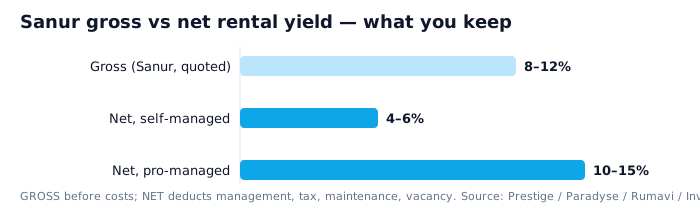
Gross yields by area haven’t changed, and they apply whichever format you hold. The point is that a hospitality operation is structured to capture the top of each area’s gross band and convert more of it into net by keeping occupancy high year-round:
| Metric | Self-managed private villa | Pro-managed hospitality asset |
|---|---|---|
| Gross yield (prime area) | ~10-18% | ~10-18% |
| Typical occupancy | ~50-65% | 70-85% |
| Net yield (after costs) | ~4-6% | ~10-15% |
| Owner workload | High | Low (passive) |
| Licensing / compliance | Owner’s responsibility | Built into the operation |
| Gross yields: Prestige Property 2026. Net yields and gross-vs-net split: Paradyse / Rumavi / InvestLandBali 2026. Self-managed occupancy band is an industry estimate. ~IDR 16,000/USD. |
The gap between 4-6% and 10-15% net is operations: data-driven pricing, OTA distribution, cost control and a service standard that keeps occupancy high. See exactly how operations drive returns in our Bali villa ROI guide and factor the holding costs with our taxes & holding costs guide.
Licensing & operations: the 2026 regulatory inflection
The biggest structural reason hospitality real estate is gaining share is regulatory. By 31 March 2026, all short-term rentals in Bali must demonstrate full legal compliance, correct zoning, licensing and tax. Hospitality-managed and branded developments are far more likely to already meet these requirements, because compliance is part of the operating model rather than an afterthought. Informal, owner-run villas carry the most exposure. Foreign buyers should also remember the ownership basics: you cannot hold Hak Milik (freehold) directly, so most hospitality product is structured as Leasehold (Hak Sewa) or via a PT PMA holding Hak Guna Bangunan (HGB).
Legal note: a managed operator handling licensing does not remove your duty to verify title, zoning and lease term. Confirm the legal structure with a notary (PPAT) and read how foreigners can legally own Bali property in our foreigner’s legal guide 2026.
Where hospitality real estate clusters in 2026
Hospitality real estate is not evenly spread, it concentrates where tourism, infrastructure and lifestyle demand intersect:
| Area | Role in hospitality supply | Direction of travel |
|---|---|---|
| Canggu / Berawa | Core hub, ~40% of managed supply | Land tightening; launches moving NW |
| Seseh / Pererenan / Nyanyi | New-launch frontier | Fastest growth as Canggu fills |
| Jimbaran / Uluwatu / Bukit | Luxury resorts & branded villas | View-driven, upper-upscale pipeline |
| Sanur | Health & Tourism KEK anchor | Hospital, mall, yacht harbour upgrades |
| Ubud | Wellness & long-stay hospitality | Steady, lower-volatility demand |
| Source: Horwath HTL / C9 Hotelworks 2025-2026; Antara (Sanur KEK). Sanur designated a Tourism & Health Special Economic Zone in late 2022. |
How Magnum Estate fits Bali’s hospitality-driven future
Magnum Estate is a clear example of a developer that has leaned fully into hospitality-driven, resort-style real estate in Bali, with 5+ years specialising in IT-enabled hotel service integrated into resort investment product. Two flagship projects illustrate the model:
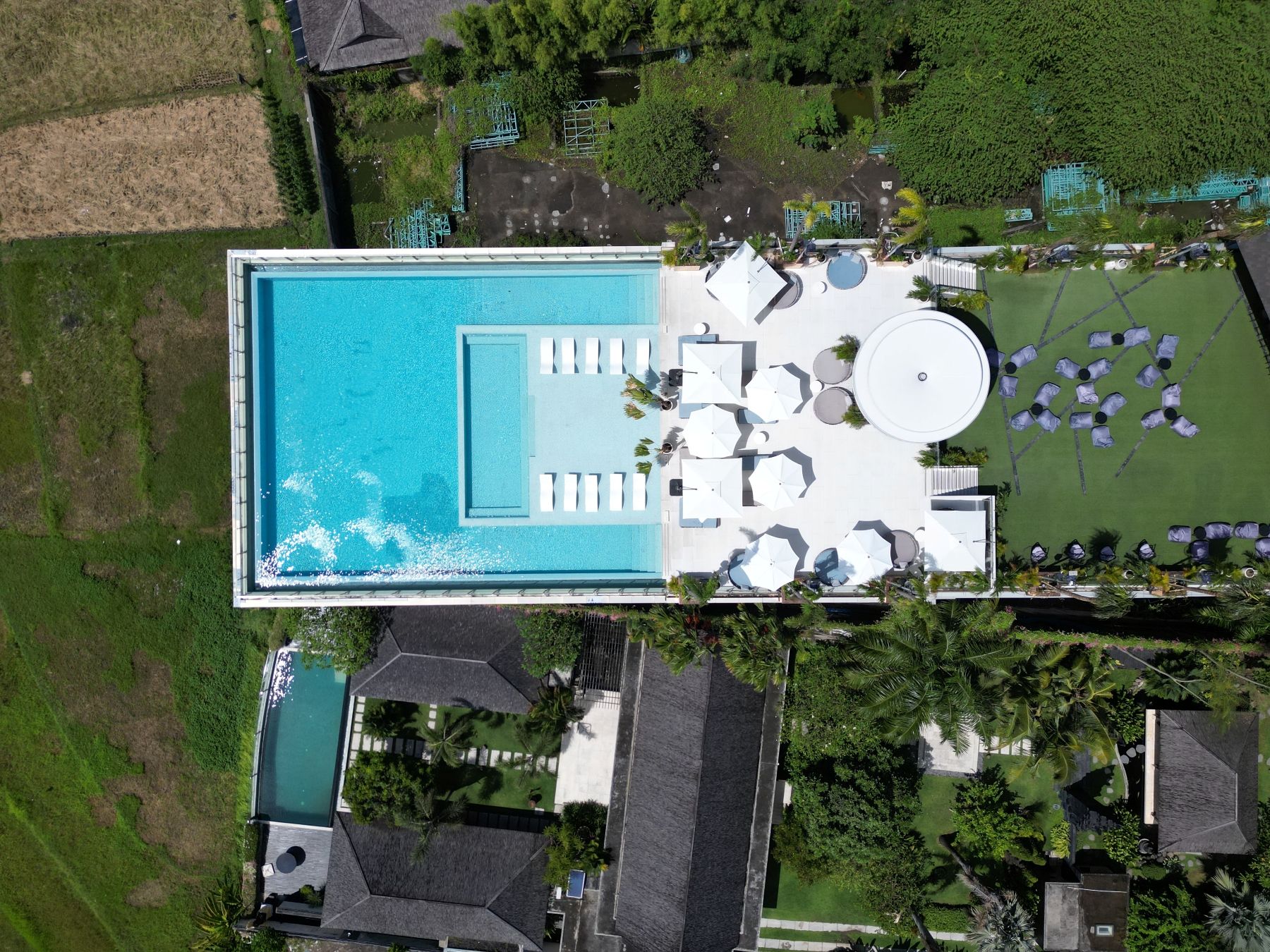
- Magnum Resort Berawa, a hospitality-driven branded residence in Canggu’s tourism core, marketed with the world’s longest rooftop pool (about 190 m) and ~5,000 m² of amenities. Units sell as fully managed apartments with a published ROI target of around 12.1%, reflecting a focus on pre-structured, hospitality-grade investment product.
- Magnum Resort Sanur, a Health & Tourism KEK project on one of the last seafront plots in Sanur: a four-storey luxury resort with 1-3 bedroom units, smart-home systems, rooftop and beach lounges, spa, fitness and yoga studios, co-working and private yacht access. It has secured environmental approval (AMDAL) and is finalising PBG, strong regulatory alignment within the Sanur KEK framework.
Limitations & suitability
Hospitality real estate is not for everyone. You share upside with an operator, so the headline gross yield is not what lands in your account; management agreements, fee structures and rental-pool rules vary widely and must be read closely. The ~12.1% Berawa figure is a developer target, not a guarantee, and net yields depend on actual occupancy, ADR and costs. Buyers wanting full control over styling, guest selection or personal use windows may prefer a private villa despite the lower net yield. And the 31 March 2026 compliance deadline is a moving regulatory target, confirm current rules before committing.
Methodology & sources
Figures are indicative 2026 ranges, reconciled across multiple market datasets and converted at ~IDR 16,000/USD where relevant. Gross yields are rent ÷ price before costs; net yields deduct management, tax, maintenance and vacancy, the two are kept strictly separate throughout. Hospitality-supply counts (59 projects / 3,643 units; 70+ on sale; 87% apartments / 13% villas; ~40% Canggu-Berawa; 5,641-room pipeline) are from Horwath HTL / C9 Hotelworks 2025-2026 and the Bali Hotels Association. Project-specific figures (Berawa ROI target, amenities; Sanur KEK status) are Magnum Estate / Antara data. Always commission independent appraisal and notary (PPAT) due diligence before purchase.
Conclusion
In 2026, hospitality real estate Bali is less a trend than a structural shift: managed, branded and serviced product is taking share from informal villas because it converts the same gross yield into a much stronger net yield, carries less regulatory risk ahead of the March 2026 compliance deadline, and offers genuinely hands-off ownership. The strongest plays pair a proven hospitality hub (Canggu/Berawa, Uluwatu, Sanur) with a credible operator and a clean legal structure.
Own a hospitality-grade asset, not just a villa
Explore Magnum Estate’s managed, resort-style residences in Berawa and Sanur, transparent pricing and projected net yields.
Berawa, Magnum Resort
Sanur, Magnum Resort
Uluwatu, Sky Stars
FAQ: hospitality real estate Bali
What is hospitality real estate in Bali?
Residential units, serviced villas, apartments, branded residences and resort units, operated with hotel-grade services, amenities and professional management. By March 2025 Bali had ~59 hospitality-managed projects (3,643 units), with 70+ now on sale.
Do hospitality-managed assets yield more than private villas?
Usually on net yield. Gross is similar (~10-18% in prime areas), but a self-managed villa nets ~4-6% after costs, while a pro-managed hospitality asset can net ~10-15% by keeping occupancy at 70-85%.
Which areas dominate hospitality real estate in Bali?
Canggu/Berawa (~40% of managed supply), with new launches in Seseh, Pererenan and Nyanyi; Jimbaran/Uluwatu for luxury resorts; and Sanur’s Health & Tourism KEK.
How does the March 2026 short-term rental rule affect investors?
From 31 March 2026 all short-term rentals must be fully compliant on zoning, licensing and tax. This favours hospitality-managed and branded residences, which already meet these requirements.
Are branded residences a good investment in 2026?
For hands-off investors, often yes: you trade some upside for stability, transparent reporting, higher occupancy and easier resale. Mandarin Oriental, Anantara and Aman have all announced Bali projects.
Can foreigners own hospitality real estate in Bali?
Not as freehold (Hak Milik) directly. Most product is structured as Leasehold (Hak Sewa) or via a PT PMA holding HGB, see our foreigner’s legal guide 2026.
How is occupancy so much higher for managed assets?
Professional operators use data-led pricing, OTA distribution and consistent service to lift occupancy toward the 70-85% prime band, versus ~50-65% for many informally run villas.
References & official sources
- BPS, Statistics Indonesia / Bali: 2025 foreign arrivals (6,948,754, +9.72%), domestic trips, occupancy, bali.bps.go.id
- ATR/BPN: land titles (Hak Milik / Hak Sewa / HGB) & zoning, atrbpn.go.id
- BKPM / Invest Indonesia: PT PMA & foreign-ownership rules, investindonesia.go.id
- DJP / Ministry of Finance: rental-income & transaction taxes, pajak.go.id
- Market data (2025-2026): Horwath HTL / C9 Hotelworks Bali Hotel & Branded Residences reports; Bali Hotels Association; Asia Property Awards 2025; Prestige Property Bali (area/yield); Paradyse / Rumavi / InvestLandBali (gross-vs-net); Antara (Sanur Tourism & Health KEK).
- Magnum Estate portfolio data (project ROI targets, occupancy): based on Magnum Resort Berawa & Sanur, 2026.
About the author
Stanislav Sadovnikov is the founder of Magnum Estate (PT Magnum Estate International), an award-winning full-cycle Bali real estate developer with 8 projects and 575 units since 2019 (Berawa, Sanur, Umalas, Sky Stars, Sky Royal). He writes about Bali pricing, yields, ownership rules and regulation for international buyers.