





Written by Stanislav Sadovnikov, Founder, Magnum Estate ·
Reviewed by Magnum Estate legal & investment desk ·
Last updated 3 June 2026
"5-10% Base-case price growth (established areas, est.) · 10-18% Gross yield, prime areas · 6.95M 2025 foreign arrivals (+9.7%) · 4-6% / 10-15% Net yield: self- vs pro-managed"
Key figures (2026)
Bali real estate forecast 2026: summary
The Bali real estate forecast 2026, the short answer: this is a maturing, fundamentals-driven market, not a bubble. The base case is steady price growth of roughly 5-10% a year in established areas (an estimate, not a guarantee), with higher upside in emerging corridors, underpinned by record tourism and incoming infrastructure rather than speculation.
- Direction: normalisation and selection, quality, legally-clean stock outperforms; weak, over-marketed stock corrects.
- Demand drivers: 6.95M foreign arrivals in 2025 (+9.7% YoY), long-stay digital nomads, and infrastructure (the planned North Bali airport, a National Strategic Project).
- Yields: prime gross yields ~10-18%; but net is what you keep, ~4-6% self-managed, ~10-15% professionally managed.
- Hotspots: Canggu/Berawa and Uluwatu/Bukit for income; Sanur, Ubud and East Bali for defensive long-stay; emerging zones for appreciation.
- Key risk: localised oversupply of generic villas and overtourism/infrastructure stress, design, uniqueness and compliance increasingly decide returns.

"Transparency: Magnum Estate develops property in Bali, so we have a commercial interest. This forecast is educational, not investment or legal advice. Forward-looking figures are scenarios and estimates that may not materialise, verify independently and consult a certified Indonesian notary (PPAT) and tax advisor before buying."
Transparency
This Bali real estate forecast 2026 is a forward-looking outlook, not a price list: it maps where demand, prices and yields are heading and what could push them off course. By 2026 the island has moved out of its post-pandemic boom into a more selective, data-driven phase, growth is steadier, legal clarity is becoming a value driver, and the gap between professionally-run and amateur assets is widening. For today’s actual price levels by area, pair this with our Bali property prices 2026 guide; for the full strategy, see the Bali villa investment 2026 guide.
Market direction: steady growth, not a bubble
The consensus across 2026 outlooks is that Bali is entering a stabilisation and selection phase, not a crash and not a speculative spike. The Bali real estate forecast 2026 base case is moderate, fundamental-based appreciation: established areas are widely expected to deliver around 5-10% annual price growth (an industry estimate, not a guarantee), with stronger upside in select emerging zones such as the wider Bukit Peninsula and the coastal belt west of Canggu. That sits inside the longer-run, like-for-like growth band of ~7-15% a year seen in strong micro-markets, while land across the island has appreciated roughly 15-30% over the past two years.
The important shift is qualitative: capital is rotating toward quality, compliance and professional management, and away from “hot location” speculation. That is healthier for long-term investors but means averages matter less than the specific micro-market and operating model.
Demand drivers: arrivals, residents & infrastructure
Three structural drivers underpin the forecast: tourism, a growing resident/long-stay base, and infrastructure.
Tourism arrivals
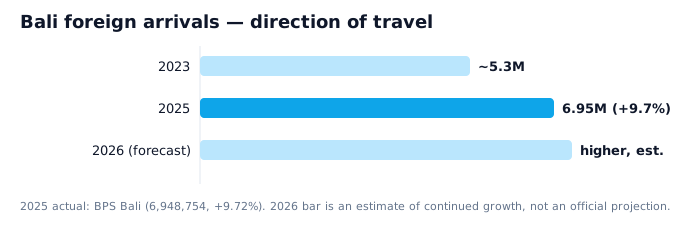
Tourism is the backbone of demand. Bali drew 6,948,754 foreign visitors in 2025, up 9.72% year-on-year (BPS Bali), and arrivals are projected to keep climbing through 2026, sustaining demand for short-term rental villas, especially 2-3 bedroom units in prime areas. Prime-area villa occupancy runs 70-85% (island-wide average closer to ~65%).
From tourists to residents
Demand is broadening beyond holiday rentals. A growing base of long-stay digital nomads and remote workers is choosing Bali as a base, supporting mid-term and annual rentals alongside the short-stay market. This “tourists-to-residents” shift diversifies demand across asset types and softens the seasonality that pure holiday-let models face.
Infrastructure: the North Bali airport & new corridors
The structural catalyst: the proposed North Bali (Bali Utara) international airport has been designated an Indonesian National Strategic Project. If built, it would open up under-developed northern and eastern regions and rebalance demand away from the congested south. Timelines remain subject to government review, so treat it as optionality, not a dated certainty. Road upgrades and new resort projects are already nudging investor interest toward Sanur, the Bukit and East-coast zones, see best areas to buy property in Bali 2026.
Price & yield trajectory
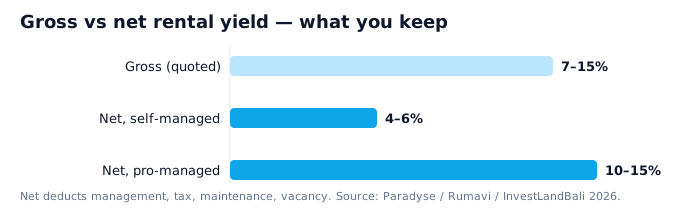
From an investor’s view, the 2026 trajectory is moderate appreciation plus solid yields. The crucial distinction is gross vs net: most “10-18% yield” headlines are gross, annual rent ÷ price, before costs. What you actually keep is the net yield, after management, tax, maintenance and vacancy. This is the single biggest source of disappointed Bali investors.
The table below summarises the forecast trajectory by metric. Growth figures are estimates; yield bands reuse the canonical area dataset.
| Metric | 2026 trajectory | Basis |
|---|---|---|
| Price growth (established areas) | ~5-10%/yr (estimate) | Market outlook commentary; like-for-like ~7-15% in strong micro-markets |
| Land appreciation (recent) | ~15-30% over 2 years | Canonical dataset / market reports |
| Gross yield (prime areas) | ~10-18% | Prestige Property Bali 2026 |
| Net yield, self-managed | ~4-6% | Paradyse / Rumavi / InvestLandBali 2026 |
| Net yield, professionally managed | ~10-15% | Paradyse / Rumavi / InvestLandBali 2026 |
| Forward-looking growth figures are estimates and may not materialise. Gross ≠ net. ~IDR 16,000/USD. |
The gap between 4-6% and 10-15% net is operations: data-driven pricing, OTA distribution and cost control, not the headline location. Model holding costs with our taxes & holding costs guide and see how management drives returns in the villa ROI guide.
Bear / base / bull scenarios
No forecast is a single number. Here is how the Bali real estate forecast 2026 looks across three illustrative scenarios. These are scenario estimates for framing, not predictions.
| Scenario | What it assumes | Price growth (est.) | Net yield (pro-managed) |
|---|---|---|---|
| Bear | Localised oversupply bites; tourism flat; rupiah volatility; tighter enforcement on non-compliant stock | 0-3% / flat | ~8-10% |
| Base | Arrivals keep rising; selective demand; infrastructure on track but slow | ~5-10% | ~10-13% |
| Bull | Record tourism; North Bali airport advances; strong nomad inflows into compliant, well-run assets | ~10-15% | ~13-15% |
| Illustrative scenarios for planning only, not forecasts of a specific outcome. Net yields assume professional management. ~IDR 16,000/USD. |
Compliance shapes the scenario you land in. Across all three, clean zoning (ITR/PKKPR), full permits (PBG/SLF) and tax compliance increasingly separate winners from losers, the “legality premium”. Run the checklist in our due-diligence guide for foreign buyers.
Pressure-test the forecast against real projects
Compare live pricing, occupancy and projected net yields across Magnum Estate’s Berawa, Sanur and Uluwatu developments.
View Magnum projects
Book a free consultation
Hotspots & emerging areas in the 2026 forecast
| Area | Role in the forecast | Gross yield | Land per m² |
|---|---|---|---|
| Canggu / Berawa / Pererenan | Short-stay & nomad core; deepest year-round demand | 12-18% | $530-1,560 |
| Uluwatu / Bingin / Bukit | View-driven luxury; fastest land appreciation | 10-16% | $310-940 |
| Seminyak / Umalas | Most established; best exit liquidity | 10-14% | $900-1,900 |
| Sanur / Ubud / East Bali | Defensive long-stay & wellness; lower volatility | 10-15% | $250-750 |
| Emerging (Tabanan, North Bali, fringes) | Appreciation upside tied to infrastructure | 6-10% | < $250 |
| Yield bands and land prices from the canonical Bali 2026 dataset (Prestige Property; Paradyse Homes per-are, AirDNA-benchmarked). ~IDR 16,000/USD. |
The balanced play: pair an income-heavy core area (Canggu, Uluwatu) with a select emerging-zone position (North Bali, Tabanan) for a 5-10 year portfolio. Compare the two coasts in Canggu vs Uluwatu.
Risks: oversupply & the legality premium
The forecast is positive but not risk-free:
- Localised oversupply. Generic, large-bedroom villas in saturated areas face slower absorption; guest ranking, design and uniqueness now matter more than simply being in a “hot” location.
- Overtourism & infrastructure stress. Congestion and environmental limits are steering where new projects can grow, favouring better-planned, sustainable developments.
- Currency & macro. Rupiah volatility and global rates affect USD-denominated returns; the Bank Indonesia property index and FX are the figures to watch.
- Execution/legal risk. Non-compliant stock (zoning, permits, tax) faces discounts and enforcement risk, the flip side of the legality premium.
Limitations & suitability
This is a forecast: forward-looking figures are scenarios and estimates, not promises, and depend on tourism, policy, infrastructure timing and FX. Bali may not suit you if you need guaranteed income, short holding periods, or freehold ownership (foreigners use leasehold or PT PMA, not Hak Milik). Net yields of 10-15% assume genuine professional management; self-managed returns are typically 4-6%. Treat any single number as the midpoint of a range, and commission independent appraisal and notary (PPAT) due diligence before committing.
Conclusion
The Bali real estate forecast 2026 rewards precision over hype: a maturing market where steady ~5-10% growth (base case), strong but selective rental demand, and a widening legality premium favour quality, compliance and professional management. The structural upside, record arrivals and infrastructure like the North Bali airport, is real, but so is localised oversupply. Build to the base case, position for the bull case, and underwrite for the bear.
Invest in the quality end of the forecast
Explore Magnum Estate’s legally-clean, professionally-managed residences in Uluwatu, Berawa and Sanur, transparent pricing and projected net yields.
Uluwatu, Sky Stars
Berawa
Sanur
FAQ: Bali real estate forecast 2026
Is Bali property expected to go up or down in 2026?
The base-case Bali real estate forecast 2026 is continued growth at a moderate pace, roughly 5-10% a year in established areas, with stronger upside in emerging corridors. Like-for-like growth in strong micro-markets has run ~7-15%. These are estimates, not guarantees.
What rental yields can investors expect in 2026?
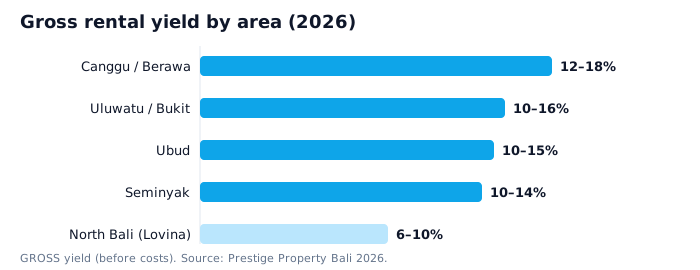
Prime gross yields run ~10-18% (Canggu/Berawa 12-18%, Uluwatu 10-16%, Ubud 10-15%, Seminyak 10-14%, North Bali 6-10%). Net is lower: ~4-6% self-managed or ~10-15% professionally managed, after costs.
What is driving demand in the forecast?
Record tourism (6,948,754 arrivals in 2025, +9.72%), a growing base of long-stay nomads and residents, and infrastructure, including the planned North Bali airport, a National Strategic Project.
Is Bali at risk of a real-estate bubble in 2026?
Most analyses describe a normalisation and selection phase, not a speculative bubble. Oversupply is real in some saturated villa segments, but growth is broadly fundamental-based; quality stock holds value while mispriced assets correct.
Which areas look strongest in the 2026 forecast?
Canggu/Berawa, Uluwatu/Bukit and Seminyak for yield; Sanur, Ubud and East Bali for defensive long-stay growth; emerging zones (Tabanan, North Bali) for appreciation tied to infrastructure.
How much does the legality premium matter?
Increasingly a lot. Clean zoning, PBG/SLF permits and tax compliance now drive both price growth and rental performance, see our due-diligence checklist.
Methodology & sources
This forecast reconciles the canonical Magnum Bali 2026 dataset (prices, yields, arrivals) with published 2026 market outlooks, converted at ~IDR 16,000/USD. Gross yields are rent ÷ price before costs; net yields deduct management, tax, maintenance and vacancy and are kept separate. Forward-looking growth figures (e.g. 5-10%/yr) and the bear/base/bull scenarios are estimates, attributed to market commentary, and are not predictions of a specific outcome. Infrastructure references (the North Bali airport as a National Strategic Project) describe gazetted plans whose timelines remain subject to government review.
References & official sources
- BPS, Statistics Indonesia / Bali: 2025 foreign arrivals (6,948,754, +9.72%), occupancy, bali.bps.go.id
- Bank Indonesia, Residential Property Price Index & IDR/USD: official price-growth and FX data, bi.go.id
- North Bali (Bali Utara) international airport, National Strategic Project (PSN): Indonesian government strategic-project programme (timeline subject to review), investindonesia.go.id
- DJP / Ministry of Finance: PBB & transaction taxes, pajak.go.id
- ATR/BPN: land titles, zoning (ITR/PKKPR) & permits, atrbpn.go.id
- Market data (2026): Prestige Property Bali area/yield analysis; Paradyse Homes price-per-are study; InvestLandBali market report; Rumavi yield data.
- Magnum Estate portfolio data (net yields by project).
About the author
Stanislav Sadovnikov is the founder of Magnum Estate (PT Magnum Estate International), an award-winning full-cycle Bali real estate developer with 8 projects and 575 units since 2019 (Berawa, Sanur, Umalas, Sky Stars, Sky Royal). He writes about Bali pricing, yields, ownership rules and regulation for international buyers.