






If you spend enough time talking to agents, lawyers, and owners in Bali right now, a pattern emerges: the market isn’t dying, it’s growing up. The spreadsheets still matter; but in 2026, the real edge comes from understanding people, not just prices.
The Market Has Grown a Spine
A few years ago, almost anything with a pool and a “Bali” label could sell. In 2026, that’s over.
Market reports and buyer guides all point in the same direction:
- Prices in good areas are no longer fantasy; sellers are meeting the market instead of “testing” it forever.
- Inventory is up, but in a healthy way: more real listings, more finished projects, more actual choice.
- Regulations and due diligence have teeth, and serious buyers see that as a feature, not a bug.
One 2026 article sums it up well: Bali is moving from a hype‑driven phase to a structured, data‑driven, founder‑led era where strategy and execution matter more than slogans.
Who’s Buying Villas in Bali in 2026 (And What’s in Their Heads)
A detailed breakdown of 2025-2026 buyers shows a very human mix of logic and emotion.
Common threads:
- Investors (often USD 150-400K budgets) chasing 7-15% gross rental yields in Canggu, Pererenan, Uluwatu, and similar hotspots, numbers that align with Bali’s current villa income data.
- Expats and second‑home buyers in the USD 250-600K range looking at Ubud, Sanur, and gentler pockets of Jimbaran for quality of life first, yield second.
- Higher‑net‑worth buyers targeting luxury ocean‑view estates in Uluwatu and Nyanyi, often from Dubai, Singapore and Europe, driven by both lifestyle and capital preservation.
Research on foreign investors in Southern Bali confirms what you hear on the ground:
- Economic conditions and behaviour matter, but location is the single strongest driver.
- Complex regulations barely reduce appetite, people work around them if the asset is compelling enough.
Underneath the numbers, the real story is simple: people are buying a different life script as much as a property.
Design Has Become a Business Strategy, Not Just a Look
The 2026 market is unforgiving to “copy‑paste villas”. Average design now gets average (or worse) occupancy.
Multiple design trend reports converge on a few clear shifts:
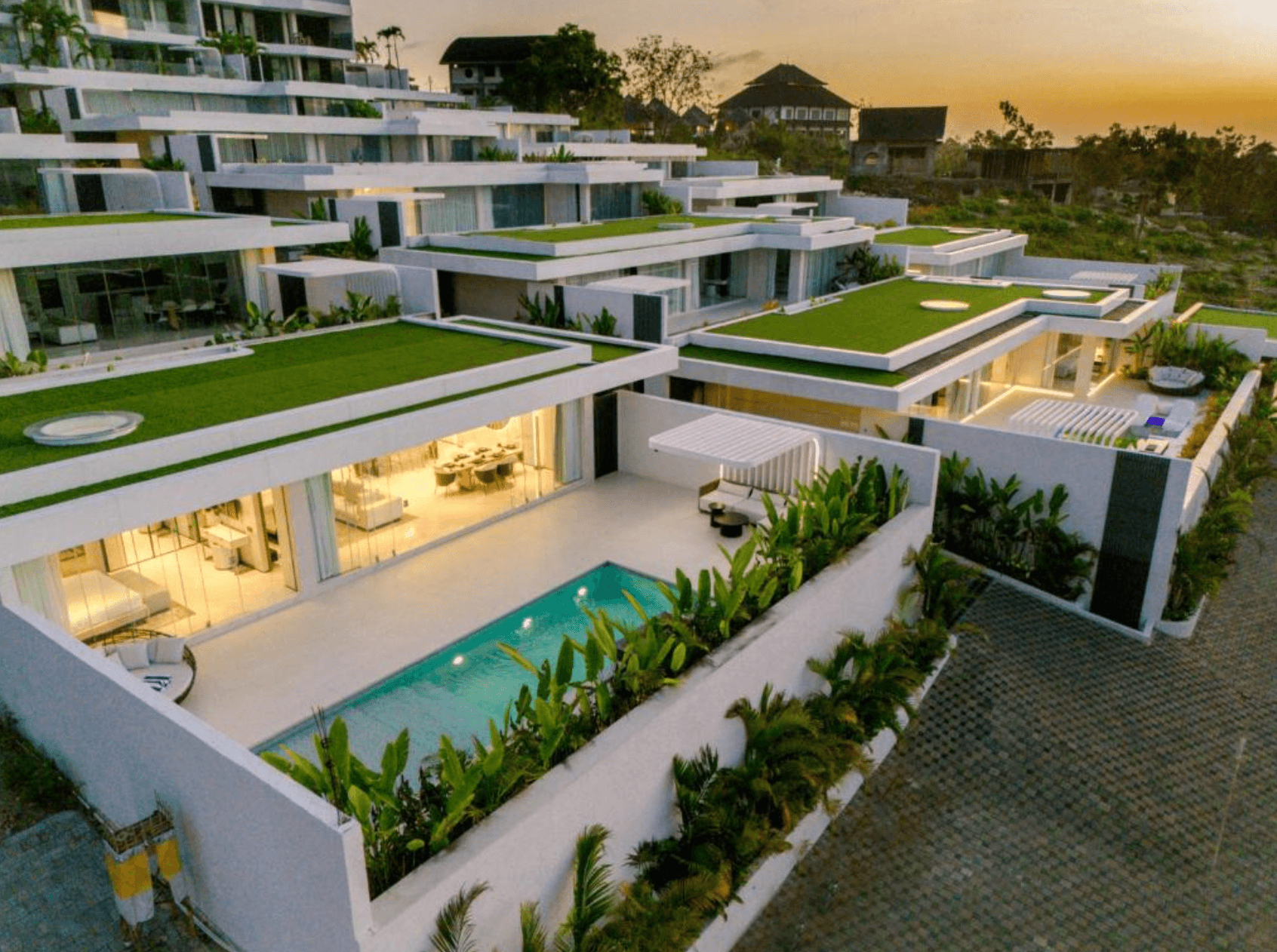
- Smaller, smarter villas. Demand is pivoting to 1-3 bedroom units that suit couples, solo travelers, and small families, because group sizes are shrinking and remote workers stay longer but in smaller parties.
- Warm, textured, human spaces. All‑white “showroom” interiors are out; buyers and guests want layered neutrals, organic textures and homes that feel lived‑in, not staged.
- Soft shapes and indoor‑outdoor flow. Arches, curves, sunken lounges, and big openings blur inside/outside and make small footprints feel generous.
- Eco‑conscious by default. Solar, rainwater harvesting, cross‑ventilation, and low‑impact materials are no longer “nice extras”, they’re part of how guests judge value, and how investors future‑proof assets.
One 2026 piece put it plainly: in Bali now, design is a yield lever, the villas that feel good to be in are the ones that stay booked.
From Hype to Checklists: How Smart Buyers Now Decide
Buyer checklists for 2026 look very different from the ones in 2021.
The new non‑negotiables:
- Legal clarity. Zoning (yellow/tourism), permits (PBG/SLF), and solid lease or PT PMA structures sit at the top of every serious buyer’s checklist.
- Product, market fit. Villa size, layout, location and design must match how people are actually traveling now (shorter groups, longer stays, more remote work).
- Operator quality. More buyers ask who will manage the villa, how they price, and what track record they have, not just “expected ROI”.
Beginner guides explicitly warn that Bali is full of “good‑looking bad deals”: nice photos hiding legal risk, noise, poor access, or designs that simply don’t rent well anymore. The human side of this is simple: buyers are more willing to walk away than they used to be.
What This All Means If You’re Considering Bali in 2026
If you strip away the jargon, 2026 is the year where Bali quietly asks you to be an adult about your decision.
The patterns from market and buyer research suggest three humane, practical rules:
- Buy something you wouldn’t be embarrassed to live in yourself. If the road, neighbours, light, noise, or layout would annoy you, they’ll annoy your guests.
- Let the numbers support the dream, not replace it. Aim for realistic 7-12% net in most areas; anything above that deserves extra scrutiny rather than instant excitement.
- Value people more than promises. The right lawyer, architect, project manager and operator will protect your downside more than any “guaranteed” ROI brochure ever could.
Bali is still Bali: beautiful, imperfect, emotional. The difference in 2026 is that the market finally rewards you for treating it with the same seriousness you’d give to any other major life decision.
Read also: Bali Real Estate 2026: A Market That Finally Rewards Patience, Quality, and Real Life

FAQs: Bali Real Estate 2026, Human Questions, Straight Answers
Q1: Has Bali’s “easy money” property phase really ended?
Yes. Market updates show average villas facing lower occupancy and a clear shift away from speculative buying toward more analytical, yield‑ and lifestyle‑driven decisions.
Q2: Who is actually buying villas in Bali now?
Data for 2025-2026 highlights investors (USD 150-400K budgets) seeking rental yield, expats and second‑home buyers (USD 250-600K), and wealthier buyers targeting luxury ocean‑view estates, with strong representation from Europe, Australia, Asia and the Middle East.
Q3: What returns can I realistically expect in 2026?
Most credible sources point to 7-15% gross and roughly 8-12% net for well‑chosen, professionally managed villas in prime and strong emerging areas; higher figures are possible in specific niches but should be stress‑tested carefully.
Q4: Is design really that important for ROI?
Yes. Reports on Bali villa trends stress that smaller, well‑designed villas with warm, sustainable, human‑scale interiors often outperform larger, generic properties in both occupancy and nightly rates.
Q5: Are regulations making it too hard for foreigners to own property?
Research shows foreign investors do find regulations complex, but they are not strongly deterred; instead, they adapt via PT PMA companies and long leaseholds, with location and asset quality still the main decision drivers.
Q6: Is oversupply a serious risk?
Oversupply is a real issue in some “copy‑paste” villa segments and overbuilt pockets of Canggu and Seminyak, but well‑located, well‑designed, and legally clean villas still enjoy strong demand and performance.
Q7: What’s the most common mistake first‑time buyers make in Bali? Beginner guides point to three recurring errors: ignoring legal/zoning checks, over‑focusing on headline ROI instead of product, market fit, and underestimating the importance of professional management and on‑the‑ground partners.
Q8: How long should I plan to hold a Bali property?
Most 2026 outlooks suggest a 5-10 year horizon to balance rental income and capital growth, especially as the market matures and “fast flip” opportunities become rarer and riskier.
Q9: Are branded or hospitality‑managed residences worth the premium?
In Bali’s evolving luxury segment, branded and hotel‑managed residences are gaining importance, with buyers paying more for trust, transparency, and operational excellence that reduce their day‑to‑day involvement and risk.
Q10: How do I know if Bali is right for me, not just my portfolio?
The most honest filter is personal: spend extended time in the area you’re considering, live like your future guests or self, and only invest if the place still feels right after the novelty wears off.