





Written by Stanislav Sadovnikov, Founder, Magnum Estate ·
Reviewed by Magnum Estate design & construction desk ·
Last updated 3 June 2026
"70-85% Prime-area occupancy (island ~65%) · 10-15% Net yield, professionally managed · 10-20 yr Material design life (humidity-rated) · 6.95M 2025 foreign arrivals (+9.7%)"
Key figures (2026)
Bali villa interior design 2026: summary
Bali villa interior design 2026 is no longer about Instagram props, it is ROI infrastructure. The short answer: tropical-modern, eco-minimal interiors with a clear indoor-outdoor living spine, flexible layouts and humidity-durable local materials lift listing click-through, perceived value and rate-holding power, which feed ADR, occupancy and net yield over a 5-10 year hold.
- Dominant style: tropical modernism + eco-minimalism (teak, rattan, stone, terrazzo, limewash).
- Layout that pays: living, pool, garden spine, clear zoning, lock-off/modular rooms, work corners.
- Durability = margin: humidity-rated finishes target a 10-20 year life and fewer refurbishments.
- Revenue link: photogenic, well-zoned villas help hold rate vs discounting (uplift figures are estimates).
- Net ≠ gross: design supports occupancy, but net yield is ~4-6% self-managed, ~10-15% pro-managed.

"Transparency: Magnum Estate develops and furnishes property in Bali, so we have a commercial interest. This guide is educational, not investment, design-engineering or legal advice. ADR and occupancy uplift figures below are illustrative industry estimates, not guarantees, verify independently and consult a qualified architect, quantity surveyor and notary (PPAT) before building or buying."
Transparency
This Bali villa interior design 2026 guide treats design as a business tool, not décor. By 2026 the island’s rental market has matured: Bali drew 6,948,754 foreign visitors in 2025 (+9.72% YoY), pushing prime-area occupancy to 70-85%, but supply has grown too, so guests, and the booking algorithms, now reward villas that simply feel right. Below we map the trends, the layouts and the materials that translate into average daily rate (ADR), occupancy and, ultimately, net return, with budgets and honest caveats.
What defines Bali villa interior design in 2026
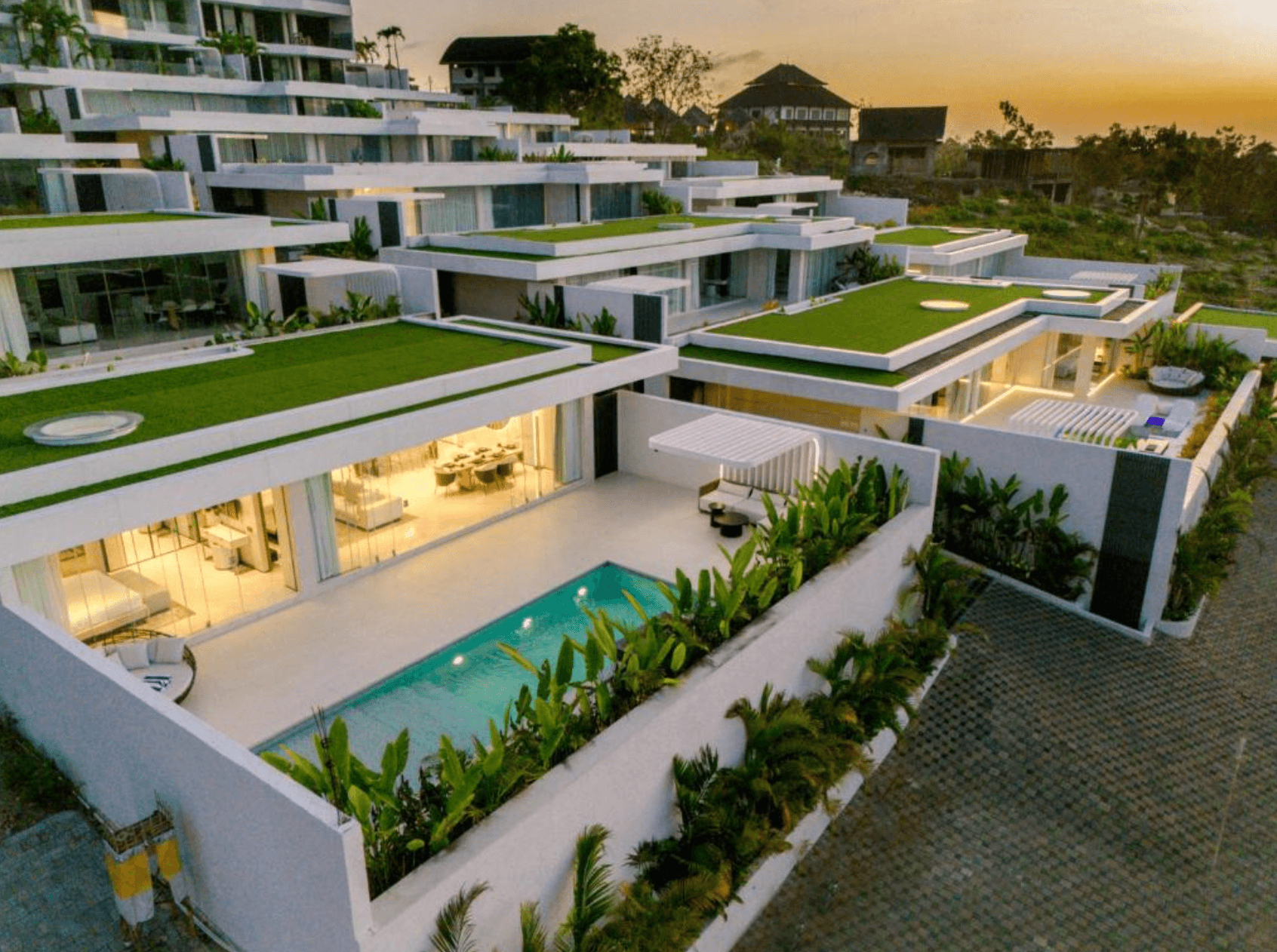
The 2026 scene blends tropical modernism, sustainability and mindfulness: open-air living, local materials and biophilic elements have replaced cluttered “boho rainbow” looks. The most sought-after style is Tropical Modernism, clean lines, seamless indoor-outdoor transitions and natural materials (teak, rattan, stone, terrazzo) that perform well in a humid climate. Luxury is now defined by comfort, durability and connection to nature rather than expensive finishes alone, and crucially, by interiors planned for 10-20 years of use, not handover-day photos. That is the same long-life philosophy in Magnum Estate’s premium construction guide.
Tropical modern & eco-minimalism: the new default
Leading 2025-2026 directions include wabi-sabi minimalism, arches and organic curves, earthy palettes and “quiet luxury” interiors that feel like sanctuaries. Three moves matter most for owners:
- Eco-minimalism. Fewer, better pieces; built-in or integrated furniture; limewash or clay-washed walls; raw textures that age gracefully instead of glossy finishes that chip.
- Earthy, muted palettes. Warm beiges, clay reds, olive greens and stone tones replace loud prints, calmer in person and stronger in photos.
- Local, durable materials. Reclaimed teak, bamboo, terrazzo and local stone, chosen for both aesthetics and longevity in Bali’s climate.
For investors the logic is simple: design that feels timeless and restful ages better and needs fewer full refurbishments, supporting stronger ROI over 5-10 years. The percentage uplifts above are directional estimates, useful for prioritising spend, not for underwriting a pro-forma.
Layouts that drive higher ROI in Bali villas
Good design is not only finishes, it is layout and flexibility. Standout layouts improve listing click-through, occupancy and the ability to hold price instead of discounting, because guests immediately feel the space “makes sense” and justifies the rate. A modular “3+2+1” concept (three self-contained units that combine into one compound) lets operators flex between couples, families and groups across seasons. Layouts that tend to boost ROI share four traits:
| Layout feature | Guest-experience effect | Revenue lever |
|---|---|---|
| Indoor-outdoor “spine” (living, dining, pool, garden) | Strong sightlines; spaces feel larger; photos pop | Higher perceived value & ADR |
| Clear zoning (sleep / work / social separated) | Families, remote workers & groups coexist without friction | Wider guest mix & better reviews |
| Flexible / lock-off rooms (1-2-3BR packages) | Right-sized bookings for each party | Higher occupancy across seasons |
| Practical back-of-house (storage, laundry, staff flow) | Calm guest areas; smooth operations | Lower operating friction & cost |
| Qualitative mapping of layout features to revenue levers. Effects are directional; magnitudes vary by area and operator. |
The takeaway: flexibility is what converts a beautiful villa into a high-occupancy one. Pair the right layout with the right micro-market, see best areas to buy property in Bali 2026 and how rate is set day-to-day in our Bali villa ROI guide.
Materials, durability & humidity: where design meets margin
Bali’s climate, humidity, salt air, intense sun, heavy rental turnover, is unforgiving. The materials that define the look in 2026 are also the ones that last, and durability is a margin question: every avoided refurbishment protects net yield. Roofing, drainage and material choices also affect comfort directly (heat, leaks, noise), which is why engineering and interiors must be planned together.
| Material / finish | Humidity & wear performance | Indicative cost band (USD) | ROI impact |
|---|---|---|---|
| Reclaimed teak / hardwood | Excellent; ages gracefully | $$$ (premium) | Low refurb frequency; strong photos |
| Terrazzo & natural stone | Excellent; resists moisture & abrasion | $$, $$$ | Long life; signature surfaces |
| Treated bamboo | Good if treated; needs upkeep if not | $, $$ | Sustainable look; mid maintenance |
| Limewash / clay-washed walls | Good; breathable, easy to refresh | $ | Cheap to renew; on-trend texture |
| Glossy laminate / cheap veneer | Poor; peels & warps in humidity | $ | Frequent replacement; drags net yield |
| Cost bands are relative ($ low, $$$ premium), not absolute quotes. Build cost for an investment-grade villa runs ~USD 1,000-1,800/m² (~IDR 16,000/USD). Source: Magnum Estate construction desk; market guides 2026. |
The cheapest finish is rarely the cheapest over a hold: a glossy veneer replaced twice can cost more than terrazzo installed once, while photographing worse the whole time. Model these holding costs against rate in our villa ROI guide and the wider Bali real estate playbook 2026.
Guest-experience-led design in 2026
Guest experience is shaped as much by design as by service. First impressions, flow, privacy and ease of use all influence reviews and repeat bookings, which feed the ranking and pricing engines of the OTAs. In practice, 2026 guest-led design focuses on:
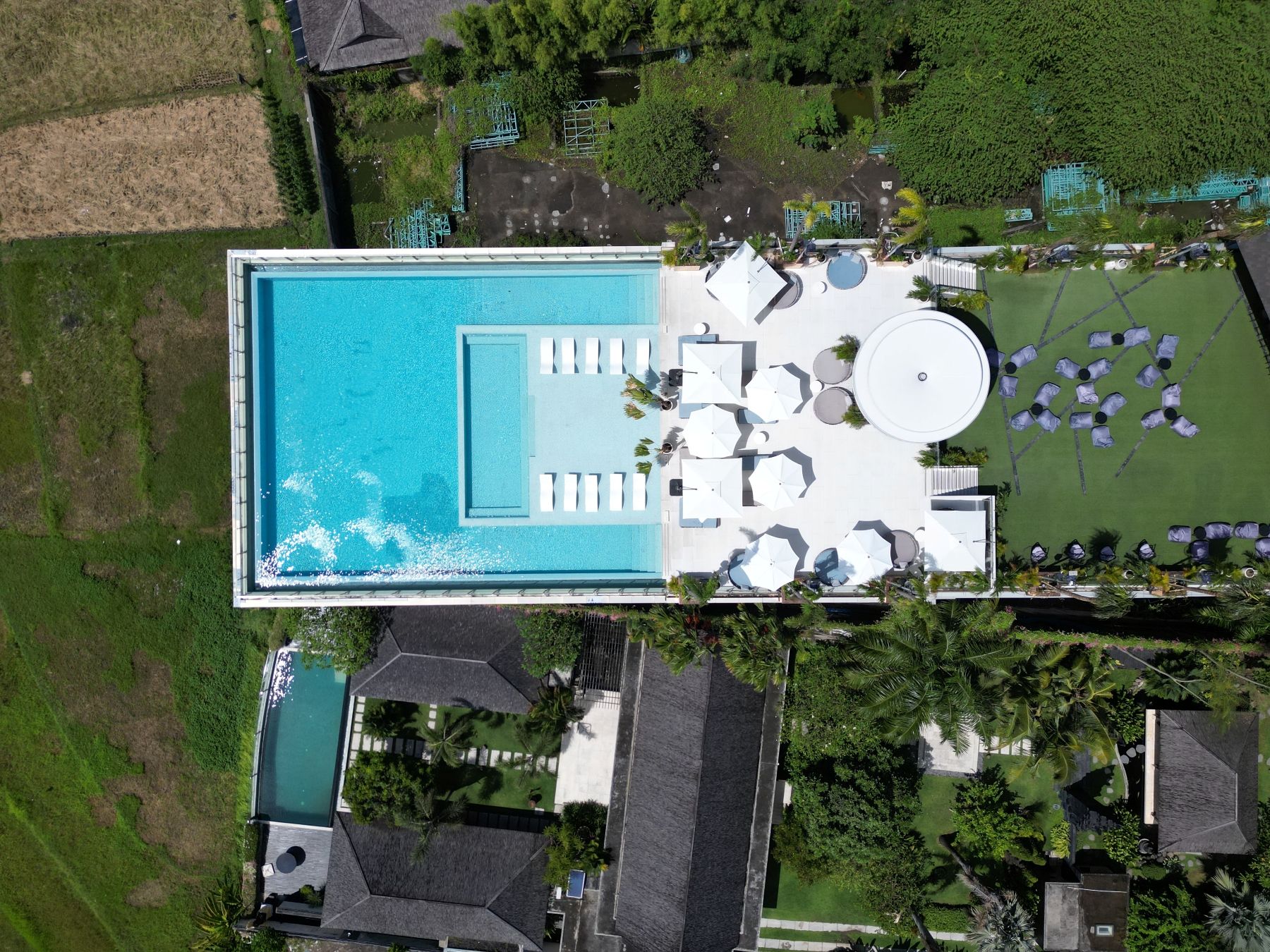
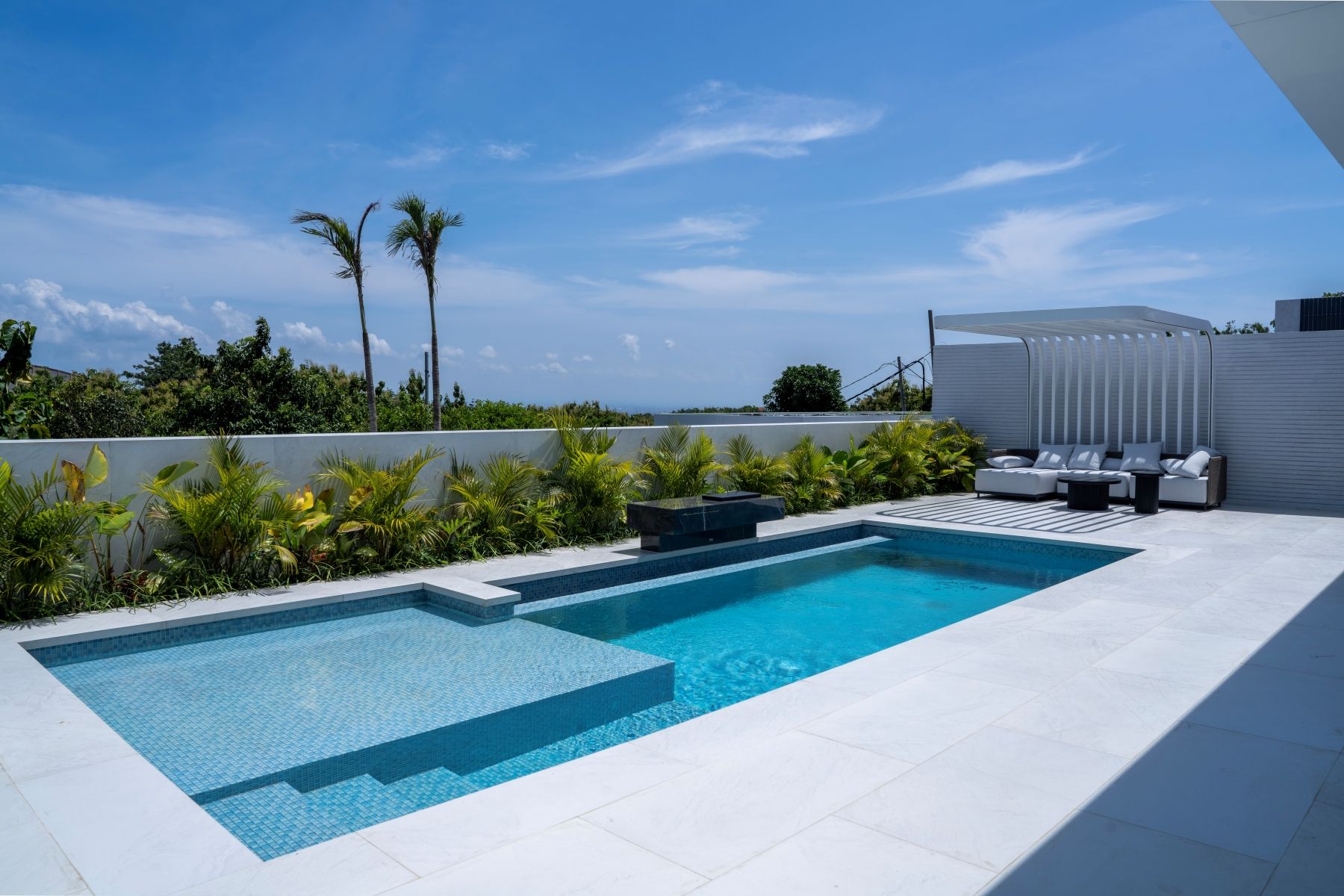
- Intuitive arrival & wow factor. A clear, photogenic entry view, framed pool, greenery and living area, creates instant emotional impact and better listing photos, improving conversion.
- Acoustic & privacy comfort. Solid bedroom walls, smart window placement and neighbour screening help guests sleep well, which shows up directly in reviews.
- Work-friendly corners. With remote workers now a structural demand driver, dedicated desks with good light and power are becoming standard in Bali villa layouts.
Design within the rules: setbacks, height limits, green-area ratios and zoning shape what layout you can actually build. Confirm title and zoning before finalising a concept, start with choosing the right area and an independent notary (PPAT) review.
See design that is built for returns
Tour how Magnum Estate plans architecture, structure and interiors together across its Berawa, Sanur and Uluwatu developments.
View Magnum projects
Book a free consultation
What a design & furnishing budget buys in 2026
Furniture, fixtures & equipment (FF&E) plus interior finishing typically sits on top of base build cost (~USD 1,000-1,800/m²). Indicative ranges for a mid-size villa:
| FF&E + interiors budget (USD) | What it realistically delivers |
|---|---|
| 15k, 35k | Functional fit-out; off-the-shelf furniture; limited “wow”, fine for budget stays |
| 35k, 70k | Solid tropical-modern look; durable materials in key zones; good listing photos |
| 70k, 130k | Investor-grade interiors; signature spine, custom built-ins, work corners, rate-holding finish |
| 130k+ | Luxury / branded fit-out; bespoke materials; top-of-market ADR positioning |
| Indicative FF&E + interior finishing only (excludes base build). Ranges vary widely by villa size, area and spec. ~IDR 16,000/USD. |
Methodology & sources
Figures are indicative 2026 ranges in USD (~IDR 16,000/USD). Build cost (~$1,000-1,800/m²) and yield figures reuse Magnum Estate’s reconciled market dataset. Gross yields are rent ÷ price before costs (~7-15%, up to 10-18% prime); net yields deduct management, tax, maintenance and vacancy (~4-6% self-managed, ~10-15% professionally managed). All ADR and occupancy uplift percentages are illustrative estimates, not measured on a named sample, they are for prioritising design spend, not for underwriting returns. Always commission an independent architect, quantity surveyor and notary (PPAT) review before building or buying.
Conclusion
In 2026, Bali villa interior design 2026 is an investment decision, not a styling one. The villas that win pair a tropical-modern, eco-minimal look with a flexible, well-zoned layout and humidity-durable materials, so they photograph well, flex across guest types, hold rate, and need fewer refurbishments. Design the indoor-outdoor spine, the zoning and the materials first; the ADR, occupancy and net yield follow.
Ready to see design built for ROI?
Explore Magnum Estate’s residences in Uluwatu, Berawa and Sanur, interiors engineered for the climate and the booking algorithm.
Uluwatu, Sky Stars
Berawa
Sanur
FAQ: Bali villa interior design 2026
What are the key Bali villa interior design 2026 trends?
Tropical modernism and eco-minimalism: clean lines, indoor-outdoor flow, wabi-sabi textures, earthy muted palettes and durable local materials (teak, rattan, stone, terrazzo) chosen to survive humidity while photographing well.
How does interior design affect villa ROI in Bali?
It influences listing click-through, perceived value, ADR and occupancy. Photogenic, well-zoned, durable interiors help hold rate instead of discounting and reduce refurbishment frequency. Specific uplift figures are estimates and vary by property and operator.
Which layout drives the highest ROI?
Flexible, well-zoned layouts with an indoor-outdoor living, pool, garden spine, lock-off/modular rooms (e.g. a 3+2+1 configuration), work corners and hidden back-of-house, they flex across couples, families and groups and maximise occupancy across seasons.
What materials last best in Bali’s humid climate?
Reclaimed teak, terrazzo, natural stone, treated bamboo, limewash/clay walls and integrated concrete age gracefully and resist humidity and heavy use better than glossy or fragile finishes, lowering long-term maintenance cost.
Does design really change occupancy and rate?
Directionally yes, better photos and flow lift conversion and rate-holding power, but the percentage uplifts cited across the industry are estimates, not guarantees, and depend heavily on pricing and management.
Do I need a separate interior designer if I buy from a developer?
If the developer plans architecture, structure and interiors together with a clear concept, materials list and furniture plan suited to the climate, a separate designer may not be needed. If interiors are an afterthought, hire a designer with Bali experience.
How much should I budget for interiors and FF&E?
For a mid-size villa, roughly USD 15k, 35k for a functional fit-out up to USD 130k+ for a luxury/branded one, on top of base build (~$1,000-1,800/m²). Investor-grade interiors typically land around USD 70k, 130k.
References & official sources
- BPS, Statistics Indonesia / Bali: 2025 foreign arrivals (6,948,754, +9.72%), hotel occupancy, bali.bps.go.id
- Kemenparekraf (Ministry of Tourism): tourism strategy & demand context, kemenparekraf.go.id
- ATR/BPN: land titles & zoning that constrain layout, atrbpn.go.id
- Design & market sources (2025-2026): Karyanusa Asia and Bali Best Design trend reports; DesRes Bali design notes; Bukit Vista listing-performance analysis; UNI Editorial modular “3+2+1” villa case study.
- Magnum Estate construction & portfolio data (materials, build cost, net yields by project).
About the author
Stanislav Sadovnikov is the founder of Magnum Estate (PT Magnum Estate International), an award-winning full-cycle Bali real estate developer with 8 projects and 575 units since 2019 (Berawa, Sanur, Umalas, Sky Stars, Sky Royal). He writes about Bali pricing, yields, ownership rules and regulation for international buyers.