





Written by Stanislav Sadovnikov, Founder, Magnum Estate ·
Reviewed by Magnum Estate legal & investment desk ·
Last updated 3 June 2026
"$500k, 1.2M+ Premium villa price band · $310-1,900 Premium land per m² (Uluwatu, Seminyak) · 10-18% Gross yield, prime areas · 6.95M 2025 foreign arrivals (+9.7%)"
Key figures (2026)
Premium real estate Bali 2026: summary
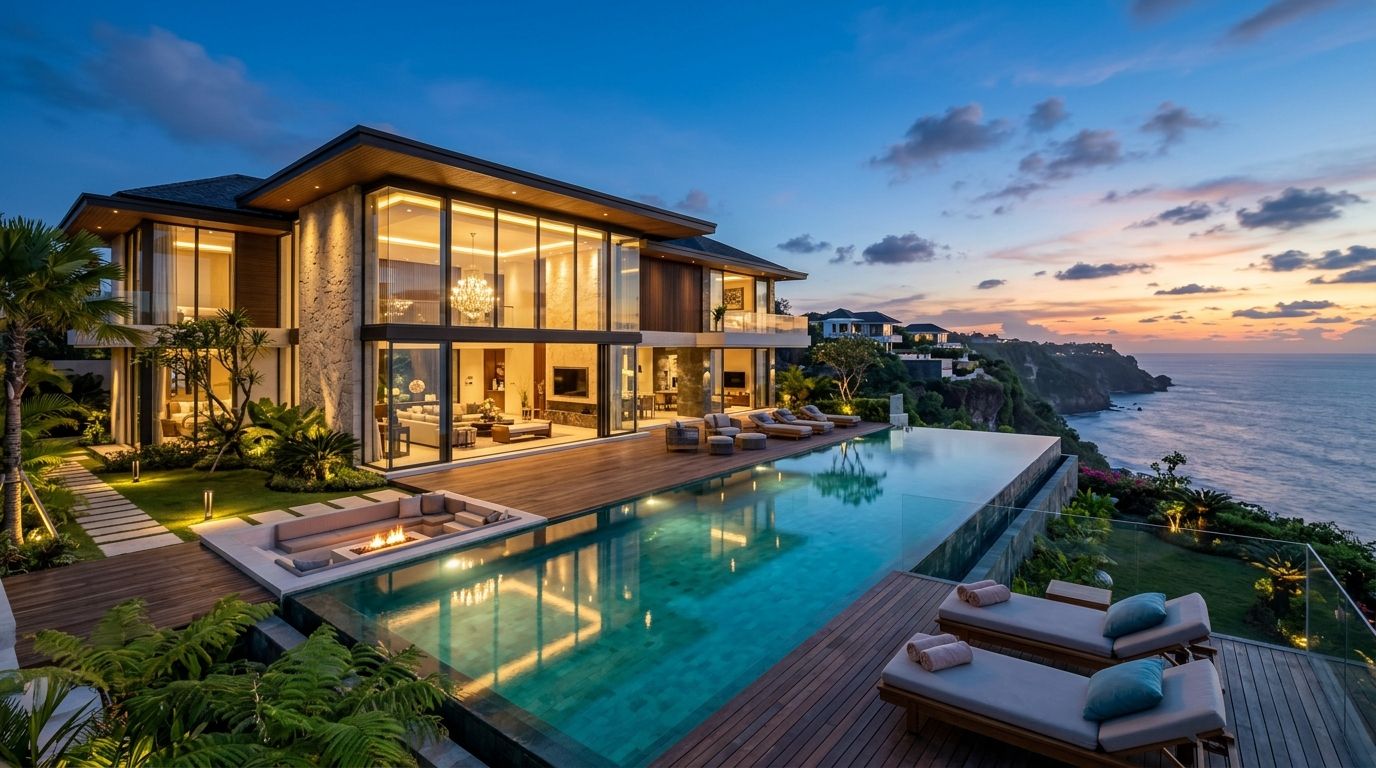
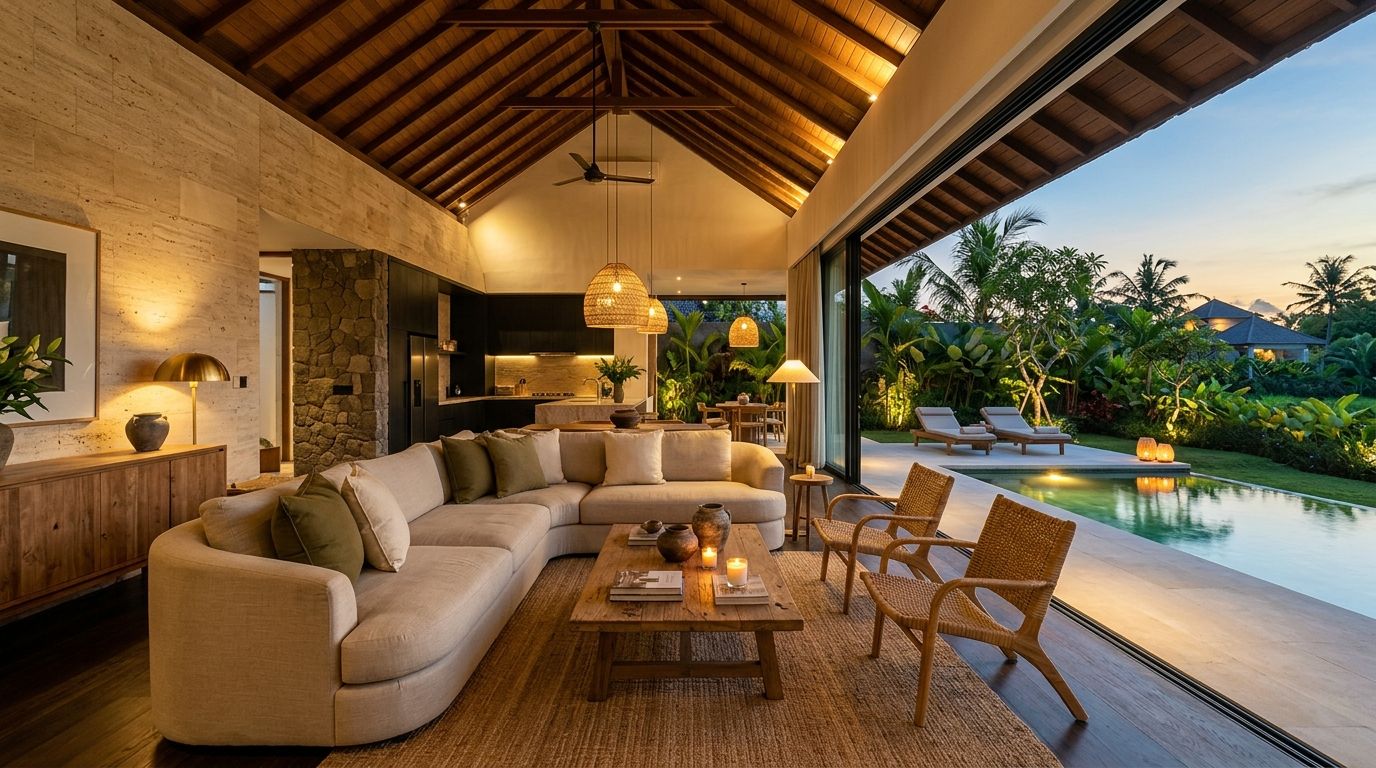
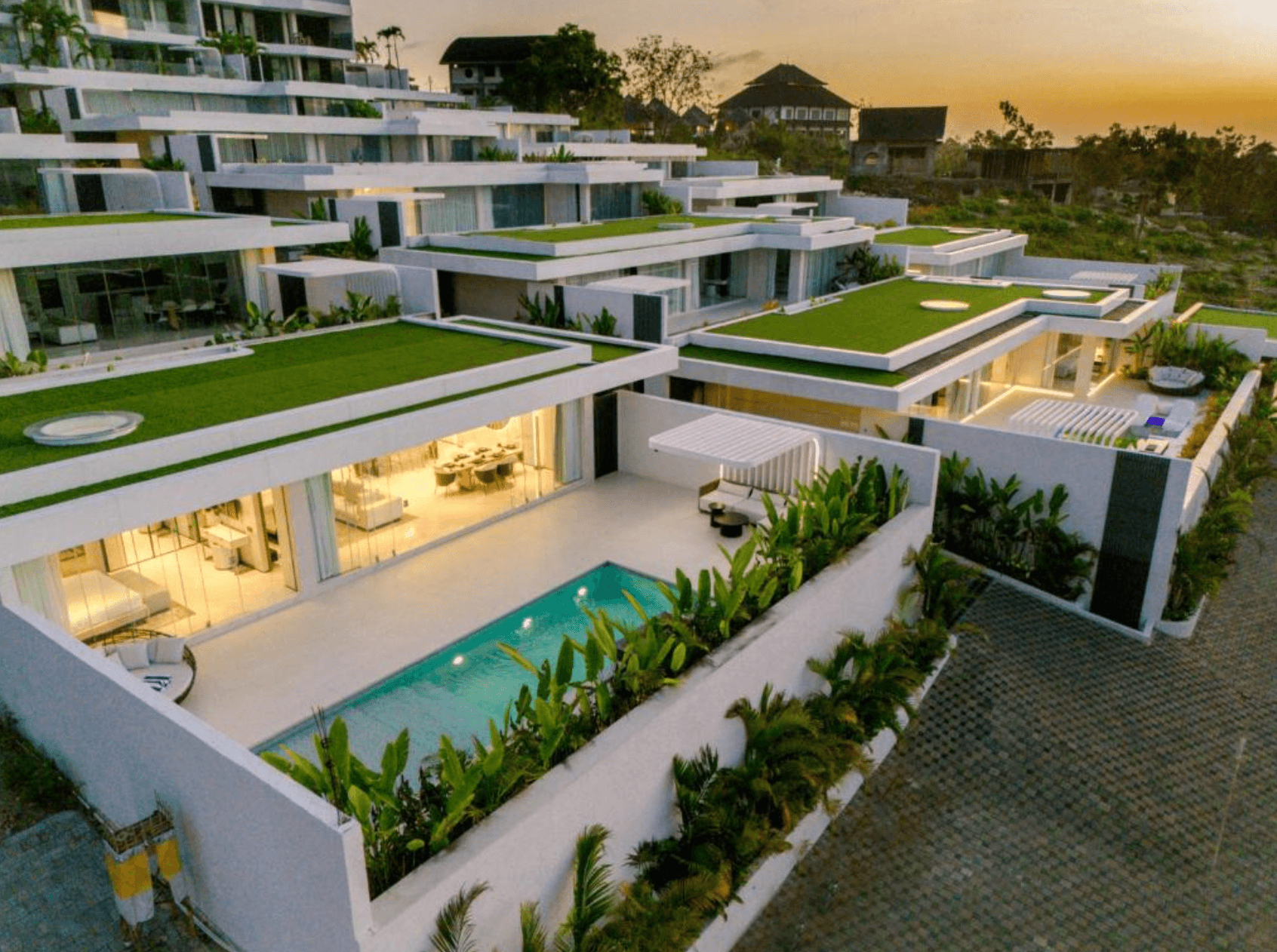
Premium real estate Bali 2026, the short answer: “premium” is no longer about infinity pools and Instagram views. It is the combination of a prime location
(Seminyak, cliff-front Uluwatu, Berawa), verifiable legal compliance (PBG, SLF, AMDAL/UKL-UPL), engineered build quality for Bali’s tropical and seismic climate, and professional management. Premium villas typically run from USD 500,000 to USD 1.2 million and beyond.
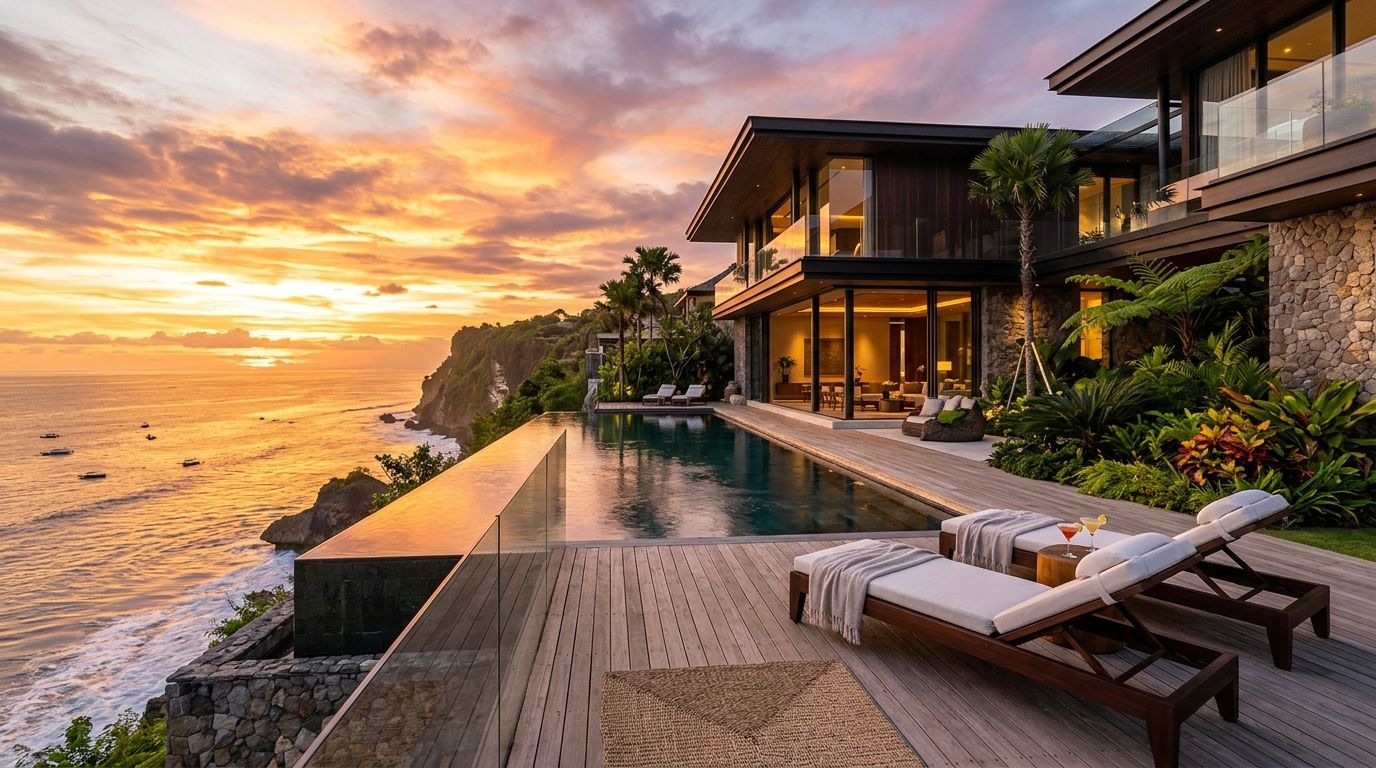
- The premium triangle: Seminyak (highest land value, best exit liquidity), cliff-front Uluwatu (luxury views, fastest land appreciation), Berawa/Canggu (deepest year-round demand).
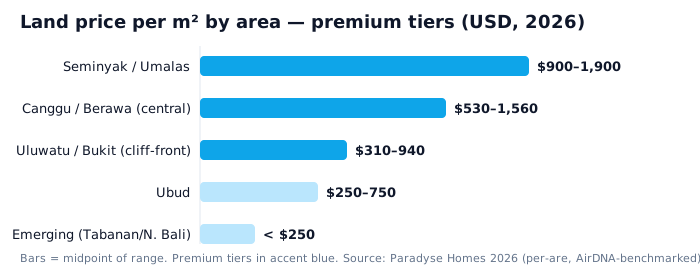
- Premium land: Seminyak ~$900-1,900/m²; Uluwatu/Bukit ~$310-940/m², both carry a clear premium over Ubud and emerging belts.
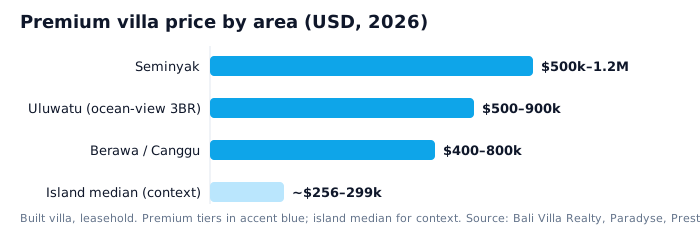
- Price band: Seminyak $500k, 1.2M; Uluwatu ocean-view 3BR $500-900k; Berawa/Canggu $400-800k.
- Why build quality matters: it protects nightly rates, cuts maintenance, lowers regulatory risk and preserves resale value over a 10-20 year hold.
- Gross ≠ net: prime gross yields run 10-18%; net is ~4-6% self-managed, ~10-15% professionally managed.

"Transparency: Magnum Estate develops premium property in Bali, so we have a commercial interest. This guide is educational, not investment or legal advice, verify figures independently and consult a certified Indonesian notary (PPAT) and tax advisor before buying."
Transparency
This premium real estate Bali 2026 guide is about the luxury segment specifically, not the whole market. By 2026, Bali’s high end has split decisively from the rest of the island: regulation, ESG expectations and buyer sophistication now filter projects far more aggressively than in the post-pandemic boom. The word “premium” has stopped meaning “expensive finishes” and started meaning compliant, engineered, well-located and professionally run. Below we define what premium actually is in 2026, map exactly where it sits, and show the price bands and ROI logic behind it. (For the whole-market view, see our Bali property prices 2026 guide.)
What defines premium real estate Bali 2026
In the luxury tier, four pillars separate genuine premium from marketing. A project that misses any one of them is not investment-grade, however good the renders look:
| Pillar | What “premium” requires in 2026 | Red flag |
|---|---|---|
| Location | Correctly-zoned land in a prime tourism/residential zone (Seminyak, cliff-front Uluwatu, Berawa) | Cheap, mis-zoned agricultural plot |
| Compliance | Valid PBG building permit, SLF fitness certificate on completion, AMDAL/UKL-UPL environmental approval | “We’ll handle permits later” |
| Build quality | Engineered for humidity, UV, heavy rain, shifting soils and seismic activity; quality glazing, waterproofing, drainage | Only finishes & views discussed |
| Operations & ESG | Professional management from day one; solar, water efficiency, waste plans, transparent reporting | No maintenance plan or capex estimate |
| Bali generally limits buildings to ~15 m (“no higher than a coconut tree”), with stricter limits near temples. Sources: ATR/BPN zoning; Indonesian building-permit (PBG/SLF) and environmental (AMDAL/UKL-UPL) regulations. |
Compliance is the new luxury. Non-compliant builds risk stop-work orders, sealing, fines or demolition, a direct threat to capital. A genuinely premium developer treats PBG, SLF and environmental approvals as a showcase, not something to hide. See our guide to avoiding mistakes when buying property in Bali.
Where premium lives: the top zones for premium real estate Bali 2026
Premium is geographically concentrated. The chart below ranks land price per m² across the premium and comparison zones, note how Seminyak and cliff-front Uluwatu command the premium tiers, while Ubud and emerging belts sit well below:
| Premium zone | Land per m² | Why it is premium |
|---|---|---|
| Seminyak / Umalas | ~$900-1,900 | Most established luxury strip; highest land value and best exit liquidity |
| Berawa / central Canggu | ~$530-1,560 | Supply-constrained, fast appreciation, deepest year-round rental demand |
| Uluwatu / Bukit (cliff-front) | ~$310-940 | Cliff-front ocean-view premium; fastest land appreciation on the island |
| Premium zones only. Land is quoted per are (100 m²) locally; converted at ~IDR 16,000/USD. Source: Paradyse Homes 2026 & Prestige Property 2026. |
The takeaway: Seminyak buys liquidity and prestige, Berawa buys rental depth, and cliff-front Uluwatu buys view scarcity and appreciation. Each is “premium” for a different reason, match it to your goal. Compare the two coasts in Canggu vs Uluwatu and see the full ranking in best areas to buy in Bali 2026.
Premium price bands by area in 2026
Whole-villa pricing in the premium tier follows location but blurs with product type, a cliff-front Uluwatu villa can exceed a Berawa entry villa. Typical built, leasehold premium ranges in 2026:
| Premium area | Typical premium villa price | Gross yield | Premium profile |
|---|---|---|---|
| Seminyak | $500k, 1.2M | 10-14% | Most established; best exit liquidity and brand prestige |
| Uluwatu / Bukit (cliff-front) | $500-900k (3BR ocean view) | 10-16% | Luxury views; fastest land appreciation |
| Berawa / Canggu | $400-800k | 12-18% | Deepest rental demand, year-round occupancy |
| Premium build cost adds ~USD 1,000-1,800/m². For context, the island median villa is ~$256-299k and the full market spans $60k, $6M. Source: Bali Villa Realty, Paradyse, Prestige 2026. |
Premium commands a measurable spread. The premium tiers sit two to four times above the island median villa price (~$256-299k). That gap is paid for in location, compliance and engineering, not just finishes. For the full market context and what each budget buys, see Bali property prices 2026.
See real premium pricing, not averages
Compare live pricing and projected net yields across Magnum Estate’s cliff-front Uluwatu (Sky Stars) and Berawa developments.
Uluwatu, Sky Stars
Berawa
Book a free consultation
Who buys premium real estate Bali 2026: buyer profiles
The premium buyer pool has matured. Three profiles now dominate, and each prices “premium” differently:
| Buyer profile | Typical budget | What they prioritise |
|---|---|---|
| Lifestyle-investor / remote professional | $0.5-1M | Year-round rental demand (Berawa/Canggu), management, net yield |
| High-net-worth second-home owner | $1M+ | View scarcity and prestige (cliff-front Uluwatu, Seminyak), build quality |
| Institutional / family office | $2M+ | ESG documentation, verifiable compliance, transparent reporting |
| Demand context: Bali drew 6,948,754 foreign visitors in 2025 (+9.72% YoY), supporting prime occupancy of 70-85%. Source: BPS Bali 2026. |
The newest and most demanding cohort is institutional. Global research shows ESG performance correlates with higher asset valuations, and these buyers increasingly require verified environmental approvals (AMDAL/UKL-UPL) and documented build standards before they commit, pushing the whole premium tier toward greater transparency.
Why premium build quality protects ROI
Premium construction looks like a cost line, but in the luxury segment it is a revenue and risk lever. In Bali’s humid, high-UV, seismic environment, cheap builds age fast, and a tired villa loses both nightly rate and resale value. Most “8-15% yield” claims you see are gross (rent ÷ price, before costs); what you keep is the net yield after management, tax, maintenance and vacancy:
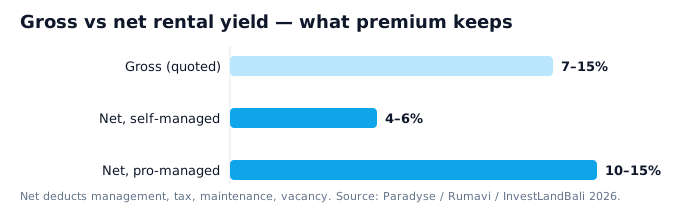
Premium build quality works on both halves of that equation. Durable materials and proper engineering keep maintenance low and the asset rate-competitive for longer; full compliance removes the tail risk of closure or demolition. Concretely, premium construction in Bali tends to deliver:
- Higher nightly rates and occupancy, guests feel the comfort and quality difference.
- Lower long-term maintenance, durable materials and better engineering reduce capex.
- Regulatory security, PBG/SLF compliance reduces the risk of forced closure or disputes.
- Stronger resale value, future buyers can see certifications and a documented build.
- Institutional appeal, ESG-aligned, documented assets attract deeper-pocketed exits.
The gap between 4-6% and 10-15% net is operations and build quality combined: data-driven pricing, OTA distribution, cost control, and a building that does not bleed maintenance. Factor holding costs with our taxes & holding costs guide and see the management math in our villa ROI guide.
How to evaluate a premium project in practice
Renders sell; documentation proves. When you review a project marketed as premium real estate Bali 2026, ask the developer five direct questions, and expect written answers:
- Which permits are already obtained, PBG, environmental approvals, and when will SLF be issued?
- Who is the main contractor, and what are their previous Bali projects?
- What structural and waterproofing systems handle Bali’s climate (humidity, UV, rain, seismic)?
- What are the height, setback and zoning rules for this plot, and how does the project comply?
- Can I see a written maintenance plan and estimated long-term capex?
Vague answers, “we’ll handle it later,” or a focus only on interiors and headline ROI mean you are not looking at true premium. For area-level due diligence, see which areas in Bali are suitable for investment property.
Limitations & who premium is not for
"Premium real estate Bali 2026 is not for everyone. If your budget is below ~USD 400k, you are better served by emerging-area or off-plan product than by stretching into a thin premium position. Premium also suits a 10-20 year horizon : the build-quality and compliance advantages compound over time and are wasted on a quick flip. Finally, premium carries lower headline gross yields than some emerging plays, you trade peak yield for liquidity, durability and regulatory safety. Figures here are indicative 2026 ranges, not a valuation of any specific property."
Transparency
Methodology & sources
Figures are indicative 2026 ranges, reconciled across multiple market datasets and converted at ~IDR 16,000/USD. Land prices are stated per m² (from per-are data, 1 are = 100 m²). Individual parcels vary by road access, zoning, view and lease term. Gross yields are rent ÷ price before costs; net yields deduct management, tax, maintenance and vacancy. Compliance facts (PBG, SLF, AMDAL/UKL-UPL, ~15 m height limit) reflect current Indonesian building and environmental regulation. Always commission an independent appraisal and notary (PPAT) due diligence before purchase.
Conclusion
In 2026, premium real estate in Bali is a filter, not a slogan. The strongest premium positions pair a prime zone (Seminyak, cliff-front Uluwatu, Berawa) with full compliance and engineering built for the climate, because that is what protects nightly rate, resale value and capital over a decade. If a project can prove its PBG, SLF and environmental approvals in writing and shows a real maintenance plan, it is premium. If it can only show renders, look elsewhere.
Ready to see real premium numbers?
Explore Magnum Estate’s compliant, engineered residences in cliff-front Uluwatu and Berawa, transparent pricing and projected net yields.
Uluwatu, Sky Stars
Berawa
All Magnum projects
FAQ: premium real estate Bali 2026
What counts as premium real estate in Bali in 2026?
A combination of prime location (Seminyak, cliff-front Uluwatu, Berawa), full compliance (PBG, SLF, AMDAL/UKL-UPL), engineered build quality for the tropical/seismic climate, and professional management. Price alone is not premium, verifiable compliance and durable construction are.
How much does premium property cost in Bali in 2026?
Premium villas typically run ~USD 500,000 to USD 1.2 million and beyond: Seminyak $500k, 1.2M; ocean-view 3BR Uluwatu $500-900k; Berawa/Canggu $400-800k. Premium land is $900-1,900/m² in Seminyak and $310-940/m² in Uluwatu.
Which areas are premium in Bali?
The premium triangle is Seminyak (highest land value, best liquidity), cliff-front Uluwatu (luxury views, fastest land appreciation) and Berawa/Canggu (deepest year-round demand). Umalas and parts of Ubud also support premium product.
Does premium construction actually improve ROI?
Yes, it supports higher rates and occupancy, lowers maintenance, reduces regulatory risk and protects resale over 10-20 years. Prime gross yields run 10-18%; net is ~4-6% self-managed or ~10-15% professionally managed.
Who buys premium real estate in Bali?
Lifestyle-investors ($0.5-1M), high-net-worth second-home owners ($1M+), and institutional/family-office buyers ($2M+) who require ESG documentation and verifiable compliance.
Is premium still appreciating in 2026?
Yes, like-for-like growth is ~7-15%/yr in strong micro-markets, and land has appreciated ~15-30% over two years, fastest in cliff-front Uluwatu.
What permits should a premium project have?
A valid PBG building permit, an SLF fitness certificate on completion, and AMDAL or UKL-UPL environmental approval. See our mistakes-to-avoid guide.
References & official sources
- BPS, Statistics Indonesia / Bali: 2025 foreign arrivals (6,948,754, +9.72%), occupancy, bali.bps.go.id
- Bank Indonesia, Residential Property Price Index: official price-growth data & IDR rate, bi.go.id
- ATR/BPN: land titles, zoning, setback & height rules, atrbpn.go.id
- DJP / Ministry of Finance: PBB & transaction taxes, pajak.go.id
- Market data (2026): Bali Villa Realty price guide; Paradyse Homes price-per-are study (AirDNA-benchmarked); Prestige Property Bali area/yield analysis; InvestLandBali market report.
- Magnum Estate portfolio data (net yields by project).
About the author
Stanislav Sadovnikov is the founder of Magnum Estate (PT Magnum Estate International), an award-winning full-cycle Bali real estate developer with 8 projects and 575 units since 2019 (Berawa, Sanur, Umalas, Sky Stars, Sky Royal). He writes about Bali pricing, yields, ownership rules and regulation for international buyers.