





Written by Stanislav Sadovnikov, Founder, Magnum Estate ·
Reviewed by Magnum Estate legal & investment desk ·
Last updated 3 June 2026
"$500-900k Ocean-view 3BR villa (Uluwatu) · $280-420+ ADR, prime ocean-view (USD/night) · 10-18% Gross yield, prime coasts · 30-60%+ Beachfront premium vs inland"
Key figures (2026)
Bali beachfront villas 2026: summary
Bali beachfront villas 2026, the short answer: yes, coastal and elevated ocean-view villas are still among the island’s strongest assets, but they are no longer just status symbols. Legal, buildable coastline is scarce, so frontline villas carry a 30-60%+ price premium over comparable inland stock and command ADR of USD 280-420+ per night in prime zones. Returns are real but must be read as gross vs net, and weighed against zoning and coastal-setback risk.
- Highest yield: Canggu/Berawa 12-18% gross; Bukit cliffs (Uluwatu) 10-16% with the top ADR and fastest land appreciation.
- Steadier income: Sanur 10-15% gross; North/emerging coasts 6-10%, longer-horizon growth plays.
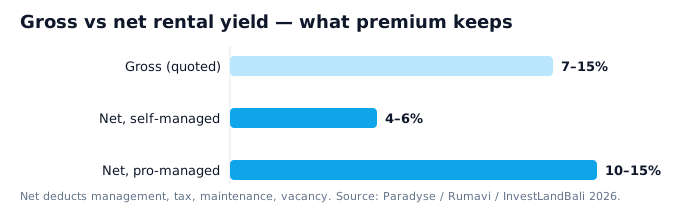
- Gross ≠ net: net yields are ~4-6% self-managed, ~10-15% professionally managed, after costs.
- Price vs inland: ocean-view land runs up to USD 900-1,900/m² in Seminyak vs under $250/m² in emerging belts.
- The catch: beach border-line (sempadan pantai) setbacks, height limits and erosion rules, verify zoning before you buy.

"Transparency: Magnum Estate develops coastal and ocean-view property in Bali, so we have a commercial interest. This guide is educational, not investment or legal advice, verify figures independently and consult a certified Indonesian notary (PPAT) and tax advisor before buying."
Transparency
This guide to Bali beachfront villas 2026 reconciles area pricing, ADR and yield data into one coherent coastal map. By 2026, Bali’s frontline and elevated ocean-view homes are still the most desired assets on the island, but limited coastline, stricter zoning and rising environmental scrutiny mean buyers must pair lifestyle ambition with hard numbers and legal discipline. Below is the coast-by-coast picture: who pays the scarcity premium, what daily rates and yields are realistic, and the setback and title caveats that separate a trophy from a write-off.
Why Bali beachfront villas in 2026 still command a premium
Coastal land is the island’s main tourism engine and its most constrained resource. Many strategic beachfront plots in established strips, Seminyak, Kuta, Nusa Dua, have already passed into investor hands, and regional spatial planning increasingly limits new shoreline construction. The result is a structural scarcity that gives Bali beachfront villas 2026 three durable advantages: a fixed supply of legal, buildable coastline; persistent tourist and wellness demand for sea views; and pricing power that supports higher daily rates and resilient resale values. Wellness-tourism research reinforces this, destination appeal, perceived value and a rising long-stay digital-nomad segment all skew toward nature-rich, sea-view stays, but the same coastal-tourism studies warn that intensive shoreline development is statistically linked to ecosystem degradation, which is exactly why zoning enforcement is tightening.
Best Bali coasts in 2026: ADR, yield and growth
Different stretches of coast now occupy distinct positions on the 2026 investment map. Use gross yield to compare areas, then discount to net (see below) before deciding:
| Coast | Profile | Typical ADR (USD/night) | Gross yield |
|---|---|---|---|
| Canggu / Berawa / Echo Beach | Black-sand surf, cafés, year-round demand | ~$180-320 | 12-18% |
| Uluwatu / Bingin / Pandawa / Sawangan (Bukit) | Cliff-front & elevated ocean view; top ADR | ~$280-420+ | 10-16% |
| Sanur | Calm seafront, family & long-stay, low volatility | ~$150-280 | 10-15% |
| Seminyak | Established premium strip; best exit liquidity | ~$220-400 | 10-14% |
| North & emerging (Tanah Lot, Kedungu, Nyanyi, Amed) | Under-developed, surf/creative potential | ~$90-200 | 6-10% |
| Gross yield = annual rent ÷ price before costs. Source: Prestige Property Bali 2026; ADR bands from market guides + Magnum portfolio. ~IDR 16,000/USD. |
The takeaway: Canggu/Berawa win on raw demand, but the Bukit cliffs carry the highest ocean-view ADR and the fastest land appreciation, so elevated villas there can match beachfront returns at a lower land-cost base. Compare the two coasts in Canggu vs Uluwatu and shortlist with our best areas to buy in Bali 2026 guide.
The Bali beachfront villas 2026 price premium vs inland
True frontline beachfront is scarce, so it trades at a 30-60%+ premium over a comparable inland villa with the same bedroom count and finish, driven almost entirely by the land underneath. Coastal land is most expensive in Seminyak/Umalas (about USD 900-1,900/m²), then central Canggu, with the Bukit cliffs offering a broader, lower entry range. Built ocean-view villas follow the same order:
| Area | Typical ocean-view villa price | Coastal land per m² | Note |
|---|---|---|---|
| Seminyak | $500k, 1.2M | ~$900-1,900 | Highest land cost; deepest resale market |
| Canggu / Berawa | $400-800k | ~$530-1,560 | Supply-constrained; fast appreciation |
| Uluwatu / Bukit (3BR ocean view) | $500-900k | ~$310-940 | Lower land base, top ADR, view premium |
| Sanur / Ubud (near-coast) | $250-500k | ~$250-750 | Calmer demand; lower volatility |
| Emerging coasts (Tabanan, Amed, North) | $100-600k | < $250 | Most land per dollar; longer horizon |
| Built villa, leasehold. Island median ≈ $256-299k; full range $60k, $6M. Build cost adds ~USD 1,000-1,800/m². Source: Bali Villa Realty, Paradyse, Prestige 2026. |
The scarcity premium is paid once on the land but earned back through ADR every night the villa is booked. For the full island price map by area, see our Bali property prices 2026 guide, and model holding costs with the taxes & holding costs guide.
See real ocean-view prices, not averages
Compare live pricing, ADR and projected yields across Magnum Estate’s Bukit and Sanur coastal developments.
View Magnum projects
Book a free consultation
Beachfront yields: gross vs net
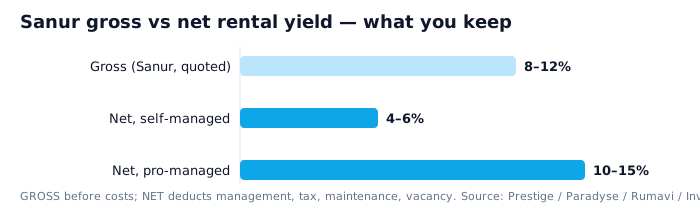
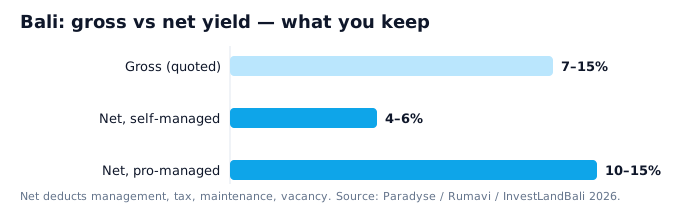
The headline “12-19% ROI” numbers you’ll see for coastal Bali are almost always gross, annual rent ÷ price, before costs. What you actually keep is the net yield, after management, tax, maintenance and vacancy. On coastal assets the gap is wider than inland, because salt, wind and humidity raise maintenance and a frontline location can mean seasonal occupancy swings. Realistic net is roughly 4-6% self-managed or 10-15% professionally managed; over a 5-10 year hold, blended total return (net rent + appreciation) lands around 10-15% a year in strong micro-locations.
The difference between 4-6% and 10-15% net is operations: dynamic pricing, OTA distribution and salt-grade maintenance. Magnum’s CEO forecasts that centralised, five-star management delivers roughly 3-5% higher ROI than self-managed coastal units. See how management drives returns in our villa ROI guide.
Zoning & coastal-setback caveats
The coastal-specific risks that don’t apply inland:
- Beach border-line (sempadan pantai) setback: a mandated buffer from the high-water mark restricts how close to the shore you can build. “Beachfront” rarely means on the sand.
- Height limits: southern Bali caps building height (commonly ~15 m / coconut-tree rule), so elevated ocean-view designs must work within strict envelopes.
- Erosion, drainage & flood risk: frontline plots face higher exposure; engineering for salt, wind and storm surge is non-negotiable.
- Zoning & title: a plot may be zoned tourism/green-belt, not residential, and foreigners cannot hold freehold (Hak Milik), use leasehold (Hak Sewa) or a PT PMA (HGB).
Confirm zoning under the regional spatial plan (RTRW) and verify title and setback compliance with a certified notary (PPAT), start with our foreigner’s legal guide to buying in Bali.
Limitations & suitability
Coastal villas are not for everyone. They suit investors who can commit to professional management, hold for 5-10 years, and fund proper salt-grade maintenance and reserves. Bali beachfront villas 2026 are a poor fit if you need quick liquidity (coastal exits can take longer than the headline resale story suggests), if you plan to self-manage from abroad (net yields fall to 4-6%), or if you’re buying purely on a quoted gross ROI without checking setback, zoning, erosion exposure and lease term. Frontline plots also carry the most regulatory and environmental scrutiny, the trophy and the highest risk often sit on the same parcel.
Methodology & sources
Figures are indicative 2026 ranges, reconciled across multiple market datasets and converted at ~IDR 16,000/USD. Land prices are stated per m² (from per-are data, 1 are = 100 m²). Gross yields are rent ÷ price before costs; net yields deduct management, tax, maintenance and vacancy. ADR bands reflect prime ocean-view stock and vary by season, size and finish. Individual parcels vary by road access, zoning, view, setback and lease term. Always commission an independent appraisal and notary (PPAT) due diligence before purchase.
Conclusion
In 2026, beachfront is still an icon, but it only becomes a smart investment when the lifestyle case and the data case agree. Pick the coast for its realistic net yield, not its quoted gross; pay the scarcity premium where ADR and appreciation earn it back (the Bukit cliffs and Berawa lead); and treat zoning, setback and title as pass/fail gates, not paperwork. Done that way, Bali beachfront villas 2026 remain one of the island’s most resilient assets.
Ready to see the real ocean-view numbers?
Explore Magnum Estate’s view-driven residences, transparent pricing and projected net yields.
Bukit, Sky Stars Ocean View
Sanur, seafront
Berawa
FAQ: Bali beachfront villas 2026
Are Bali beachfront villas in 2026 a good investment?
Yes, coastal and elevated ocean-view villas remain among Bali’s strongest performers. Gross yields run ~10-18% in prime coasts; net is ~4-6% self-managed or ~10-15% professionally managed. Scarce legal coastline supports premium ADR and resale values.
Which Bali coast has the best yield in 2026?
Canggu/Berawa lead on gross yield (~12-18%). The Bukit cliffs (Uluwatu, Bingin, Pandawa, Sawangan) run ~10-16% gross with the highest ocean-view ADR (USD 280-420+) and fastest land appreciation. Sanur is steadier at 10-15%; North Bali 6-10%.
How much do beachfront villas cost in 2026?
Frontline beachfront carries a 30-60%+ premium over inland. Ocean-view Uluwatu 3BR villas run ~$500-900k; Canggu/Berawa $400-800k; Seminyak $500k, 1.2M. Coastal land is dearest in Seminyak/Umalas (~$900-1,900/m²).
Frontline beachfront or elevated ocean-view, which is better?
Elevated ocean-view villas in Uluwatu/Bukit and Pandawa/Sawangan often match or beat absolute beachfront on net yield, thanks to a lower land base, strong ADR and lower flood/erosion risk.
What zoning and setback rules apply?
A beach border-line (sempadan pantai) setback, height limits, drainage and erosion rules apply under regional spatial planning (RTRW). Foreigners use leasehold (Hak Sewa) or a PT PMA (HGB), not freehold. Verify with a PPAT.
How important is professional management?
Very. Magnum’s CEO forecasts centralised, five-star management delivers ~3-5% higher ROI than self-managed units, decisive in salt-and-wind coastal environments.
Are coastal Bali prices still rising?
Yes, like-for-like growth ~7-15%/yr in strong micro-markets, with coastal land appreciating fastest on the Bukit. Bali drew 6.95M foreign visitors in 2025 (+9.7%), underpinning demand.
References & official sources
- BPS, Statistics Indonesia / Bali: 2025 foreign arrivals (6,948,754, +9.72%), occupancy, bali.bps.go.id
- Bank Indonesia, Residential Property Price Index: official price-growth & FX data, bi.go.id
- ATR/BPN: land titles, zoning & coastal spatial planning (RTRW), atrbpn.go.id
- DJP / Ministry of Finance: PBB & transaction taxes, pajak.go.id
- Market data (2026): Prestige Property Bali area/yield analysis; Paradyse Homes price-per-are study; Bali Villa Realty price guide; InvestLandBali market report.
- Magnum Estate portfolio data (coastal ADR & net yields by project).
About the author
Stanislav Sadovnikov is the founder of Magnum Estate (PT Magnum Estate International), an award-winning full-cycle Bali real estate developer with 8 projects and 575 units since 2019 (Berawa, Sanur, Umalas, Sky Stars, Sky Royal). He writes about Bali pricing, yields, ownership rules and regulation for international buyers.