





Written by Stanislav Sadovnikov, Founder, Magnum Estate ·
Reviewed by Magnum Estate legal & investment desk ·
Last updated 3 June 2026
"~15-20% Higher monthly rate, work-ready units* · ~30% Faster to rent, work-ready units* · 12-18% Gross yield, Canggu/Berawa · 6.95M 2025 foreign arrivals (+9.7%)"
Key figures (2026)
Bali digital nomads 2026: summary
Bali digital nomads, the short answer: remote workers have turned the island from a short-stay tourist market into a mixed long- and mid-term rental base, and that structural demand rewards investors who build for work and wellness. Third-party market reports indicate work-ready villas (fast internet plus a dedicated workspace) rent about 30% faster and command roughly 15-20% higher monthly rates* than comparable units without them.
- Where they cluster: Canggu/Berawa and Pererenan (social/surf), Ubud (wellness), Uluwatu (views), Sanur (quieter).
- What they pay for: high-speed internet, a real workspace, quiet, plus pool/yoga/gym wellness amenities.
- Why it matters: long stays smooth seasonality, cut turnover and stabilise occupancy.
- Yield reality: Canggu/Berawa runs 12-18% gross; net is ~4-6% self-managed, ~10-15% pro-managed.
- Demand backdrop: Bali drew 6.95M foreign visitors in 2025 (+9.7% YoY); prime occupancy 70-85%.
*Third-party market-report figures carried from the original page; treat as industry estimates, not guaranteed returns.

"Transparency: Magnum Estate develops property in Bali, so we have a commercial interest. This guide is educational, not investment or legal advice, verify figures independently and consult a certified Indonesian notary (PPAT) and tax advisor before buying or letting a property."
Transparency
This Bali digital nomads guide explains how remote work is quietly re-engineering the island’s rental market in 2026, and what that means for villa investors. Nomads and location-independent professionals increasingly treat Bali as a long-term base, not a two-week holiday, which shifts demand from nightly tourist stays toward steadier monthly and mid-term lets. Below: where they cluster, the amenities they pay a premium for, the realistic rate uplift on work-ready units, and how it flows through to gross and net yields by area.
Why Bali digital nomads choose the island, what research says
Academic and policy work confirms what investors see on the ground: Bali is one of the world’s leading remote-work destinations. Sentiment-analysis studies on digital nomads in Indonesia find that most are millennials from developed countries, drawn by freedom, cost of living, community and the ability to combine work with personal development in hubs like Canggu and Ubud. A 2025 mapping of nomad-migration motives adds mobility, affordability and lifestyle convenience as primary relocation drivers, while research on well-being and revisit intentions shows Bali’s local wisdom (Tri Hita Karana) and perceived destination quality lift both destination image and willingness to return. The practical conclusion: Bali digital nomads form a structural, long-stay demand base, not a passing trend, so assets designed for this group can achieve more resilient occupancy and repeat bookings.
How remote work is changing Bali’s rental market
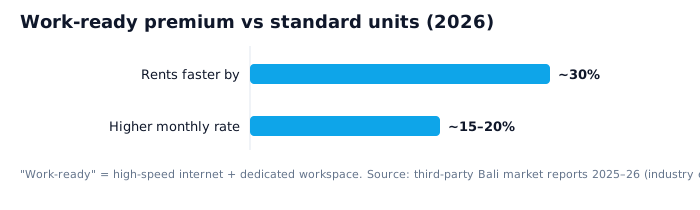
Market analyses and practitioner reports show the rise of remote work has moved Bali from a short-tourist-stay model toward a mixed long- and mid-term rental market. Remote workers, freelancers and flexible employees now lift demand for villas, serviced apartments and co-living with work-life-friendly amenities, while high-earning nomads push expansion in the luxury segment, privacy, wellness and productivity in one package. Three concrete implications for 2026 property performance:
| Shift | What it means for the asset | Effect on returns |
|---|---|---|
| Long-stay demand rises | 1-6 month and 12-month lets become viable in nomad hubs | Smoother occupancy; lower turnover cost |
| Work-ready units favoured* | Fast internet + dedicated workspace become table stakes | ~30% faster to rent; ~15-20% higher monthly rate* |
| Hybrid pricing | Blend nightly, weekly and monthly by season & area | Captures peak ADR + base-season stability |
| *Third-party Bali market reports (2025-26), carried from the original article; treat as industry estimates. See long-term vs short-term rental strategy for the underlying ADR/occupancy math. |
The takeaway: the nomad shift is really a shift from marketing to operations, the winning asset is configured for monthly work-stays, not just photogenic nightly bookings. See how the two models compare in our
Bali long-term vs short-term rental strategy 2026
and how data should drive the call in how to invest in Bali with data, not hype.
Where Bali digital nomads cluster, gross yield by area
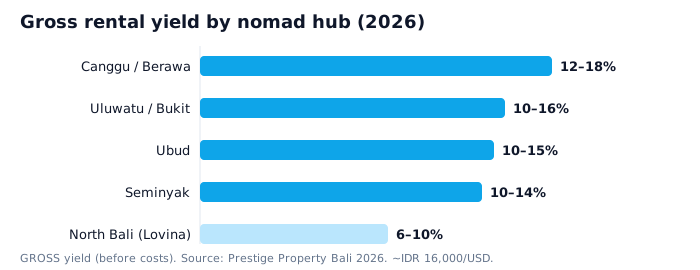
Nomads do not spread evenly, they concentrate in specific micro-markets with coworking density, café culture, surf or nature access and community. Matching asset type and stay length to each hub is the whole game:
| Area | Nomad profile | Land per m² | Gross yield |
|---|---|---|---|
| Canggu / Berawa | Social, surf-oriented; deepest year-round demand | ~$530-1,560 | 12-18% |
| Pererenan | Canggu’s quieter overflow; fast-rising | ~$530-1,560 (Canggu belt) | 12-18% |
| Ubud | Wellness & nature long-stayers; low volatility | ~$250-750 | 10-15% |
| Uluwatu / Bukit | Surf & views; fastest land appreciation | ~$310-940 | 10-16% |
| Sanur / Seminyak | Quieter, family-friendly / amenity-rich | Seminyak ~$900-1,900 | 10-14% |
| Yields are GROSS (before costs), from the canonical 2026 dataset; land per m² converted from per-are at ~IDR 16,000/USD. Sources: Prestige Property Bali 2026; Paradyse Homes 2026. |
Canggu/Berawa and Pererenan show the deepest, most consistent nomad demand, the reason they top the gross-yield table. Compare the two coasts in Canggu vs Uluwatu and see the full price map in best areas to buy property in Bali 2026.
What digital nomads want in a Bali property
Studies and market reports are remarkably consistent: for remote workers, productivity, community, lifestyle and well-being matter as much as price. The practical must-haves cluster into two groups, a reliable work setup and wellness amenities, and both carry pricing power:
| Category | Features nomads expect | Why it earns a premium |
|---|---|---|
| Work-ready | High-speed/redundant internet, dedicated workspace or home office, good lighting, ergonomic furniture, sound-proofing | Rents ~30% faster; ~15-20% higher monthly rate* |
| Wellness & community | Pool, yoga deck, small gym, gardens, nature/ocean views, walkable café & coworking access | Lifts perceived value; supports repeat bookings |
| Stay flexibility | Monthly-friendly terms, fast check-in, responsive (often AI-assisted) guest support | Wins the longer, lower-churn bookings |
| *Third-party market reports (2025-26). Wellness drivers corroborated by academic work on Bali wellness tourism and Tri Hita Karana value perception. |
Compliance note: monthly and short lets in Bali must be properly licensed, zoned and taxed. Before letting to nomads, confirm KBLI/NIB, hosting licence, zoning and local tax registration, see the licensing detail in our rental strategy guide and ownership structures in buying property in Bali as a foreigner.
Investment math: gross vs net yields
The nomad premium is real, but most “12-18% yield” figures you’ll see are gross, annual rent ÷ price, before costs. What you keep is the net yield, after management, tax, maintenance and vacancy. This gap is the single biggest source of disappointed Bali buyers:
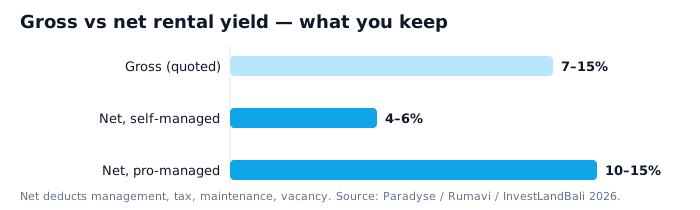
The good news for nomad-focused assets: long monthly stays cut the very costs that erode net yield, cleaning turnover, marketing churn and vacancy gaps. The gap between 4-6% and 10-15% net is operations: dynamic monthly/nightly pricing, OTA and long-stay distribution, and disciplined cost control. Model the holding side with our taxes & holding-costs guide and the full return build in our villa ROI guide.
See real 2026 numbers, not averages
Compare live pricing and projected net yields across Magnum Estate’s Berawa, Sanur and Uluwatu developments, built for the long-stay, work-from-anywhere guest.
View Magnum projects
Book a free consultation
Investor strategy: designing & positioning for digital nomads
The real question isn’t “are there nomads?” but “how do I structure my asset and operations around them?” Four practical moves:
1. Prioritise work-ready layouts
Include a real workroom or dedicated desk area with strong natural light, multiple sockets and ergonomic furniture, plus reliable high-bandwidth (ideally redundant) internet. Connectivity quality drives both satisfaction and review scores.
2. Align amenities with wellness and community
Gardens, pools, yoga decks, small gyms and walkable access to coworking and cafés lift perceived value and justify premium monthly pricing, corroborated by wellness-tourism research.
3. Choose the right neighbourhood
Canggu/Berawa and Pererenan for social/surf nomads; Ubud for wellness and nature; Uluwatu for surf and views; Sanur for quieter, family-friendly stays. Match asset type, stay length and pricing to each micro-market’s dominant guest.
4. Operate as a data-driven, flexible rental business
Blend nightly, weekly and monthly pricing with dynamic revenue management, and lean on professional, increasingly AI-assisted, management for bookings, messaging and support. See the operational playbook in our villa ROI guide.
Limitations & suitability
A nomad-focused strategy is not for everyone. It suits owners willing to run an active, service-led letting business (or pay a manager for it) in a true nomad hub. It is a weaker fit if you want fully passive income, own in a residential area with thin coworking/café density, cannot meet hosting licensing and zoning rules, or expect the headline 15-20% rate uplift on every property, that premium applies to genuinely work-ready, well-located units, not generic stock. Currency moves (IDR/USD), platform rule changes and licensing deadlines can all shift the math, so treat the figures here as indicative 2026 ranges, not guarantees.
Methodology & sources
Figures are indicative 2026 ranges. Market-context and yield figures (arrivals, occupancy, gross yield by area, land per m², gross-vs-net) are reconciled from the canonical 2026 dataset and converted at ~IDR 16,000/USD; land is stated per m² (from per-are data, 1 are = 100 m²). The “~30% faster” and “~15-20% higher monthly rate” figures are third-party market-report estimates carried from the original article, confirm against a named, dated source before relying on them. Gross yields are rent ÷ price before costs; net yields (4-6% self-managed, 10-15% professionally managed) deduct management, tax, maintenance and vacancy. Always commission independent appraisal and notary (PPAT) due diligence before buying or letting.
Conclusion
In 2026, the smart read on Bali digital nomads is operational, not hype: remote work is a structural demand pillar, and the assets that win are configured for monthly work-stays, fast internet, a real workspace, wellness amenities, in genuine hubs like Canggu/Berawa, Pererenan, Ubud and Uluwatu. Pair the right micro-market with disciplined, data-driven operations and the gross-to-net gap narrows in your favour.
Build for the work-from-anywhere guest
Explore Magnum Estate’s residences in Berawa, Sanur and Uluwatu, designed for long-stay nomads with transparent pricing and projected net yields, run day to day by the developer’s own property management.
Berawa
Uluwatu, Sky Stars
Sanur
FAQ: Bali digital nomads 2026
Why is Bali still popular with digital nomads in 2026?
Affordability, lifestyle, a deep expat community and a dense coworking-and-café ecosystem, with Canggu/Berawa and Ubud repeatedly named as top hubs. Academic work cites freedom, culture (Tri Hita Karana) and personal development as core motives.
How do Bali digital nomads affect villa ROI?
They lift mid- and long-term stay demand, smoothing seasonality. Work-ready units reportedly rent ~30% faster and command ~15-20% higher monthly rates*. That supports ~12-18% gross in Canggu/Berawa, but net is ~4-6% self-managed or ~10-15% professionally managed.
Which areas are best for nomad-oriented investment?
Canggu/Berawa and Pererenan for social/surf nomads; Ubud for wellness long-stayers; Uluwatu/Bukit for surf and views; Sanur and Seminyak for quieter, amenity-rich stays.
What features should my villa have for remote workers?
High-speed internet, a dedicated workspace/home office with good light and ergonomic furniture, a quiet environment, and wellness amenities (pool, yoga, gym, nature views).
Are digital nomads a fad or a long-term driver?
Research treats location-independent work as a long-term pattern, with Bali identified as a strategic, frequently preferred base. Plan for structural, not seasonal, demand.
What monthly rate can a work-ready villa achieve?
It varies by area and product, but third-party reports indicate ~15-20% more per month than comparable units lacking fast internet and a workspace, with the largest premium in Canggu/Berawa and Pererenan.
Do property taxes hurt nomad-rental returns?
Annual PBB is low (~0.1% of assessed value), but rental-income and transaction taxes apply, see our tax & holding-costs guide.
*Third-party market-report figures; treat as industry estimates pending a named, dated source.
References & official sources
- BPS, Statistics Indonesia / Bali: 2025 foreign arrivals (6,948,754, +9.72%), occupancy, bali.bps.go.id
- Bank Indonesia, Residential Property Price Index & FX: price-growth and IDR/USD reference, bi.go.id
- BKPM / Invest Indonesia: PT PMA & foreign-ownership rules for letting businesses, investindonesia.go.id
- DJP / Ministry of Finance: PBB, rental-income & local hospitality (PHR) taxes, pajak.go.id
- ATR/BPN: land titles & zoning for hosting/short-let use, atrbpn.go.id
- Market data (2026): Prestige Property Bali area/yield analysis; Paradyse Homes price-per-are study; InvestLandBali / Rumavi net-yield notes; third-party Bali digital-nomad market reports (work-ready uplift estimates).
- Academic context: sentiment analysis of digital nomads in Indonesia/Bali; nomad-migration motive mapping (2025); well-being / Tri Hita Karana & revisit-intention studies.
- Magnum Estate portfolio data (net yields by project).
About the author
Stanislav Sadovnikov is the founder of Magnum Estate (PT Magnum Estate International), an award-winning full-cycle Bali real estate developer with 8 projects and 575 units since 2019 (Berawa, Sanur, Umalas, Sky Stars, Sky Royal). He writes about Bali pricing, yields, ownership rules and regulation for international buyers.