





Written by Stanislav Sadovnikov, Founder, Magnum Estate ·
Reviewed by Magnum Estate legal & investment desk ·
Last updated 3 June 2026
"10-16% Gross yield, Uluwatu (Ubud 10-15%) · $250-900k Villa price (Ubud, Uluwatu ocean-view) · 70-85% Prime-area occupancy · 6.95M 2025 foreign arrivals (+9.7%)"
Key figures (2026)
Bali wellness retreat villas 2026: summary
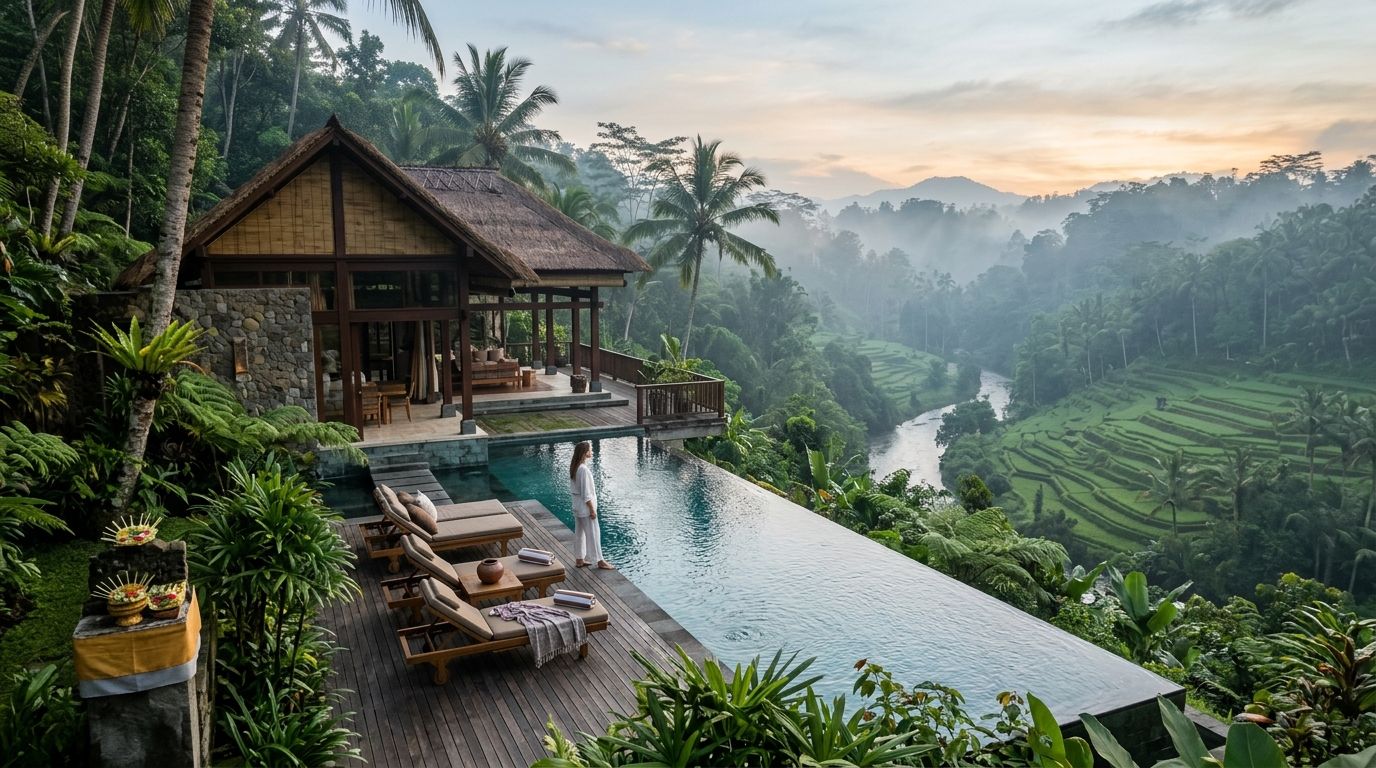
Bali wellness retreat villas 2026, the short answer: wellness has shifted from a poolside add-on to a primary reason travellers choose Bali, and villas designed around it tend to win on nightly rate, length of stay and year-round occupancy. The two strongest micro-markets are Ubud (yoga, meditation, long-stay) and Uluwatu/Bukit (cliff-top, ocean-view calm).
- Where: Ubud is the wellness & long-stay capital; Uluwatu/Bukit and Sanur add ocean-view calm.
- Gross yield: Ubud 10-15%, Uluwatu 10-16% gross (before costs).
- Net reality: ~4-6% self-managed, ~10-15% professionally managed, operations make the gap.
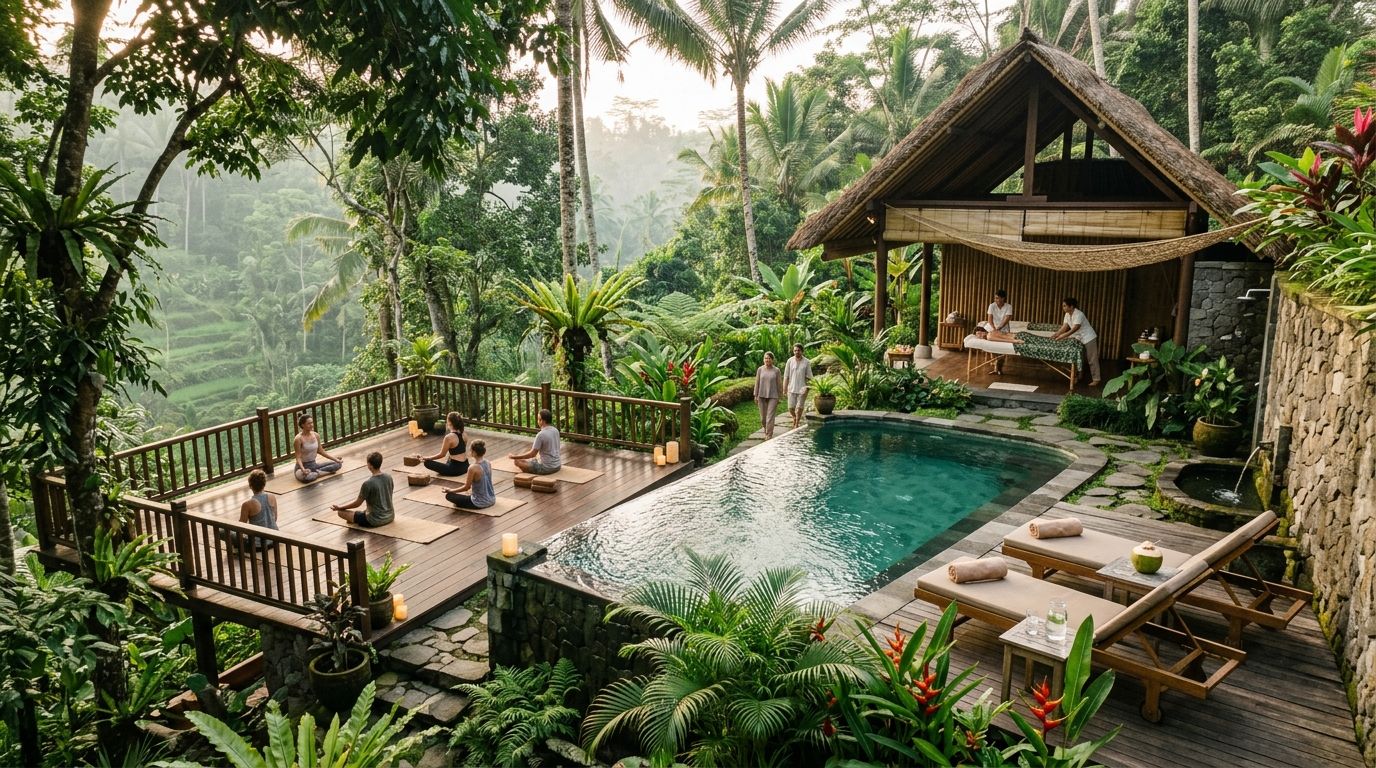
- Amenities that pay: yoga shala, meditation gazebo, spa, cold-plunge/ice bath, sauna, quiet gardens, designed in, not bolted on.
- Demand: Bali drew 6.95M foreign visitors in 2025 (+9.7% YoY); prime occupancy 70-85%.

"Transparency: Magnum Estate develops property in Bali, so we have a commercial interest. This guide is educational, not investment or legal advice, verify figures independently and consult a certified Indonesian notary (PPAT) and tax advisor before buying."
Transparency
This Bali wellness retreat villas 2026 guide reconciles tourism research and current market data into one investment thesis. Wellness is no longer a feature you add at the end of a build, for a large and growing share of visitors it is the reason they come to Bali at all. The practical consequence for owners is concrete: villas designed around health and recovery tend to attract longer stays, higher spend per guest and steadier occupancy than generic short-let stock. Below is where that demand concentrates, the amenities that actually drive rate, and the honest gross-versus-net yield map.
Why wellness demand is structural, not a fad
Global wellness travel has grown faster than tourism overall, with travellers willing to pay a premium for health, mindfulness and transformation-focused trips. Tourism-segmentation research on Bali describes “wellness-seeking” and “nature-seeking” responsible travellers as core, values-driven clusters, guests with stronger motivation and more responsible behaviour than the average visitor, and exactly the profile that books multi-day retreats and wellness villas. This sits on top of a deep demand base: Bali drew 6,948,754 foreign visitors in 2025, up 9.72% year-on-year. For investors, the takeaway is that wellness is a durable demand driver rather than a seasonal trend, see how it fits the wider picture in our best areas to buy in Bali 2026 guide.
Best areas for Bali wellness retreat villas 2026: Ubud & Uluwatu
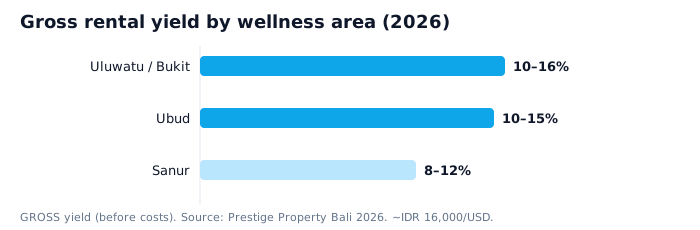
Two micro-markets anchor the wellness thesis. Ubud, and its fringe (Tegalalang, Sidemen, parts of East Bali), is the island’s meditative, jungle-and-rice-field capital for yoga, cleansing rituals and long stays, with low volatility and steady year-round demand. Uluwatu/Bukit adds cliff-top, ocean-view calm and the fastest land appreciation. Typical built, leasehold prices and gross yields:
| Area | Typical villa price | Gross yield | Wellness profile |
|---|---|---|---|
| Uluwatu / Bukit | $500-900k (3BR ocean view) | 10-16% | Cliff-top calm, ocean-view retreats; fastest land appreciation |
| Ubud | $250-500k | 10-15% | Yoga, meditation & long-stay; low volatility, year-round demand |
| Sanur | $300-700k | 8-12% | Calm beachfront, mature wellness & longer-stay guests |
| Built villa, leasehold, ~IDR 16,000/USD. GROSS yields (before costs). Source: Prestige Property Bali 2026; Bali Villa Realty / Paradyse 2026 for prices. |
The takeaway: Ubud buys more land per dollar and the deepest wellness brand; Uluwatu buys view-led premium and appreciation. Compare the two coasts in Canggu vs Uluwatu and read the Uluwatu & Bukit ROI strategy.
What makes a villa a wellness retreat asset (not just a pretty pool)
A wellness retreat asset is purpose-built around health and recovery, not a generic villa with a massage table added in a corner. Research on bamboo and natural materials in Bali interiors shows measurable positive psychological effects on occupants, especially in calm, hideout-style spaces. The amenities that consistently appear in high-performing retreat properties, and that justify premium nightly rates, are:
| Category | Amenities that drive rate & stays |
|---|---|
| Movement & mind | Yoga shala, meditation gazebo, walking paths, quiet communal lounges |
| Recovery | Spa/treatment rooms, cold-plunge or ice bath, sauna, hydrotherapy |
| Environment | Natural materials, cross-ventilation, acoustic control, shaded outdoor space, good light |
| Programming | Clear guest segment (yoga / fitness / detox / mindful surf), healthy F&B, hotel-grade management |
| Sources: Bali interior-design research on natural materials; 2026 wellness-resort market reports; Magnum Estate premium-construction approach. |
Build it in, don’t bolt it on: wellness facilities only earn their premium when paired with solid engineering and compliance. See how natural materials, light and acoustics are specified in our premium real estate in Bali 2026 article.
See wellness-led design in real projects
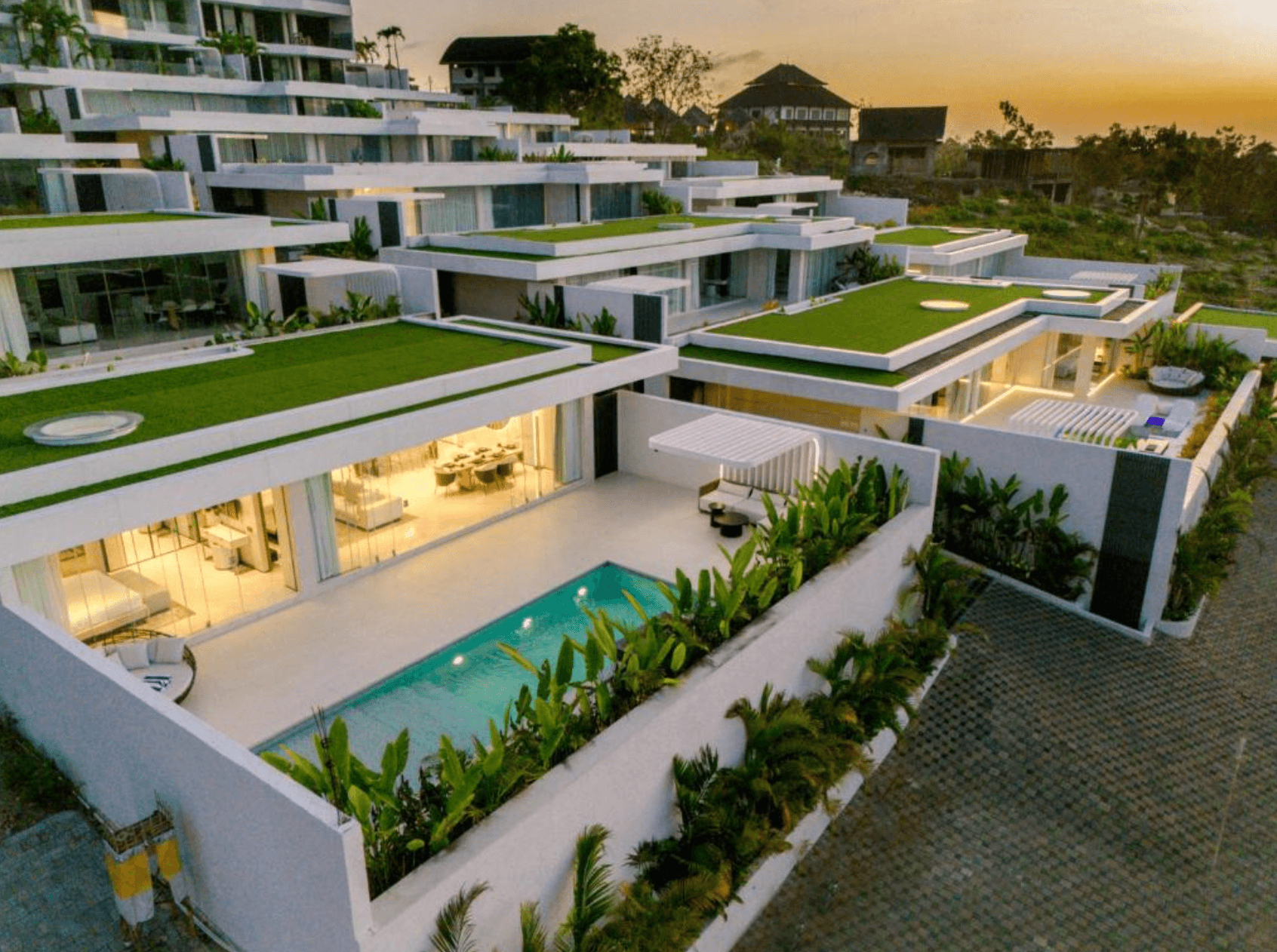
Explore how spa, fitness and nature integration are built into Magnum Estate’s Uluwatu, Berawa and Sanur developments.
View Magnum projects
Book a free consultation
Occupancy resilience, longer stays and higher spend
The investment edge of wellness is not only rate, it is resilience. Wellness guests book multi-day retreats and remote-work-plus-recovery stays rather than weekend party trips, which lengthens the average stay and smooths seasonality. Areas with strong wellness positioning, Ubud, Uluwatu/Bukit, Sanur and parts of East Bali, therefore support more stable year-round occupancy than pure nightlife zones. In prime areas, professionally managed villas run 70-85% occupancy (island-wide average closer to ~65%), and wellness positioning helps hold the upper end of that band through repeat guests and direct bookings.
| Driver | Generic short-let | Wellness retreat villa |
|---|---|---|
| Typical length of stay | Short (weekend / a few nights) | Multi-day retreats & long stays |
| Seasonality | Peaks & troughs | Smoother, year-round |
| Prime-area occupancy | Variable | Toward the upper 70-85% band |
| Booking source | Mostly OTAs | OTAs + repeat / direct (brand-led) |
| Occupancy ranges: BPS Bali / Prestige Property 2026 (prime 70-85%, island ~65%). Stay-length & booking patterns: 2026 wellness-tourism reports. |
Wellness villa yields: gross vs net
Most “8-15% yield” claims you’ll see are gross, annual rent ÷ price, before costs. What you actually keep is the net yield, after management, tax, maintenance and vacancy. For wellness villas this gap matters even more, because programming, F&B and hotel-grade service add operating cost:
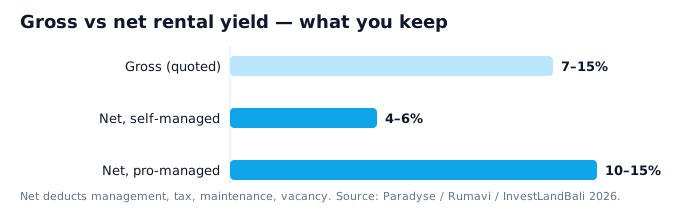
So the same Ubud or Uluwatu villa that shows a 10-16% gross headline realistically returns about 4-6% net self-managed or 10-15% net under professional management. The gap is operations: data-driven pricing, OTA distribution, a coherent wellness brand and disciplined cost control. Wellness-positioned assets in limited-supply, view-rich micro-locations tend to land toward the upper end of the net band thanks to better rate resilience and repeat guests.
The difference between 4-6% and 10-15% net is operations, not luck. Factor holding costs with our taxes & holding costs guide and stress-test occupancy and ADR over a full cycle with our real 10-year ROI insights.
Limitations & suitability
Wellness retreat villas are not for everyone. They are operationally heavier than a plain rental: programming, F&B and trained staff add cost and management complexity, so the self-managed net of ~4-6% is a realistic floor, not a worst case. Concept risk is real, a vague “wellness-ish” villa underperforms a clearly positioned one. Yields here are gross by area and net as a general range, not a guarantee for any single property; individual results depend on title, lease term, build quality, brand and operator. If you want a hands-off, low-touch hold, a simpler product in a deep-demand area may suit you better.
Methodology & sources
Figures are indicative 2026 ranges, reconciled across multiple market datasets and converted at ~IDR 16,000/USD. Villa prices are stated in USD (leasehold, built). Gross yields are rent ÷ price before costs, quoted by area (Ubud 10-15%, Uluwatu 10-16%, Sanur 8-12%); net yields deduct management, tax, maintenance and vacancy (~4-6% self-managed, ~10-15% professionally managed). Tourism and occupancy figures are from BPS Bali and 2026 market reports. Always commission an independent appraisal and notary (PPAT) due diligence before purchase.
Conclusion
In 2026, wellness is one of Bali’s most durable demand drivers, and it rewards precision over hype. Pick a clear guest segment, design the amenities (yoga shala, ice bath, sauna, spa, quiet gardens) in from day one, and anchor in a proven wellness micro-market: Ubud for long-stay depth, Uluwatu/Bukit for view-led premium. Then judge the deal on realistic net yield, not the gross headline, and verify title and zoning before you commit.
Ready to see the real numbers?
Explore Magnum Estate’s wellness-led, ocean-view residences in Uluwatu, Berawa and Sanur, transparent pricing and projected net yields.
Uluwatu, Sky Stars
Berawa
Sanur
FAQ: Bali wellness retreat villas 2026
Why are wellness retreat villas attractive investments in Bali in 2026?
Wellness tourism has grown faster than mainstream tourism and Bali is a global hub for yoga, spa and holistic retreats. Wellness-positioned villas tend to command premium nightly rates, attract longer stays and hold occupancy across the year, supporting more resilient returns.
Which Bali areas are best for wellness retreat villas?
Ubud is the established wellness and long-stay capital (yoga, meditation, healing); Uluwatu and the Bukit peninsula add cliff-top ocean-view calm; Sanur and parts of East Bali also support nature-led wellness stays.
What rental yield can a Bali wellness villa achieve?
Gross yields run ~10-15% in Ubud and ~10-16% in Uluwatu. Net is lower: ~4-6% self-managed or ~10-15% professionally managed, after fees, tax, maintenance and vacancy.
What amenities make a villa a wellness retreat asset?
Yoga shala, meditation gazebo, spa/treatment rooms, cold-plunge or ice bath, sauna, hydrotherapy, walking paths and quiet gardens, designed in from the start, on natural materials with good acoustics and cross-ventilation.
How much do wellness villas cost by area?
Built, leasehold: Ubud ~$250-500k; Uluwatu (ocean-view 3BR) ~$500-900k; Sanur ~$300-700k. Build cost adds ~USD 1,000-1,800/m² for investment-grade quality.
Is wellness a passing trend or a long-term demand driver?
Research describes wellness-seeking travellers as stable, values-driven segments motivated by health and transformation, not fashion, positioning wellness as a long-term structural driver, not a fad.
How can I see wellness-oriented projects in Bali?
Magnum Estate runs several amenity-rich villa and apartment projects where spa, fitness, nature integration and 5-star service are built into the concept.
References & official sources
- BPS, Statistics Indonesia / Bali: 2025 foreign arrivals (6,948,754, +9.72%), hotel occupancy, bali.bps.go.id
- Bank Indonesia, Residential Property Price Index: official price-growth & IDR/USD data, bi.go.id
- Kemenparekraf, Ministry of Tourism: tourism strategy & wellness positioning, kemenparekraf.go.id
- ATR/BPN: land titles, leasehold & zoning, atrbpn.go.id
- Wellness-tourism research: Global Wellness Institute wellness-travel growth; MDPI Bali ecotourism segmentation (wellness/nature clusters); JASTH typology of traditional-healing wellness tourism in Bali; Bali interior-design research on natural materials.
- Market data (2026): Prestige Property Bali area/yield analysis; Bali Villa Realty & Paradyse Homes price guides; Paradyse / Rumavi / InvestLandBali gross-vs-net yield analysis.
- Magnum Estate portfolio data (net yields by project).
About the author
Stanislav Sadovnikov is the founder of Magnum Estate (PT Magnum Estate International), an award-winning full-cycle Bali real estate developer with 8 projects and 575 units since 2019 (Berawa, Sanur, Umalas, Sky Stars, Sky Royal). He writes about Bali pricing, yields, ownership rules and regulation for international buyers.