





Written by Stanislav Sadovnikov, Founder, Magnum Estate ·
Reviewed by Magnum Estate legal & investment desk ·
Last updated 3 June 2026
"$1,000-1,800 Build cost per m² (investment-grade) · 12-24 mo Build timeline (permits to handover) · 4-6% / 10-15% Net yield: self- vs pro-managed · $250-1,900 Land per m² (Ubud, Seminyak)"
Key figures (2026)
Building vs buying villa in Bali 2026: summary
Building vs buying villa in Bali, the short answer: build if you can secure clean, well-zoned land and run a 12-24-month project; buy if you want speed, a proven rental history and lower execution risk. Building usually costs less per m² (construction ~USD 1,000-1,800/m² plus land), but the buy route turns into income in weeks, not years.
- Cost: building is cheaper per m²; buying bundles in the developer margin and a “going-concern” premium.
- Time: build = 12-24 months; buy = ready to rent in weeks.
- Risk: build carries permit, contractor and overrun risk; buy carries hidden-defect and legacy-design risk.
- Customization: build lets you design for today’s guest demand; buy means inheriting someone else’s layout.
- Returns: gross 10-18% in prime areas; net ~4-6% self-managed or ~10-15% pro-managed, either way.

"Transparency: Magnum Estate develops property in Bali, so we have a commercial interest. This guide is educational, not investment or legal advice, verify figures independently and consult a certified Indonesian notary (PPAT) and tax advisor before you build or buy."
Transparency
This building vs buying villa in Bali guide reconciles 2026 construction costs, land prices and rental yields into one decision map. By 2026 the question for serious investors is no longer just where to invest, but whether to build a villa from scratch or buy an existing one. Both routes can work; the right call depends on cost per m², time horizon, risk tolerance, how much customization you need, and the realistic net return, not the headline gross. Below is the full comparison, with the numbers and a framework to choose.
The 2026 big picture
Bali drew 6,948,754 foreign visitors in 2025, up 9.72% year-on-year, pushing prime-area villa occupancy to 70-85% (island-wide closer to ~65%). Land values appreciated roughly 15-30% over the past two years, and like-for-like prices are growing about 7-15% a year in strong micro-markets. That demand supports both strategies, but 2026 is a selective, regulation-heavy market. Building is no longer a casual side project, and buying any random “Instagram villa” is not enough either. Treat the villa as a 10-20-year asset, not a flip, and the build-vs-buy decision becomes a question of capital efficiency and risk, not taste.
The economics of building a villa in Bali
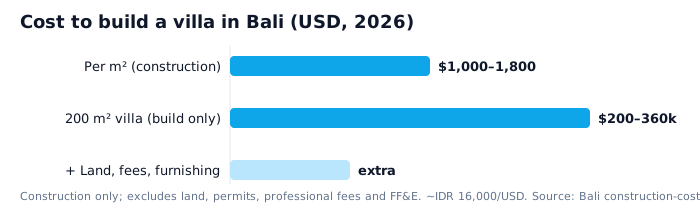
Updated construction-cost studies give clear 2026 benchmarks. For an investment-grade villa, budget ~USD 1,000-1,800 per m² for construction alone, premium materials and high-end finishes push toward the top of that band (a high-end build reported at ~IDR 22.9M/m² ≈ USD 1,443/m²). At ~IDR 16,000/USD, a 200 m² villa therefore costs roughly USD 200,000-360,000 to build, before land, professional fees, permits and furnishing. Land is the swing factor: see the per-m² ranges by area in our Bali property prices 2026 guide, and what is available in our Bali land for sale overview.
| Cost line | 2026 benchmark | Notes |
|---|---|---|
| Construction per m² | ~$1,000-1,800/m² | Investment-grade; premium finishes at the top end |
| 200 m² villa (build only) | ~$200k, 360k | Excludes land, fees, furnishing |
| Land per m² | $250-1,900 | By area, Ubud, Seminyak (see prices guide) |
| Permits & professional fees | varies | PKKPR, PBG, SLF, architect/engineer/QS, AMDAL/UKL-UPL |
| Timeline | 12-24 months | Add contingency for delays |
| Indicative 2026 ranges, ~IDR 16,000/USD. Build cost from Bali construction-cost studies; land per m² from the canonical Magnum price map. |
Academic feasibility studies on Bali villa projects (Seminyak, Canggu, Ubud) show well-planned developments can reach IRR around 19-20% with positive NPV and payback in about 6-9 years, but only when demand, costing and operations are realistic. In 2026, premium construction starts with compliance and engineering (zoning, PBG, SLF, AMDAL/UKL-UPL), not pool photos.
Ownership reality: foreigners cannot hold freehold (Hak Milik) directly. To build, you use leasehold (Hak Sewa) or a PT PMA holding building rights (HGB), which shapes both land cost and the structure of a construction contract. See
buying property in Bali as a foreigner
before signing anything.
When building makes sense
- You can access legally clean, well-zoned land at a rational price per m².
- You are prepared for 12-24 months of development, with a contingency budget and a vetted team.
- You want a bespoke product optimised for digital nomads, wellness and long stays.
The case for buying an existing villa
Buying, especially a villa with a proven rental history, is a different risk/return profile. You pay more per m², but you remove most of the execution risk.
Advantages
- Speed to income. You can start renting within weeks or months, assuming the licence and SLF are in place.
- Visible performance. You can audit historical occupancy, ADR, reviews and the real cost structure before you commit.
- Lower execution risk. No contractor failure, no cost overruns, no permit delays mid-project.
Trade-offs
- Higher price per m². You pay for land, structure, finishes and “going-concern” rental performance, sometimes at a premium.
- Legacy design. Older villas may need upgrades to layout, acoustics, waterproofing and work-from-home features to meet 2026 guest expectations.
- Hidden structural issues. 2026 checklists flag roof leaks, poor waterproofing, undersized septic systems and outdated electrics.
A middle path is off-plan: you buy into a developer’s build at pre-completion pricing, capturing some construction savings without managing the site yourself. Compare the trade-offs in our off-plan property in Bali guide.
Building vs buying villa in Bali: side by side
| Factor | Build | Buy (ready) | Off-plan (middle path) |
|---|---|---|---|
| Cost per m² | Lowest (~$1,000-1,800/m² build + land) | Highest (margin + going-concern) | Mid (pre-completion discount) |
| Time to income | 12-24 months | Weeks | Until handover |
| Execution risk | High (permits, contractor, overruns) | Low | Medium (developer delivery) |
| Customization | Full, design to guest demand | Inherited layout | Limited finishes/options |
| Performance visibility | Projected only | Documented history | Projected |
| Best for | Hands-on, land-secured, 10-20-yr hold | Remote / first-time, speed-focused | Discount + lower hassle |
| Indicative comparison for 2026. Net yields are similar across routes once stabilised; the differences are cost basis, timing and risk. |
The takeaway: building wins on cost-per-m² and control; buying wins on speed and certainty. The decisive variable is land, a rational, well-zoned plot makes building attractive, while a weak land deal erases the savings. Sanity-check land economics against our Bali property prices 2026 map and area comparison in Canggu vs Uluwatu.
See finished quality before you decide to build
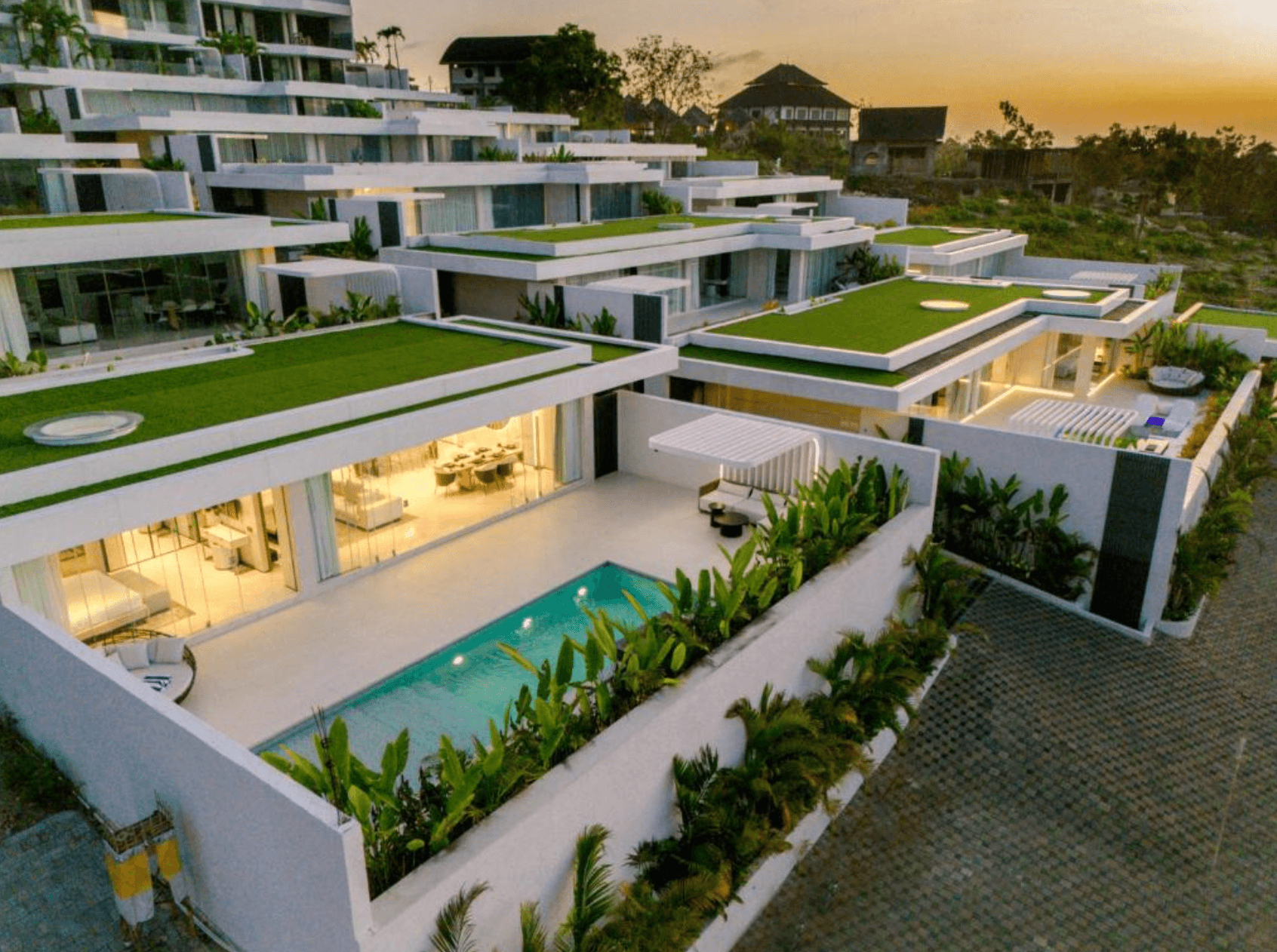
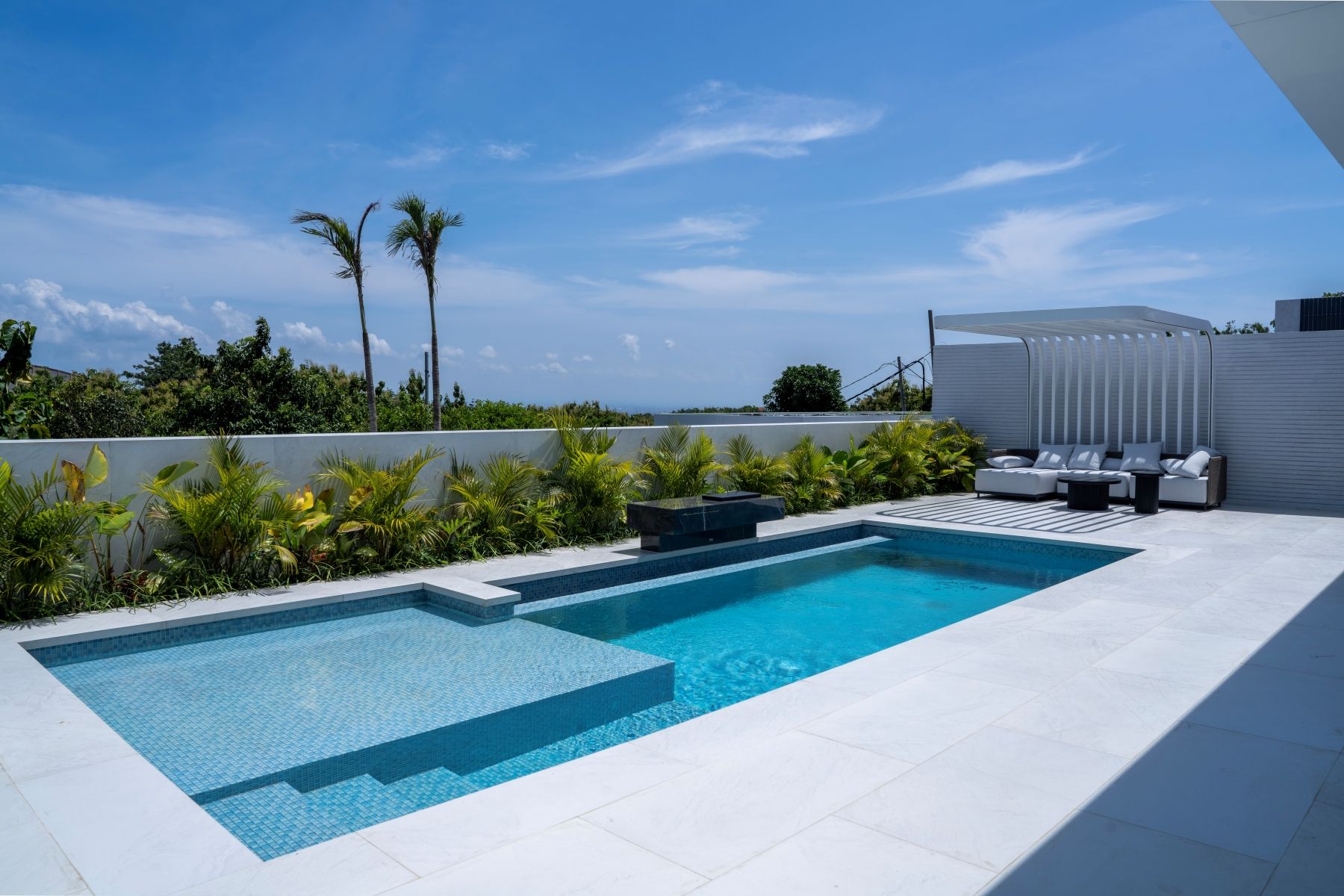
Tour Magnum Estate’s completed and off-plan residences in Berawa, Sanur and Uluwatu, real specs, real net-yield projections.
View Magnum projects
Book a free consultation
Returns: gross vs net (either way you go)
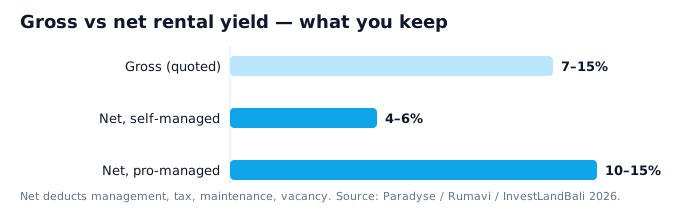
Whether you build or buy, the return that matters is net, not gross. Most “8-15% yield” claims are gross, annual rent ÷ price, before costs. What you actually keep is the net yield after management, tax, maintenance and vacancy: roughly 4-6% self-managed or 10-15% under professional management. Gross yields by area run highest in Canggu/Berawa (12-18%), then Uluwatu (10-16%), Ubud (10-15%) and Seminyak (10-14%). Building can lower your cost basis and lift the gross figure, but the gap between 4-6% and 10-15% net is operations, not the build-vs-buy decision.
The cost basis you set by building or buying is the denominator; operations are the numerator. Model both with our villa ROI guide and factor recurring costs with the
taxes & holding costs guide
(annual PBB is low, ~0.1% of assessed value).
Decision framework: building vs buying villa in Bali
Combining the construction economics with feasibility research gives a simple rule of thumb:
Choose to build if…
- You already have, or can secure, legally clean, well-zoned land with a strong micro-location.
- You can retain a reputable architect/engineer/contractor and run a 12-24-month project, including permitting (PKKPR, PBG, SLF).
- You want to maximise design fit for digital nomads, eco-luxury or wellness, targeting a 10-20-year hold.
Choose to buy if…
- You prioritise speed, simplicity and immediate cash flow, or you live abroad and cannot supervise construction.
- You can find a villa with solid performance data and clear compliance (zoning, PBG, SLF, rental licence).
- You are willing to invest in upgrades (workspaces, acoustics, ESG improvements) rather than build from scratch.
Limitations & suitability
This comparison uses indicative 2026 ranges; your real numbers depend on the specific plot, contractor and product. Building is not for everyone: if you cannot visit the site, cannot tolerate a 12-24-month timeline, or are buying mainly for lifestyle rather than a multi-year hold, the execution risk rarely justifies the per-m² saving, buy or go off-plan instead. Equally, buying a poorly documented “bargain” villa without a structural audit can cost more than a clean build. Neither route is a flip: Bali rewards patient, compliance-first capital.
Methodology & sources
Figures are indicative 2026 ranges, reconciled across market datasets and converted at ~IDR 16,000/USD. Build cost is stated per m² for construction only (excludes land, permits, fees and FF&E). Land prices are per m² (from per-are data, 1 are = 100 m²). Gross yields are rent ÷ price before costs; net yields deduct management, tax, maintenance and vacancy. IRR/payback figures are from third-party Bali villa feasibility studies and assume realistic demand and operations. Always commission an independent appraisal, structural audit and notary (PPAT) due diligence before you build or buy.
Conclusion
In 2026, the building vs buying villa in Bali decision comes down to land, time and temperament. Build when you have a clean, well-zoned plot, a vetted team and a 10-20-year horizon, you will set the lowest cost basis (~$1,000-1,800/m² plus land) and a product tuned to today’s guests. Buy (or go off-plan) when you value speed, proven performance and lower risk. Either way, judge the deal on realistic net yield, not the headline gross.
Ready to compare real numbers?
Explore Magnum Estate’s ocean-view residences in Uluwatu, Berawa and Sanur, transparent pricing and projected net yields, whether you build or buy.
Uluwatu, Sky Stars
Berawa
Sanur
FAQ: building vs buying villa in Bali 2026
Is it cheaper building vs buying a villa in Bali in 2026?
Per m², building is often cheaper: construction runs ~USD 1,000-1,800/m² plus land, while a ready villa includes the developer’s margin and a going-concern premium. But building adds permit, professional, finance and 12-24 months of time costs, so the total depends on land price and execution.
How long does it take to build a villa in Bali?
About 12-18 months for a standard villa and up to 24 months for complex projects, depending on permits, contractor capacity and design. Always add a contingency for delays.
What are the main risks of building as a foreign investor?
Mis-zoned land, delayed permits (PBG/SLF), contractor insolvency, cost overruns and structural/waterproofing defects. Foreigners use leasehold or a PT PMA (HGB), not freehold. Use strict land checks, milestone payments and independent supervision.
When is buying an existing villa the better choice?
When you value speed, proven performance and lower execution risk, or you live abroad. A compliant villa with documented rental history can generate income within weeks, not years.
What net yield can I expect either way?
Gross runs ~10-18% in prime areas; net is ~4-6% self-managed or ~10-15% professionally managed, after fees, tax, maintenance and vacancy, regardless of whether you built or bought.
Should I run feasibility numbers before deciding to build?
Yes. Model cash flow, NPV, IRR, payback and a sensitivity case. Bali villa studies cite IRR ~19-20% and payback ~6-9 years only when demand, costing and operations are realistic.
References & official sources
- BPS, Statistics Indonesia / Bali: 2025 foreign arrivals (6,948,754, +9.72%), occupancy, bali.bps.go.id
- Bank Indonesia, Residential Property Price Index: price-growth data & IDR/USD, bi.go.id
- DJP / Ministry of Finance: PBB & transaction taxes, pajak.go.id
- ATR/BPN: land titles (Hak Milik / Hak Pakai / HGB), zoning & permits, atrbpn.go.id
- Market & construction data (2026): Bali construction-cost studies (per-m² build cost); Paradyse Homes price-per-are study; Prestige Property Bali area/yield analysis; InvestLandBali market report; third-party Bali villa feasibility studies (IRR/NPV/payback).
- Magnum Estate portfolio data (build cost & net yields by project).
About the author
Stanislav Sadovnikov is the founder of Magnum Estate (PT Magnum Estate International), an award-winning full-cycle Bali real estate developer with 8 projects and 575 units since 2019 (Berawa, Sanur, Umalas, Sky Stars, Sky Royal). He writes about Bali pricing, yields, ownership rules and regulation for international buyers.