





Written by Stanislav Sadovnikov, Founder, Magnum Estate ·
Reviewed by Magnum Estate legal & investment desk ·
Last updated 3 June 2026
"12-18% Gross yield, Canggu/Berawa (highest prime) · $530-1,560 Central Canggu land per m² · $400-800k Typical built villa (leasehold) · 70-85% Prime occupancy (peak up to 85%)"
Key figures (2026)
Canggu real estate investment: summary
Canggu real estate investment, the short answer: Canggu and its sub-zones (Berawa, Pererenan, Batu Bolong, Seseh) carry the deepest year-round rental demand on the island, which is why gross yields here, about 12-18%, are the highest of any prime Bali zone. The catch is that you pay for that demand: central land runs USD 530-1,560/m² and built villas typically USD 400,000-800,000.
- Why demand holds: digital nomads, long-stay remote workers and lifestyle buyers, not just seasonal tourists.
- Highest yield: Canggu/Berawa 12-18% gross, but that’s before costs.
- Gross ≠ net: net yields are ~4-6% self-managed, ~10-15% professionally managed.
- Sub-zones: central Canggu/Berawa = premium & dense; Pererenan/Seseh = spillover, more land per dollar.
- Saturation risk: central Canggu is densifying and traffic-bound; the edge zones are where the growth runway sits.

"Transparency: Magnum Estate develops property in Bali, including in Berawa, so we have a commercial interest. This guide is educational, not investment or legal advice. Verify figures independently and consult a certified Indonesian notary (PPAT) and tax advisor before buying."
Transparency
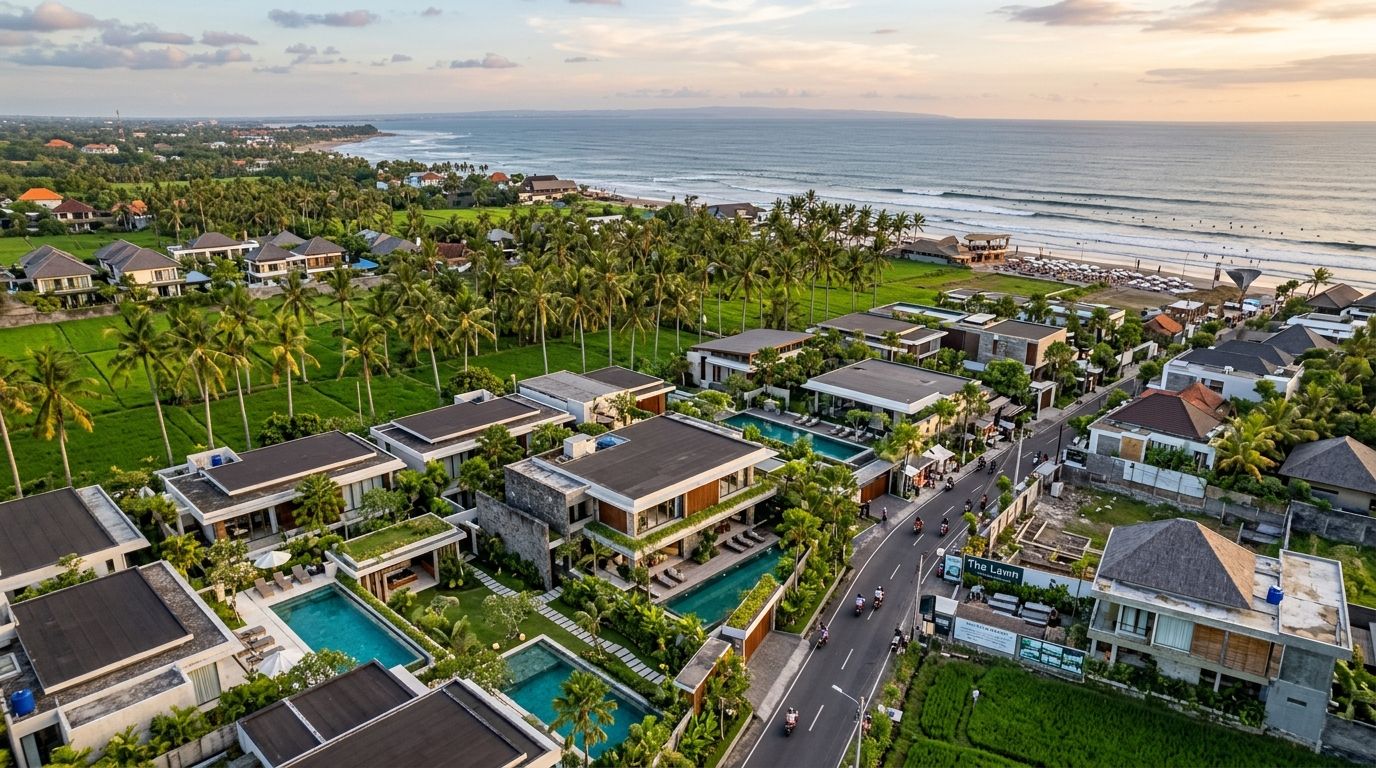
A serious Canggu real estate investment decision in 2026 turns on three numbers: how durable the rental demand is, what you pay per m² of land, and what the realistic net yield looks like once costs are taken out. Canggu has changed from a quiet surf village into Bali’s busiest expat-and-nomad hub, and that demand depth is exactly why it posts the island’s top gross yields, and its highest entry prices. Below is the full picture, sub-zone by sub-zone, using the same reconciled 2026 dataset (at ~IDR 16,000/USD) we apply across all Magnum guides.
Why demand for Canggu stays high
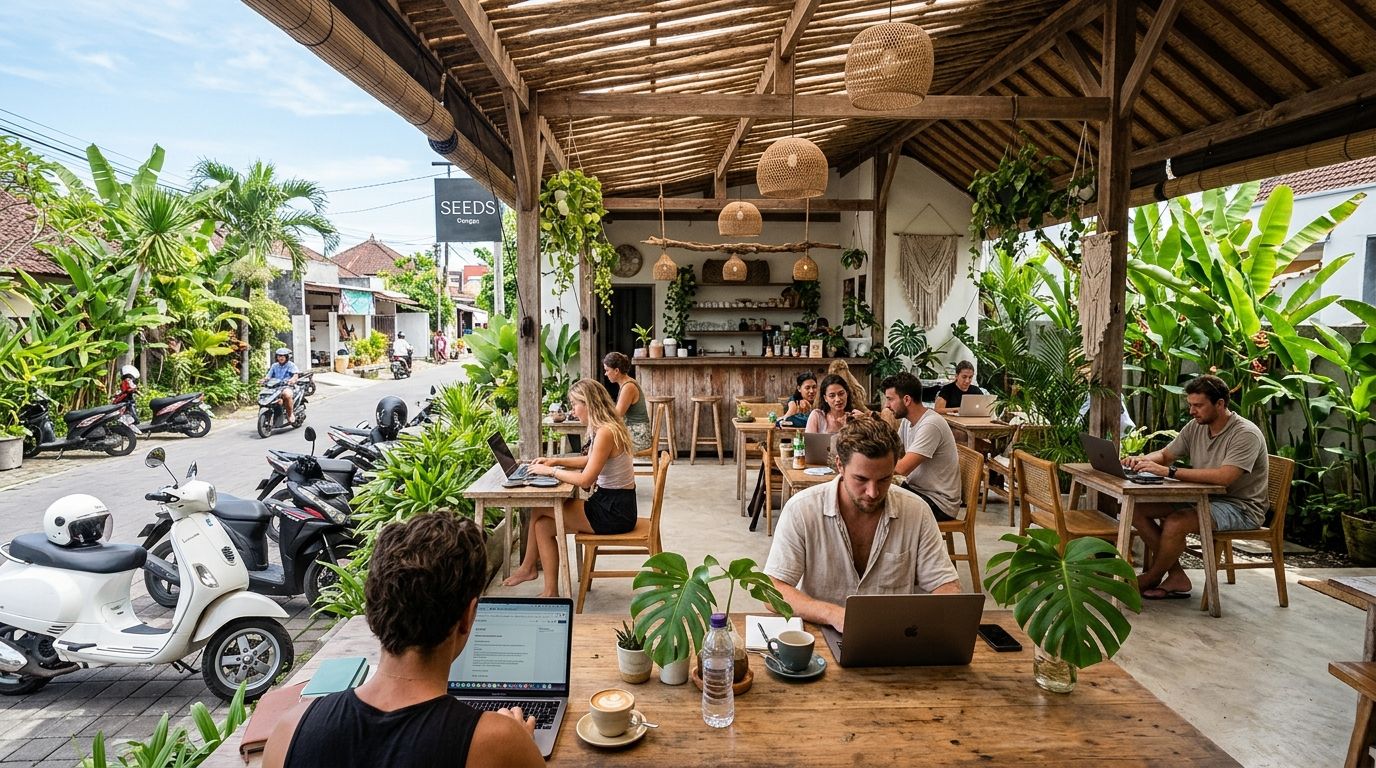
Canggu’s strength is the mix of who shows up, not just how many. The crowd skews toward digital nomads, start-up founders, long-stay remote workers and lifestyle buyers, who stay far longer than the average tourist, and that converts into more stable rental income than purely seasonal markets. Bali as a whole drew 6,948,754 foreign visitors in 2025, up 9.72% year-on-year, and Canggu captures an outsized share of the long-stay segment. Prime-area villa occupancy runs 70-85% (island-wide average closer to ~65%), and operators on the original Magnum reporting note Canggu peaks up to 85% in high season.
Three structural forces keep that demand from fading: year-round tourism (surfers, wellness retreats, events and a continuous nomad pipeline rather than one summer spike); steady infrastructure upgrades (wider roads, new commercial strips); and lifestyle pull, beach access, café culture, fitness and yoga communities, international schools and growing medical facilities that turn renters into eventual buyers.
The Canggu sub-zones: where the money actually is
“Canggu” is really a cluster of micro-markets, and a canggu real estate investment lives or dies on picking the right one. They are not interchangeable on price, density or growth runway:
| Sub-zone | Character | Investor angle |
|---|---|---|
| Berawa | Most established, beach clubs & retail; densest demand | Best occupancy & exit liquidity; premium entry price |
| Batu Bolong / Echo Beach | Core surf-and-café strip; very supply-constrained | Highest land cost, scarce plots, strong ADR |
| Pererenan | Quieter, fast-gentrifying spillover west of the river | Growth runway; more land per dollar than central Canggu |
| Seseh / Cemagi | Emerging coastal belt; lower density | Best value & appreciation upside; longer horizon |
| Sub-zone character per Magnum Estate area notes 2026; pricing follows the canonical Canggu land band below. |
The takeaway: central Berawa and Batu Bolong buy you demand depth and liquidity; Pererenan and Seseh buy you a growth runway at a lower entry. If you want the head-to-head against the other coast, read Canggu vs Uluwatu; for the island-wide ranking, see best areas to buy property in Bali 2026.
Land & villa prices in Canggu (2026)
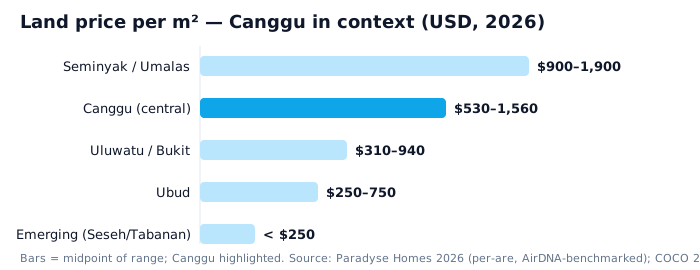
Land in Bali is quoted per are (100 m²); converted to per-m² at ~IDR 16,000/USD, central Canggu sits second only to Seminyak, supply-constrained and appreciating fast. Whole-villa prices follow the same logic but blur with product type. Typical built, leasehold figures for 2026:
| Metric (Canggu / Berawa) | 2026 figure | Notes |
|---|---|---|
| Central land per m² | ~$530-1,560 (IDR 1.2-2.5B/are) | 2nd-highest on the island, after Seminyak |
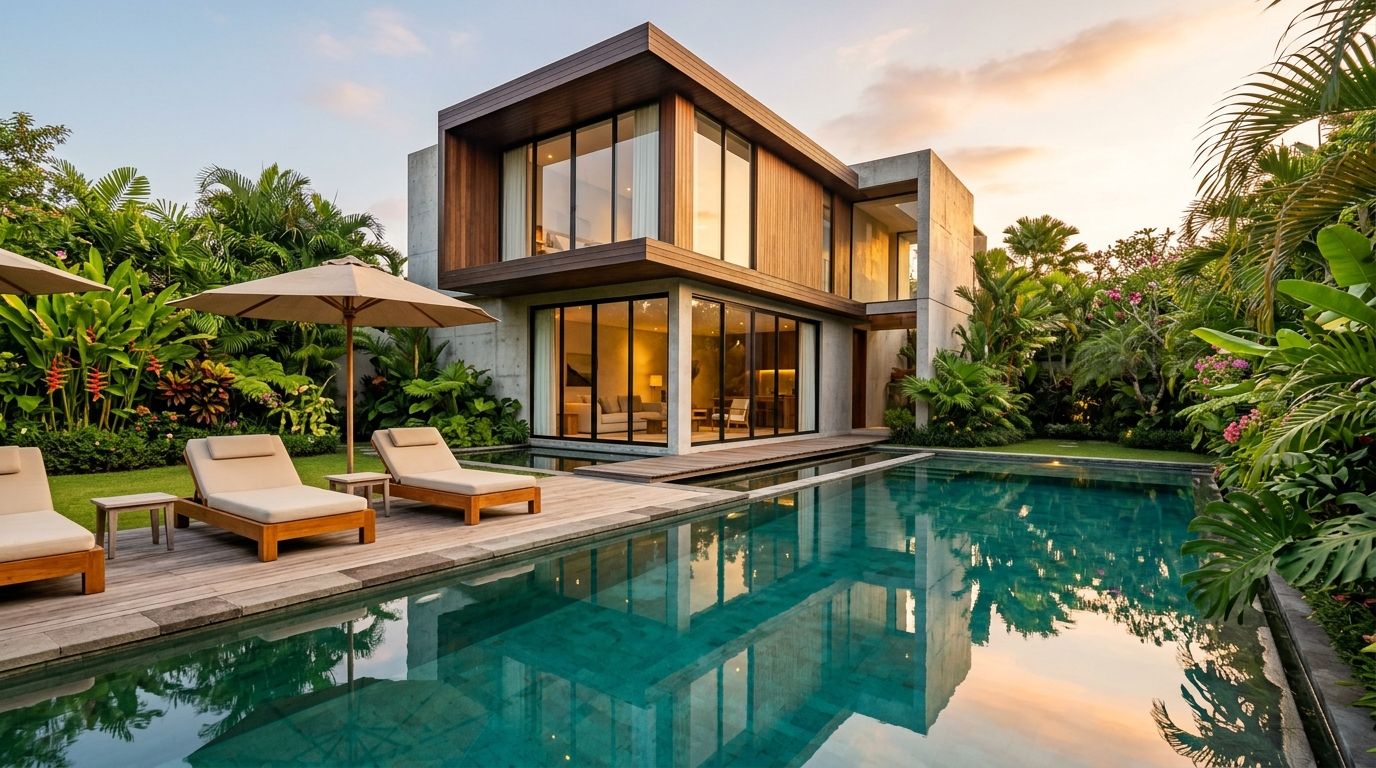
| Typical built villa (leasehold) | $400k, 800k | Most 2-3BR investor stock; deepest demand |
| Entry-level unit | from ~$73k | Off-plan / smaller units, per market listings |
| Build cost | ~$1,000-1,800/m² | Investment-grade finish |
| Gross yield | 12-18% | Highest of any prime Bali zone |
| Land & villa: Paradyse Homes 2026, Bali Villa Realty 2026, Prestige Property Bali 2026. Entry-price and peak-occupancy points from the original Magnum Canggu report. Island median villa ≈ $256-299k. |
Central Canggu land is roughly 2-3× the price of Uluwatu or Ubud land per m², so the same budget buys far less ground here. The bet you’re making is on demand depth, not on cheap land, which is why sub-zone selection (and a path to the beach) matters more in Canggu than almost anywhere. Cross-check the island-wide picture in our Bali property prices 2026 guide.
See real Berawa pricing, not averages
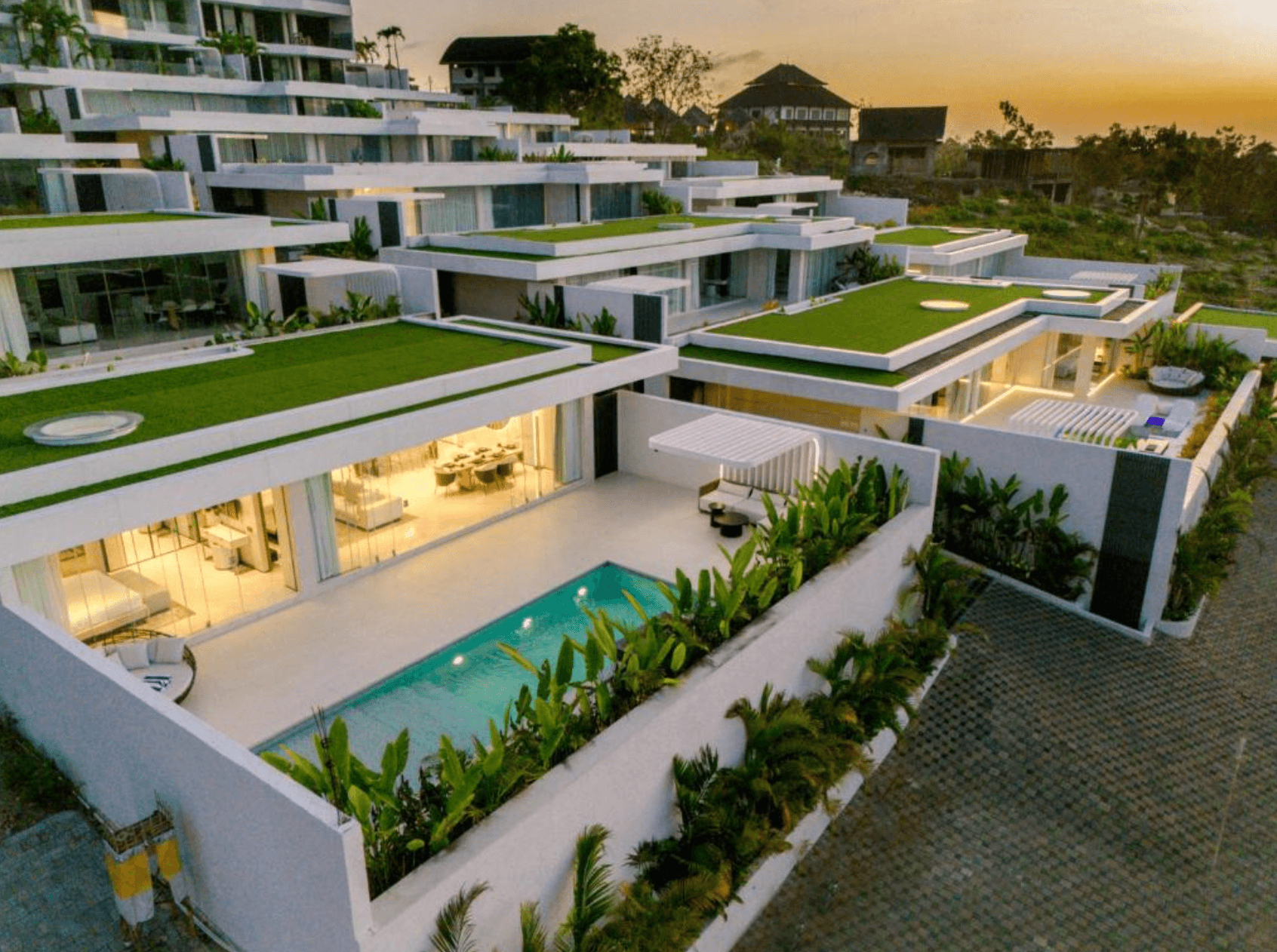
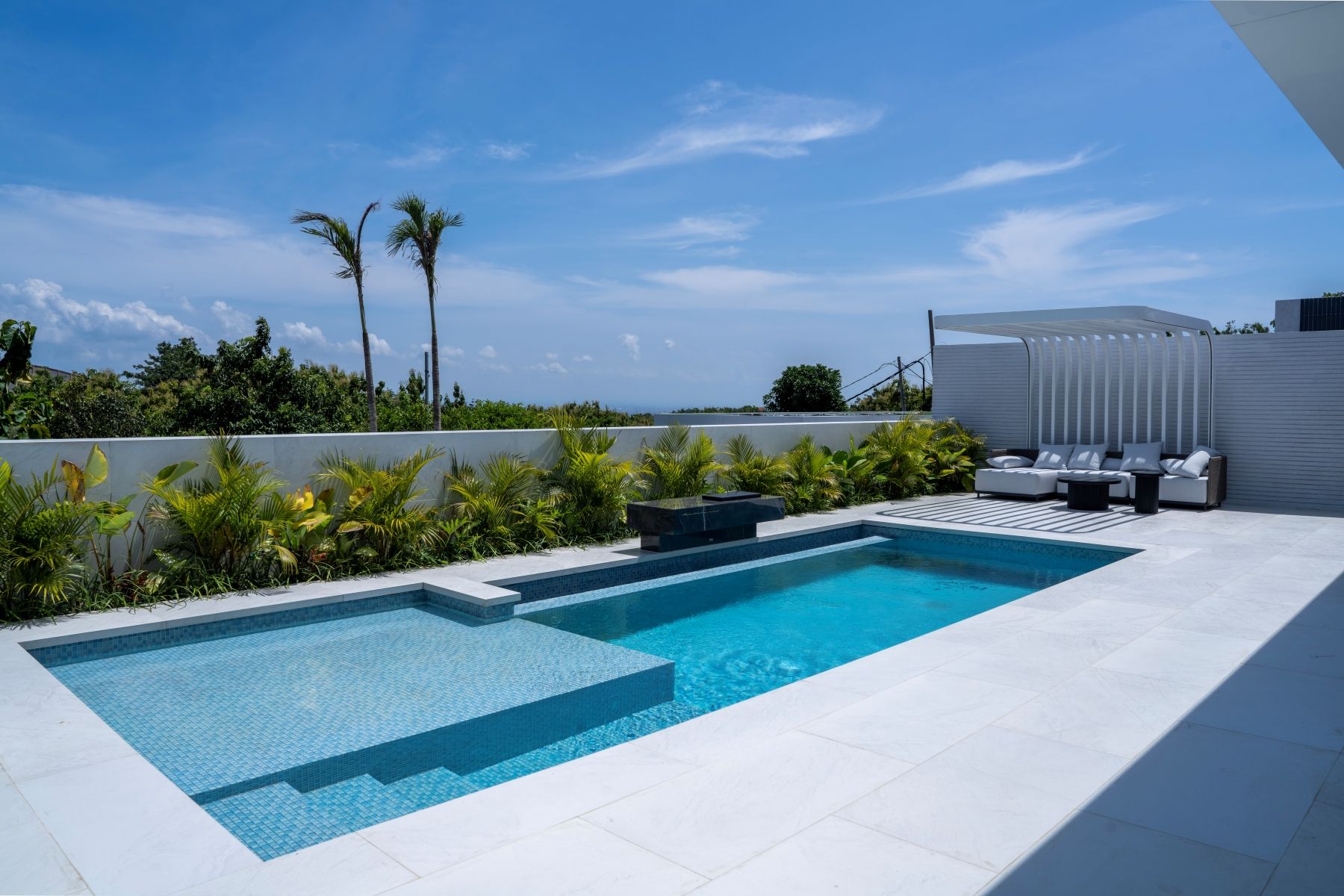
Compare live pricing and projected net yields at Magnum Estate’s Berawa development in the heart of Canggu.
View Berawa project
Book a free consultation
Canggu rental yields: gross vs net
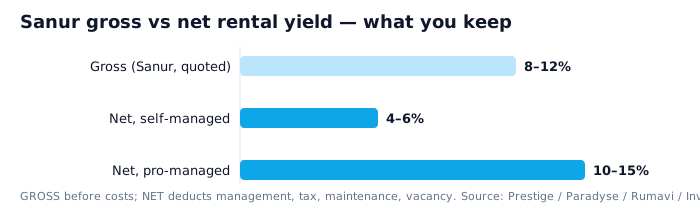
Canggu’s 12-18% headline is a gross figure, annual rent ÷ price, before costs. What you actually keep is the net yield, after management, tax, maintenance and vacancy. This gap is the single biggest source of disappointed Bali investors, and it applies fully in Canggu despite the strong top-line demand:
| Yield basis | Range | What it reflects |
|---|---|---|
| Gross (Canggu/Berawa, quoted) | 12-18% | Rent ÷ price, before any costs |
| Net, self-managed | 4-6% | After tax, maintenance, vacancy, no pro pricing/distribution |
| Net, professionally managed | 10-15% | Data-driven pricing, OTA distribution, cost control |
| Gross by area: Prestige Property Bali 2026. Gross-vs-net: Paradyse / Rumavi / InvestLandBali 2026. Net figures are island-wide bands, not Canggu-specific. |
The gap between 4-6% and 10-15% net is operations, not location. Even Canggu’s market-leading demand won’t rescue a poorly managed villa. Factor holding costs with our taxes & holding costs guide, and weigh the nightly-vs-monthly model in our long-term vs short-term rental strategy.
Saturation risk: is Canggu overbuilt?
This is the fair pushback on any Canggu real estate investment. Central Canggu and Berawa are densifying, traffic is a genuine constraint, and new supply has accelerated. But the demand side has so far kept pace in well-located pockets, visitor numbers keep rising and the long-stay segment keeps absorbing inventory. Markets cool when interest fades; Canggu’s has not.
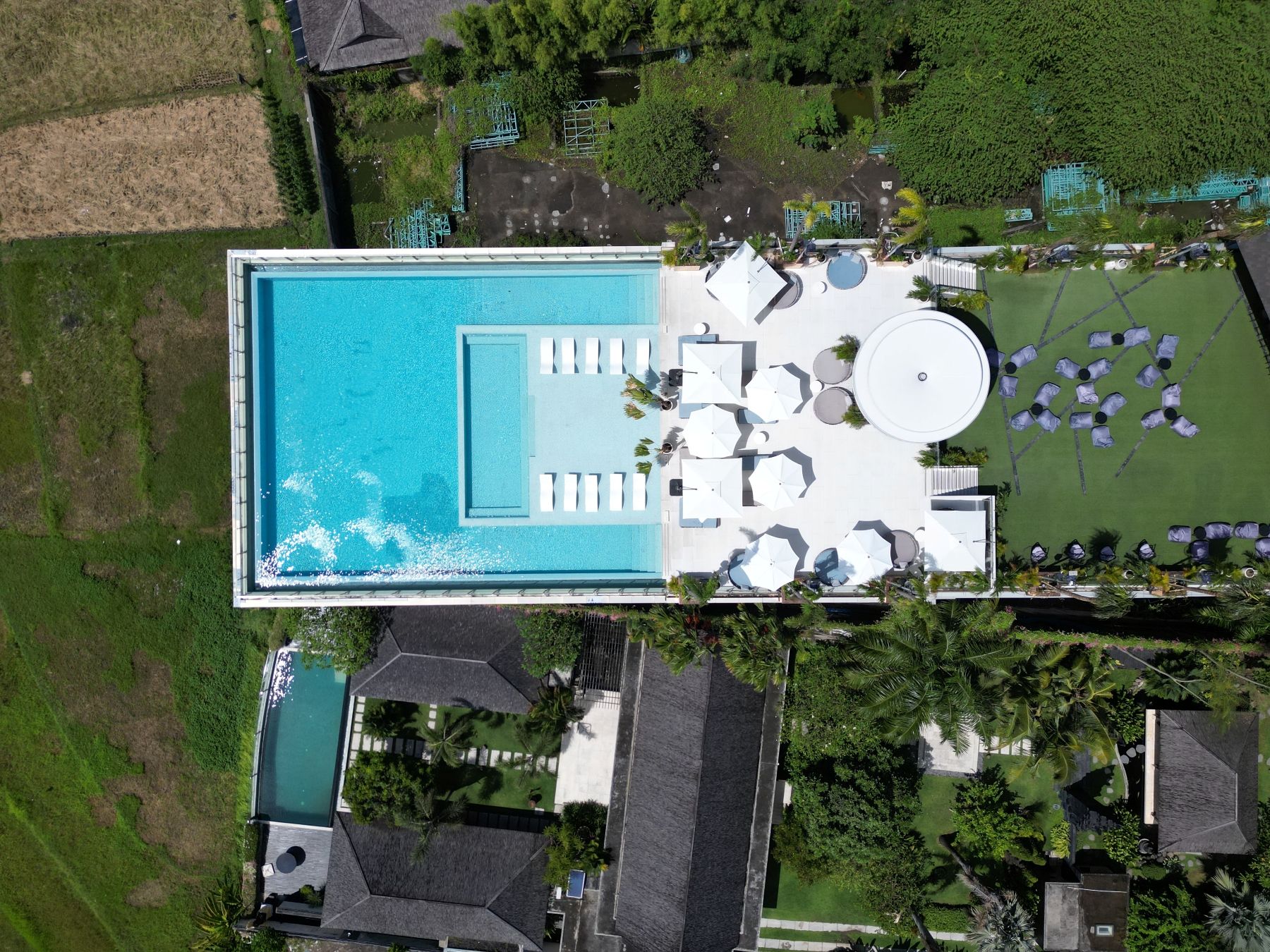
The practical hedge against saturation is geography. Spillover zones, Pererenan, Seseh and Cemagi, offer quieter settings, more land per dollar and appreciation upside while staying close to the central hubs. The risk is concentrated in second-row, no-beach-access central plots bought at peak pricing; the runway sits at the edges. Before committing, check zoning carefully: see how to choose land in Bali without zoning risk.
Who is buying in Canggu, and how
The buyer base keeps widening: international entrepreneurs, remote workers planning relocation, Bali-based expats expanding portfolios, and first-time overseas investors. Many combine personal use with rental income, which keeps demand active across price points.
Crucially, foreigners cannot hold freehold (Hak Milik) directly. Investment runs through a leasehold (Hak Sewa) or a PT PMA company holding Hak Guna Bangunan (HGB). The structure affects exit, financing and tax, so it is a first-order decision, not a footnote, start with how foreigners own property in Bali and the leasehold vs freehold vs PT PMA breakdown.
Methodology & sources
Figures are indicative 2026 ranges, reconciled across multiple market datasets and converted at ~IDR 16,000/USD. Land prices are stated per m² (from per-are data, 1 are = 100 m²). Individual parcels vary by road access, zoning, view, beach proximity and lease term. Gross yields are rent ÷ price before costs; net yields deduct management, tax, maintenance and vacancy, and the 4-6% / 10-15% net bands are island-wide, not Canggu-specific. Entry-price (~$73k) and peak-occupancy (up to 85%) points are preserved from the original Magnum Canggu report. Always commission an independent appraisal and notary (PPAT) due diligence before purchase.
Conclusion
A Canggu real estate investment in 2026 is a demand play, not a value play. You pay the island’s highest prime land prices ($530-1,560/m²) in exchange for its deepest, most diversified rental demand and the top gross yields (12-18%). The way to win is to be precise: pick the right sub-zone, central Berawa for liquidity, Pererenan or Seseh for growth, model the realistic net yield, verify the title structure and zoning, and lean on professional management to close the gap between gross and net.
Ready to see the real Canggu numbers?
Explore Magnum Estate’s Berawa residences in the heart of Canggu, plus our Sanur and Uluwatu projects, transparent pricing and projected net yields.
Canggu, Berawa
Uluwatu, Sky Stars
All Magnum projects
FAQ: Canggu real estate investment 2026
Is Canggu a good real estate investment in 2026?
For yield-focused buyers, yes. Canggu/Berawa carry the deepest year-round rental demand on the island and the highest prime gross yields (~12-18%). The trade-off is high entry prices and rising saturation, so sub-zone choice and management decide returns.
How much does property cost in Canggu in 2026?
Built leasehold villas in Canggu/Berawa typically run $400k, 800k, with entry units from ~$73k. Central land is ~$530-1,560/m²; Pererenan and Seseh sit lower.
What rental yield can a Canggu villa achieve?
Gross yields run ~12-18%. Net is lower: ~4-6% self-managed or ~10-15% professionally managed, after fees, tax, maintenance and vacancy.
Is the Canggu property market overcrowded?
Central Canggu is densifying and traffic-bound, but demand has kept pace in well-located pockets. Pererenan, Seseh and Cemagi offer quieter spillover with more land per dollar.
Can foreigners invest in Canggu real estate?
Yes, but not via direct freehold. Foreigners use a leasehold (Hak Sewa) or a PT PMA company holding HGB. Verify title and zoning with a certified Indonesian notary (PPAT).
Is Canggu better than Uluwatu for investment?
Canggu offers deeper year-round demand and higher gross yields; Uluwatu offers ocean-view premiums and faster land appreciation. See our Canggu vs Uluwatu comparison.
References & official sources
- BPS, Statistics Indonesia / Bali: 2025 foreign arrivals (6,948,754, +9.72%), occupancy, bali.bps.go.id
- Bank Indonesia, Residential Property Price Index: official price-growth data, bi.go.id
- DJP / Ministry of Finance: PBB & transaction taxes, pajak.go.id
- ATR/BPN: land titles, HGB & zoning, atrbpn.go.id
- Market data (2026): Bali Villa Realty price guide; Paradyse Homes price-per-are study (AirDNA-benchmarked); Prestige Property Bali area/yield analysis; InvestLandBali market report.
- Magnum Estate portfolio data (Canggu/Berawa net yields & occupancy).
About the author
Stanislav Sadovnikov is the founder of Magnum Estate (PT Magnum Estate International), an award-winning full-cycle Bali real estate developer with 8 projects and 575 units since 2019 (Berawa, Sanur, Umalas, Sky Stars, Sky Royal). He writes about Bali pricing, yields, ownership rules and regulation for international buyers.