





Written by Stanislav Sadovnikov, Founder, Magnum Estate ·
Reviewed by Magnum Estate legal & investment desk ·
Last updated 3 June 2026
"$530-1,560 Canggu land per m² vs $310-940 Uluwatu · 12-18% / 10-16% Gross yield: Canggu vs Uluwatu · 70-85% Prime-area occupancy (island ~65%) · 6.95M 2025 foreign arrivals (+9.7%)"
Key figures (2026)
Canggu vs Uluwatu: summary
Canggu vs Uluwatu, the short answer: choose Canggu/Berawa for steadier income (gross yield 12-18%, deepest year-round demand and the fastest resale), and choose Uluwatu for ocean-view exclusivity, larger plots and faster land appreciation (gross yield 10-16%). Central Canggu land costs more ($530-1,560/m²) than Uluwatu/Bukit ($310-940/m²), so Uluwatu buys more land per dollar but with a longer rental ramp. Both sit inside Bali’s broader 2026 demand surge, 6.95M foreign visitors (+9.7% YoY) pushing prime occupancy to 70-85%, and island-wide land values up 15-30% over two years. Canggu’s demand is broad and year-round; Uluwatu’s is more seasonal and view-driven, which is why Canggu resells faster while Uluwatu land compounds quicker. Built villas follow the same pattern: Canggu/Berawa runs $400-800k versus $500-900k for an ocean-view Uluwatu 3BR, with net yields on both settling at 4-6% self-managed or 10-15% managed. Lifestyle often decides the choice as much as returns: Canggu suits owners wanting a walkable, social, car-light base, while Uluwatu suits those prioritizing quiet, privacy and cliff-top views.
- Pricier land: central Canggu $530-1,560/m² > Uluwatu/Bukit $310-940/m².
- Higher yield: Canggu/Berawa 12-18% gross; Uluwatu 10-16% gross.
- Villa price: Canggu/Berawa $400-800k; Uluwatu ocean-view 3BR $500-900k (built, leasehold).
- Gross ≠ net: net is ~4-6% self-managed, ~10-15% professionally managed for both.
- Lifestyle: Canggu = walkable, social, car-light; Uluwatu = quiet, private, car-dependent.

"Transparency: Magnum Estate develops property in both Berawa (Canggu) and Uluwatu, so we have a commercial interest. This guide is educational, not investment or legal advice, verify figures independently and consult a certified Indonesian notary (PPAT) and tax advisor before buying."
Transparency
This Canggu vs Uluwatu guide reconciles 2026 market data into one side-by-side picture so you can match the right Bali coast to your goals. These are the island’s two most-compared beach areas, and the choice is rarely about scenery alone, it comes down to land price per m², realistic net yield, occupancy and the kind of buyer each area rewards. Below is the full head-to-head, with the same sourced numbers we use across our best areas to buy in Bali 2026 analysis.
The 2026 market in numbers
Bali drew 6,948,754 foreign visitors in 2025, up 9.72% year-on-year, pushing prime-area villa occupancy to 70-85% (island-wide average closer to ~65%). Land values across the island appreciated roughly 15-30% over the past two years, with like-for-like price growth closer to 7-15% a year in strong micro-markets. Both Canggu and Uluwatu sit in that prime band, but they behave differently: Canggu’s demand is broad and year-round, while Uluwatu’s is more view-driven and seasonal, the core of the Canggu vs Uluwatu trade-off.
Lifestyle: Canggu vs Uluwatu
Living in Canggu
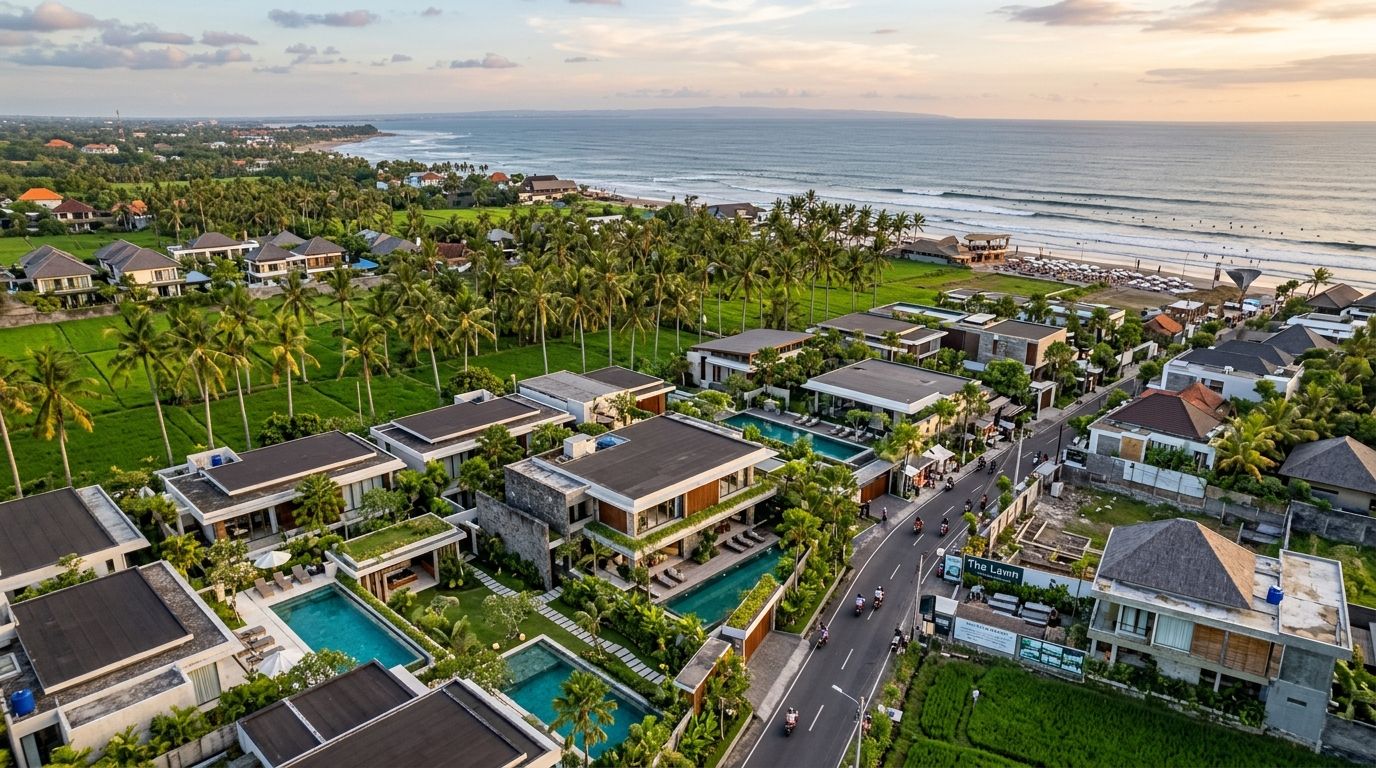
Canggu sits on Bali’s southwest coast and has gone from rice-field village to one of the island’s main residential hubs in roughly a decade. Daily life is walkable and social: cafes, gyms, wellness studios, supermarkets, clinics and international schools are mostly within reach without a long drive. It hosts Bali’s largest expat base, remote workers, founders, creatives and families, backed by the densest coworking and networking scene on the island. The trade-offs are real: peak-hour traffic, ongoing construction and a markedly more urban feel than the rest of Bali. Beaches feature dark volcanic sand and beginner-to-intermediate surf, with social beach clubs (such as FINNS) drawing daily crowds.
Living in Uluwatu
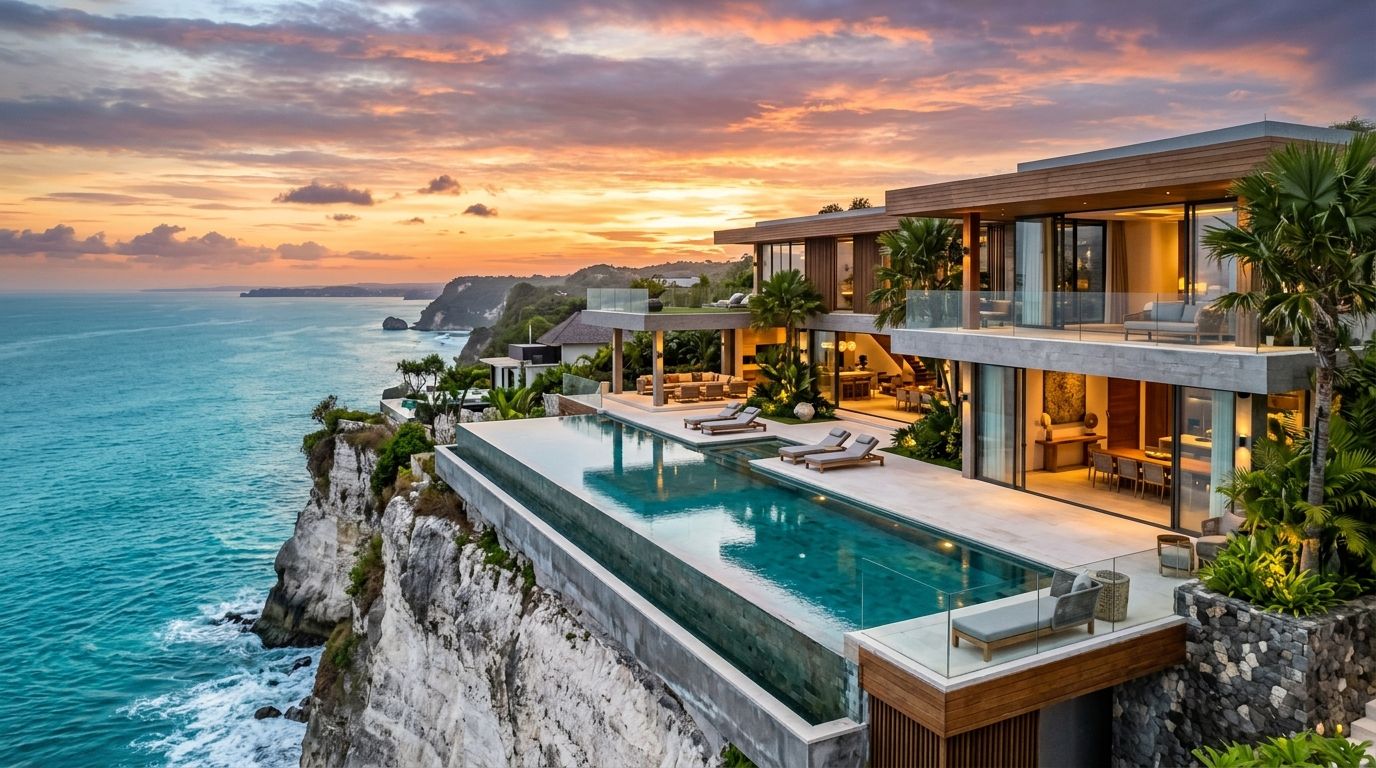
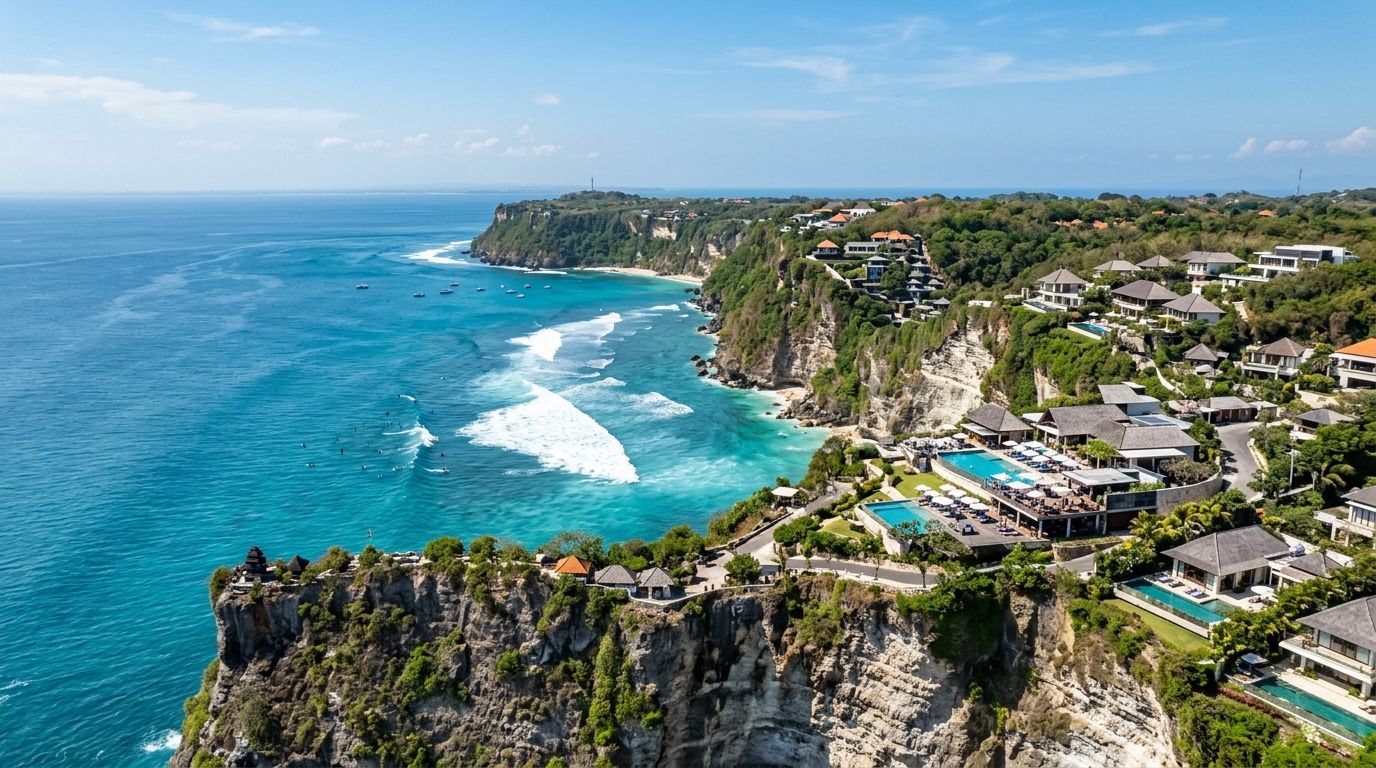
Uluwatu, on the Bukit Peninsula, feels the opposite: cliffs, wider ocean views, longer distances and a slower pace. Plots are larger, privacy is higher and shops are sparser, you need transport for most errands. The draw is dramatic scenery and a strong surf culture, with white-sand, cliff-backed beaches like Bingin, Padang Padang and Dreamland that attract surfers worldwide. Nightlife is smaller and more scattered; you drive between sunset lounges rather than walk. It rewards buyers who value space, calm and exclusivity over convenience.
The takeaway: Canggu wins on convenience, social energy and liquidity; Uluwatu wins on scenery, privacy and land per dollar. For where these two sit among all the island’s hotspots, see our best areas to buy property in Bali 2026 guide, and ground the numbers in Bali property prices 2026.
Land price per m²: Canggu vs Uluwatu (2026)
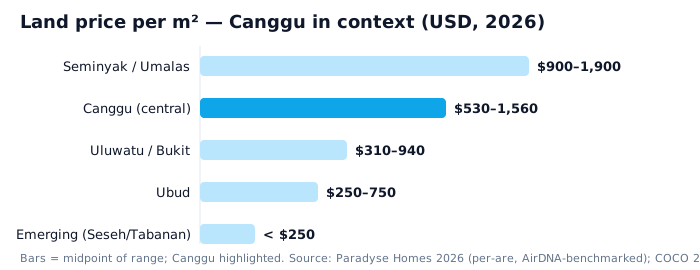
Land is quoted per are (100 m²) in Bali; converted to per-m² at ~IDR 16,000/USD, central Canggu commands a clear premium over Uluwatu. Canggu is supply-constrained and appreciating fast; Uluwatu has a broad entry range and more open land, but a longer path to peak rental performance.
| Area | Land price per m² | Per are (IDR) | Character |
|---|---|---|---|
| Canggu (central) | ~$530-1,560 | IDR 1.2-2.5B | Supply-constrained, fast appreciation |
| Uluwatu / Bukit | ~$310-940 | IDR 0.5-1.5B | Cliff-top premium; broad entry range |
| Source: Paradyse Homes 2026 (per-are, AirDNA-benchmarked) & COCO 2026. Within the island, both sit below Seminyak/Umalas ($900-1,900/m²) and above emerging belts (< $250/m²). |
Canggu side: see real Berawa numbers
Compare live pricing and projected yields at Magnum Estate’s Berawa (Canggu) development.
Berawa, Canggu
Book a free consultation
Villa prices & yields by area (2026)
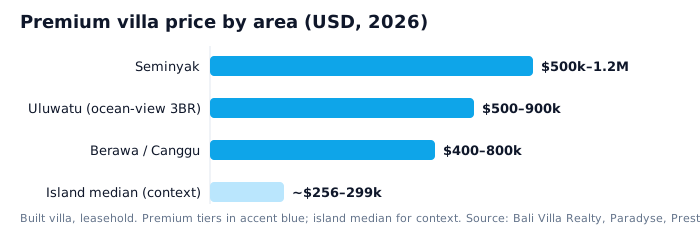
Whole-villa prices blur with product type, an ocean-view Uluwatu villa can exceed a Canggu entry villa even though Canggu land is dearer. Typical built, leasehold ranges and gross yields in 2026:
| Area | Typical villa price | Gross yield | Profile |
|---|---|---|---|
| Canggu / Berawa | $400-800k | 12-18% | Deepest rental demand, year-round; best resale liquidity |
| Uluwatu / Bukit | $500-900k (3BR ocean view) | 10-16% | Luxury views; fastest land appreciation; more seasonal |
| Build cost adds ~USD 1,000-1,800/m² for an investment-grade villa. Island median ≈ $256-299k; full range $60k, $6M. |
Rental yields: gross vs net
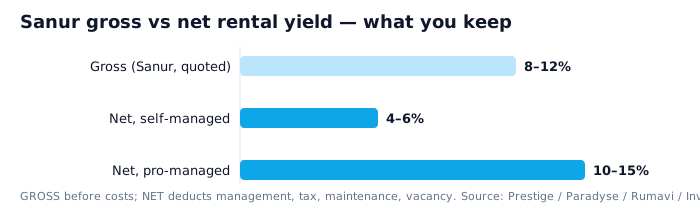
Most “10-18% yield” claims you’ll see for either area are gross, annual rent ÷ price, before costs. What you actually keep is the net yield, after management, tax, maintenance and vacancy. This gap is the single biggest source of disappointed Bali investors, and it applies equally to Canggu and Uluwatu:
The gap between 4-6% and 10-15% net is operations: data-driven pricing, OTA distribution and cost control, and Canggu’s deeper year-round demand makes that easier to sustain than Uluwatu’s seasonal cliffside market. Factor holding costs with our taxes & holding costs guide and see how management drives returns in our villa ROI guide.
Head-to-head: Canggu vs Uluwatu comparison
| Metric | Canggu / Berawa | Uluwatu / Bukit |
|---|---|---|
| Land price per m² | ~$530-1,560 | ~$310-940 |
| Typical villa price (built, leasehold) | $400-800k | $500-900k (3BR ocean view) |
| Gross yield | 12-18% | 10-16% |
| Prime occupancy | 70-85% (year-round) | 70-85% peak, more seasonal swing |
| Buyer profile | Income-focused; liquidity & year-round demand | Long-horizon; ocean-view exclusivity & land appreciation |
| Net yields for both areas: ~4-6% self-managed, ~10-15% professionally managed. USD at ~IDR 16,000/USD. Sources: Paradyse Homes, Bali Villa Realty, Prestige Property Bali, InvestLandBali 2026; BPS Bali (arrivals/occupancy). |
Before you buy in either area: foreigners cannot hold Hak Milik (freehold) directly, you’ll use Leasehold (Hak Sewa) or a PT PMA (HGB). Check title, zoning and lease term first; our
legal guide for foreign buyers
walks through the structure.
Limitations & suitability
These are indicative 2026 ranges, not appraisals, individual parcels and villas vary widely by road access, view, zoning and lease term. Canggu is likely the wrong fit if you want quiet, low-density living or are sensitive to traffic and construction. Uluwatu is likely the wrong fit if you need walkable amenities, a large day-one rental pipeline, or quick liquidity, since its market is more seasonal and car-dependent. Neither area is a guaranteed return: gross yields are not net, and prime pricing means downside risk if occupancy softens. Buyers chasing maximum land per dollar should also weigh emerging belts against both.
Methodology & sources
Figures are indicative 2026 ranges, reconciled across multiple market datasets and converted at ~IDR 16,000/USD. Land prices are stated per m² (from per-are data, 1 are = 100 m²). Gross yields are rent ÷ price before costs; net yields deduct management, tax, maintenance and vacancy and are kept separate throughout. Area figures are consistent with our Bali property prices 2026 dataset. Always commission an independent appraisal and notary (PPAT) due diligence before purchase.
Conclusion
In the Canggu vs Uluwatu decision there is no universal winner, only alignment with your goal. Pick Canggu/Berawa for income, liquidity and year-round demand; pick Uluwatu for ocean-view exclusivity, larger plots and longer-horizon land appreciation. Define your purpose first, income flow, part-time living, or long-term hold, then let the land price, realistic net yield and lifestyle fit decide.
Ready to compare the real numbers?
Explore Magnum Estate’s developments on both coasts, transparent pricing and projected net yields in Berawa (Canggu) and Uluwatu, or compare the current Canggu villas for sale with the Uluwatu villas for sale.
Canggu, Berawa
Uluwatu, Sky Stars
All Magnum projects
FAQ: Canggu vs Uluwatu
Canggu vs Uluwatu: which is better for property investment in 2026?
Canggu/Berawa is stronger for steady income (gross ~12-18%, deepest year-round demand); Uluwatu suits long-horizon buyers chasing ocean-view exclusivity and faster land appreciation (gross ~10-16%).
Which area has higher rental yields?
Canggu/Berawa typically delivers higher, more consistent gross yields (~12-18%) thanks to 70-85% prime occupancy year-round; Uluwatu runs ~10-16% gross with more seasonal swing. Net is ~4-6% self-managed or ~10-15% pro-managed for both.
Is land more expensive in Canggu or Uluwatu?
Central Canggu land is dearer (~$530-1,560/m²) than Uluwatu/Bukit (~$310-940/m²). Uluwatu buys more land per dollar but with a longer rental ramp.
What does a villa cost in Canggu vs Uluwatu?
Built, leasehold villas run ~$400-800k in Canggu/Berawa and ~$500-900k for an ocean-view 3BR in Uluwatu. The Bali island median is ~$256-299k.
Which area is better for digital nomads and daily living?
Canggu, largest expat base, most coworking, walkable cafes and easier access to Seminyak, Kuta and Ubud. Uluwatu is quieter, more private and car-dependent.
Is Uluwatu safer from overdevelopment than Canggu?
Uluwatu still has more open land and lower density, but development is rising there too, factor future supply into any long-hold thesis.
References & official sources
- BPS, Statistics Indonesia / Bali: 2025 foreign arrivals (6,948,754, +9.72%), occupancy, bali.bps.go.id
- Bank Indonesia, Residential Property Price Index: official price-growth data & IDR/USD, bi.go.id
- DJP / Ministry of Finance: PBB & transaction taxes, pajak.go.id
- ATR/BPN: land titles (Hak Sewa, HGB) & zoning, atrbpn.go.id
- Market data (2026): Bali Villa Realty price guide; Paradyse Homes price-per-are study; Prestige Property Bali area/yield analysis; InvestLandBali market report.
- Magnum Estate portfolio data (net yields by project, Berawa & Uluwatu).
About the author
Stanislav Sadovnikov is the founder of Magnum Estate (PT Magnum Estate International), an award-winning full-cycle Bali real estate developer with 8 projects and 575 units since 2019 (Berawa, Sanur, Umalas, Sky Stars, Sky Royal). He writes about Bali pricing, yields, ownership rules and regulation for international buyers.