





Written by Stanislav Sadovnikov, Founder, Magnum Estate ·
Reviewed by Magnum Estate legal & investment desk ·
Last updated 3 June 2026
"$250-1,900 Land per m² (emerging, Seminyak) · 25-30 yr Typical leasehold term (+ extension) · PKKPR, PBG Zoning then building permit · 6.95M 2025 foreign arrivals (+9.7%)"
Key figures (2026)
Bali land for sale 2026: summary
Bali land for sale 2026, the short answer: the value is not in the cheapest price per are, but in land that is legally clean, correctly zoned, and in a growth corridor. Foreigners cannot own freehold (Hak Milik); the safe routes are a notarised leasehold (Hak Sewa)
or HGB/Hak Pakai via a PT PMA. Land runs from under USD 250/m² in emerging areas to USD 900-1,900/m² in Seminyak.
- Verify title first: SHM or SHGB certificate, owner name matched against BPN records, never rely on old pipil letters.
- Zoning is the filter: Yellow/Orange/Tourism zones allow building; Green (agricultural) and Conservation zones do not, the green-zone trap.
- Permits in order: PKKPR zoning approval, then a PBG building permit, before any serious development.
- Foreign ownership: leasehold (typically 25-30 years) or HGB through a PT PMA. Nominee deals are illegal and unenforceable.
- Price by area: Seminyak > central Canggu > Uluwatu > Ubud > emerging (Tabanan, Seseh, North Bali).

"Transparency: Magnum Estate develops property in Bali, so we have a commercial interest. This guide is educational, not investment or legal advice, verify figures and titles independently and consult a certified Indonesian notary (PPAT) and an independent land lawyer before buying. Land law and zoning are governed by Indonesian authorities (ATR/BPN, BKPM); see the official sources below."
Transparency
This Bali land for sale 2026 guide is about buying land safely, not just cheaply. By 2026 the market is more mature and far more regulated: Indonesian authorities have tightened land registration and zoning enforcement, so the gap between “cheap but risky” plots and properly documented, investment-grade land is wider than ever. Below is the buyer’s path, title checks, zoning, permits, the right legal structure for foreigners, and what land actually costs per m² by area.
The 2026 land market in numbers
Demand stays strong across the south (Canggu, Berawa, Uluwatu, Nusa Dua) and is rising in emerging belts (Medewi, North Bali, the west coast). Tourism underpins it: Bali drew 6,948,754 foreign visitors in 2025, up 9.72% year-on-year. Land values across the island appreciated roughly 15-30% over the past two years, with like-for-like growth nearer 7-15% a year in strong micro-markets. At the same time, programmes such as Complete Systematic Land Registration (PTSL) have pushed more plots into formal documentation, good news for buyers who insist on certificates over informal papers. The practical effect: legal cleanliness, zoning and location now drive value more than headline price per are.
Step 1: verify the title and certificate
Before anything else, confirm what is being sold and who can legally sell it. A legitimate plot has a valid land certificate, typically SHM (Hak Milik / freehold) or SHGB (Hak Guna Bangunan / Right to Build), and the seller’s name must match official BPN (National Land Agency) records exactly. Old pipil or girik documents are weak proof of ownership without updated registration and should never stand alone.
| Certificate | What it is | Who can hold it | Buyer note |
|---|---|---|---|
| SHM (Hak Milik) | Freehold, strongest title | Indonesian citizens only | Foreigners cannot hold directly, lease it or convert via PT PMA |
| SHGB (Hak Guna Bangunan) | Right to Build, 30 yrs + extensions | Indonesians & PT PMA | Standard route for foreign-company ownership |
| Hak Pakai | Right to Use | Foreign individuals & PT PMA | Used for personal/residential use rights |
| Pipil / girik | Old tax/customary letters | , | Not a certificate, insist on registration first |
| Source: ATR/BPN land-title framework; Indonesian Agrarian Law No. 5/1960. Always cross-check against BPN records via a PPAT. |
Legal: the title check is non-negotiable. Engage a licensed notary (PPAT) and an independent lawyer to verify the certificate against BPN records, confirm boundaries and check for encumbrances. For the foreigner-ownership rules in full, see our legal guide to buying property in Bali as a foreigner.
Step 2: zoning and the green-zone trap
Zoning is the first and most important filter, it decides whether you can legally build at all. Bali land is categorised into clear zones, each with different development rights. The classic mistake is buying cheap Green Zone land marketed for villas: building non-agricultural structures there is prohibited and increasingly enforced.
| Zone | Local name | Can you build? | Typical use |
|---|---|---|---|
| Yellow (Residential) | Zona Kuning | Yes, safest for villas/houses | Residential homes & villas |
| Orange (Mixed / higher density) | Zona Oranye | Yes, denser | Mixed-use, small apartments, shophouses |
| Tourism / Commercial | Pariwisata | Yes, hospitality | Hotels, resorts, beach clubs, commercial |
| Green (Agricultural) | Zona Hijau | No, farming/conservation only | Rice fields, agriculture, the green-zone trap |
| Conservation | Konservasi | No, strictly protected | Natural/cultural protection |
| Source: ATR/BPN spatial planning (RTRW/RDTR). Confirm the exact zone of a specific parcel via PKKPR, never the seller’s word. |
The takeaway: if a listing pitches Bali land for sale 2026 in a green or conservation zone as “suitable for villas,” walk away. The cheapest plots are often cheap precisely because they cannot legally be developed. Sense-check the location against the area picture in best areas to buy property in Bali 2026.
Step 3: PKKPR and PBG permits
Once title and zone are clear, two approvals stand between you and construction. First, the PKKPR (Persetujuan Kesesuaian Kegiatan Pemanfaatan Ruang), an official zoning approval confirming permitted use, how much of the plot may be covered, and which activities are allowed. It is more authoritative than the old ITR letters. Only after PKKPR do you apply for the PBG (Persetujuan Bangunan Gedung) building permit, which replaced the former IMB. Serious development cannot begin without both. Budget time for these and make the purchase conditional on a satisfactory zoning confirmation wherever possible.
Leasehold vs HGB for land: the foreigner’s choice
Under Indonesian Agrarian Law, only Indonesian citizens can hold freehold (Hak Milik). Foreigners buying Bali land for sale 2026 therefore use one of two structures, and the right one depends on scale and exit plans.
| Leasehold (Hak Sewa) | HGB via PT PMA | |
|---|---|---|
| Term | Typically 25-30 yrs + extension options | HGB 30 yrs, renewable; Hak Pakai also available |
| Setup | Notarised lease attached to the certificate | Foreign-owned company + land registration |
| Best for | Single villa, personal use, simplest path | Larger projects, resorts, resale flexibility |
| Cost / overhead | Lower; no company to maintain | Higher; company tax & reporting |
| Key risk | Extension terms must be defined up front | Compliance with BKPM/PT PMA rules |
| Source: Indonesian Agrarian Law No. 5/1960; BKPM/Invest Indonesia foreign-investment rules. Nominee arrangements (an Indonesian holding freehold “for you”) are illegal and unenforceable in court. |
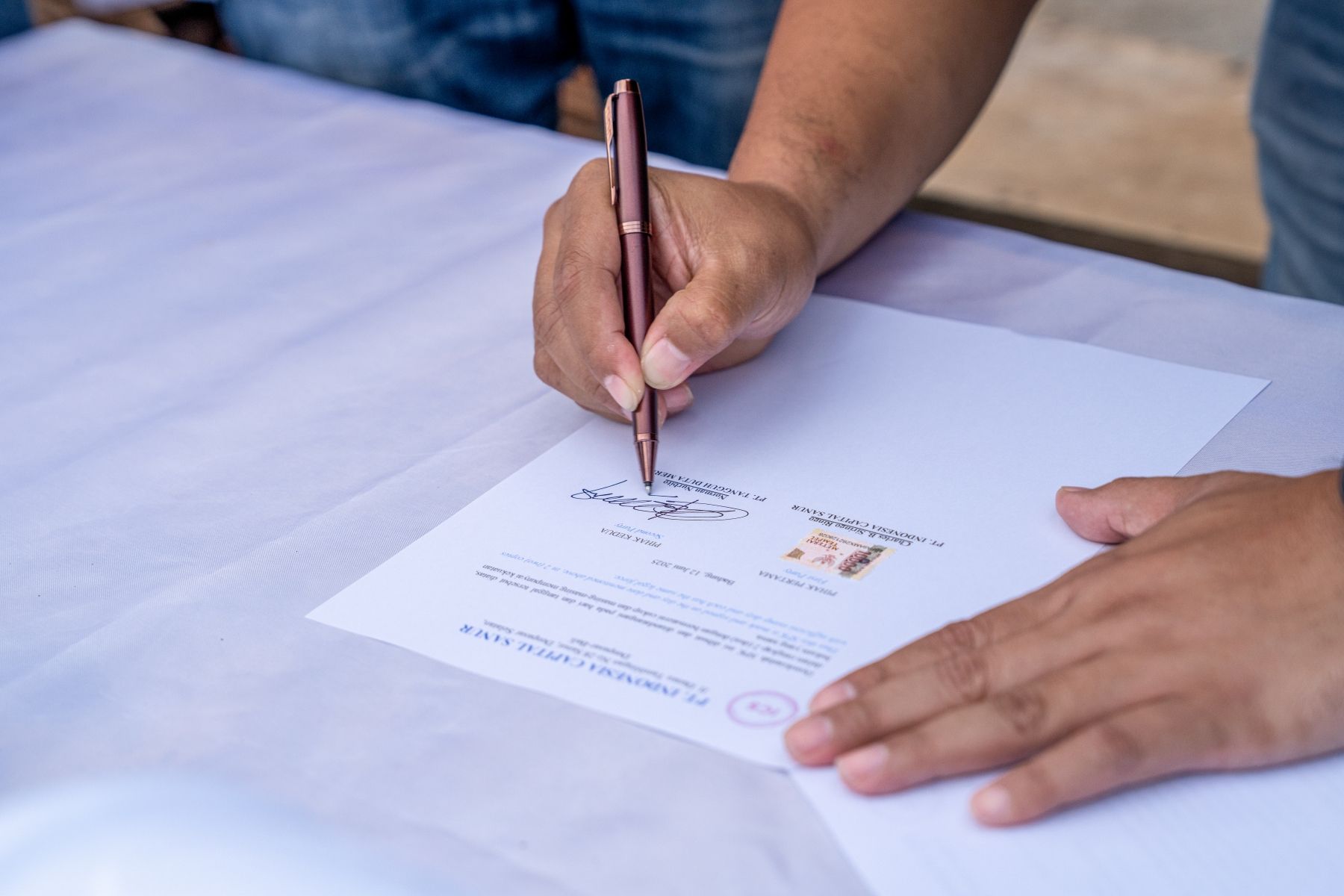
For most buyers a notarised leasehold is the most straightforward route; the lease should be signed before a licensed notary (PPAT) and attached to the land certificate to be enforceable. For larger or resale-oriented projects, HGB or Hak Pakai through a PT PMA gives more flexibility. Compare the trade-offs in our freehold vs leasehold in Bali guide.
Skip the legal landmines
Magnum Estate develops on pre-vetted, correctly zoned land in Berawa, Sanur and Uluwatu, title, zoning and permits handled.
View Magnum projects
Book a free consultation
Land price per m² by area (2026)
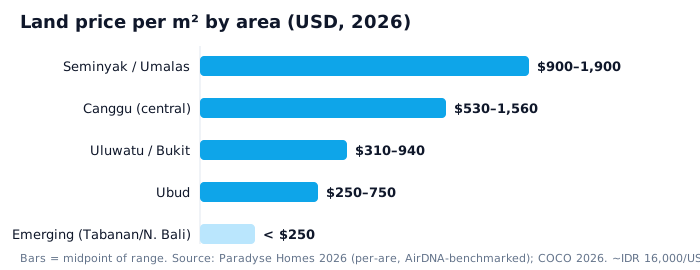
Land is quoted per are (100 m²) in Bali; converted to per-m² at ~IDR 16,000/USD, the 2026 ranking is consistent, established central zones cost the most, emerging belts the least:
| Area | Land price per m² | Per are (IDR) | Character |
|---|---|---|---|
| Seminyak / Umalas | ~$900-1,900 | IDR 1.5-3B+ | Established, high-density, premium strip |
| Canggu (central) | ~$530-1,560 | IDR 1.2-2.5B | Supply-constrained, fast appreciation |
| Uluwatu / Bukit | ~$310-940 | IDR 0.5-1.5B | Cliff-top premium; broad entry range |
| Ubud | ~$250-750 | IDR 0.4-1.2B | Lower density, rice-field & jungle |
| Emerging (Tabanan, Seseh, N. Bali, Medewi) | < $250 | varies | Most land per dollar, longer horizon |
| Source: Paradyse Homes 2026 (per-are, AirDNA-benchmarked) & COCO 2026. Leasehold land is also quoted per are per year, roughly IDR 20-40M+ in prime spots. North Bali land can be a small fraction of southern prices. |
For the same budget you secure far more land in Uluwatu, Ubud or an emerging belt than in Seminyak or central Canggu, the trade-off is rental demand, not just scenery. For whole-villa and yield figures, see the full Bali property prices 2026 breakdown.
Where to look: key areas for land buyers
Match the plot to a strategy. The strongest 2026 plays pair a proven hotspot with a clear use case and the correct zone:
- Canggu & Berawa (Badung): deepest year-round rental demand and surf/café culture; high prices, so returns rely on strong hospitality operations, not speculation.
- Uluwatu & Bukit: fastest land appreciation and the highest ocean-view premium; larger plots still available for villa estates, but topography and access need planning.
- Nusa Dua & South Bali: established five-star infrastructure, SHM-certified plots, family and conference tourism; mostly mid-to-high budget.
- Medewi, Negara & North Bali: lower price per m², long-term upside from planned tourism and infrastructure; best for eco-resorts and land banking with a 5-10 year horizon.
Due-diligence checklist for Bali land in 2026
| Check | What to confirm |
|---|---|
| 1. Certificate | Valid SHM/SHGB; seller’s name matches BPN records; no reliance on pipil/girik alone |
| 2. Zoning (PKKPR) | Official confirmation of residential/tourism vs green/conservation; building coverage allowed |
| 3. Access rights | Documented legal road access (right of way) in the certificate or a separate deed |
| 4. Topography & history | Flood/erosion/landslide risk; past land use that could complicate permits |
| 5. Legal structure | Leasehold or PT PMA reviewed by an independent Indonesian lawyer; never a nominee |
| 6. Future plans | Nearby infrastructure, zoning changes or planned tourism areas affecting value |
| In a maturing market, due diligence is the difference between land that grows in value and a long, expensive problem. |
Tip: run this checklist before paying any deposit, and make offers conditional on the title and PKKPR clearing. For a wider buyer-error list, see how to avoid mistakes when buying property in Bali.
Methodology & sources
Land figures are indicative 2026 ranges, reconciled across market datasets and converted at ~IDR 16,000/USD. Prices are stated per m² (from per-are data, 1 are = 100 m²). Individual parcels vary by road access, zoning, view and lease term. Legal and zoning statements reflect Indonesian Agrarian Law No. 5/1960 and ATR/BPN spatial planning as applied in 2026; rules evolve, so verify the current position with a PPAT and an independent lawyer before purchase.
Conclusion
In 2026, Bali land for sale rewards process over price: verify the title against BPN, confirm the zone via PKKPR, secure your PBG, choose a clean leasehold or HGB structure, then weigh land price per m² against the area’s realistic demand. Do that, and a well-chosen plot becomes a resilient, long-horizon asset rather than a legal liability.
Build on land that’s already vetted
Explore Magnum Estate’s residences on correctly zoned land in Uluwatu, Berawa and Sanur, transparent title, zoning and pricing.
Uluwatu, Sky Stars
Berawa
Sanur
FAQ: Bali land for sale 2026
Can foreigners buy Bali land for sale in 2026?
Not as freehold, foreigners cannot hold Hak Milik. The legal routes are a notarised leasehold (Hak Sewa), typically 25-30 years with extension options, or HGB / Hak Pakai held through a PT PMA company.
What is the safest structure for a foreigner?
A notarised leasehold attached to the certificate, or HGB/Hak Pakai via a PT PMA, both signed before a PPAT and checked against BPN records. Nominee arrangements are illegal and unenforceable.
What is the green-zone trap?
Green Zone (Zona Hijau) is agricultural/conservation land where building villas or commercial property is prohibited and increasingly enforced. Cheap plots advertised for villas in a green zone are a red flag.
How much does land cost per m² in Bali in 2026?
Seminyak/Umalas ~$900-1,900/m²; central Canggu ~$530-1,560; Uluwatu/Bukit ~$310-940; Ubud ~$250-750; emerging areas (Tabanan, Seseh, North Bali, Medewi) below $250.
What permits do I need before building?
First a PKKPR zoning approval, then a PBG building permit (which replaced the old IMB). PKKPR is more authoritative than the old ITR letters.
How do I check a land certificate is genuine?
Work with a licensed notary (PPAT) and a trusted lawyer to check the certificate against BPN records, verify boundaries and owners, and confirm there are no encumbrances.
Is 2026 still a good time to buy Bali land?
Yes, if you pick legally clean, correctly zoned plots in growth corridors with a 5-10 year horizon. The more regulated market filters out risky projects and supports long-term value.
References & official sources
- ATR/BPN, Ministry of Agrarian Affairs & Spatial Planning / National Land Agency: land titles (SHM, SHGB, Hak Pakai), zoning & spatial planning, atrbpn.go.id
- BKPM / Invest Indonesia: PT PMA & foreign-investment rules (HGB/Hak Pakai), investindonesia.go.id
- Indonesian Agrarian Law No. 5/1960: freehold/lease framework, via faolex.fao.org
- BPS, Statistics Indonesia / Bali: 2025 foreign arrivals (6,948,754, +9.72%), bali.bps.go.id
- Market data (2026): Paradyse Homes price-per-are study (AirDNA-benchmarked); COCO 2026 land-price analysis; Prestige Property Bali area analysis; InvestLandBali market report.
- Magnum Estate portfolio data (zoning & land vetting by project).
About the author
Stanislav Sadovnikov is the founder of Magnum Estate (PT Magnum Estate International), an award-winning full-cycle Bali real estate developer with 8 projects and 575 units since 2019 (Berawa, Sanur, Umalas, Sky Stars, Sky Royal). He writes about Bali pricing, yields, ownership rules and regulation for international buyers.