


Bali's Real Estate Market Is Growing Up: A Founder's Reflection on 2025

Bali's Real Estate Market Is Growing Up: A Founder's Reflection on 2025

The Year Regulation Caught Up With Ambition—And Why That’s Good News for Professional Developers

2025 will be remembered as the year Bali’s real estate market matured.

For a decade, the narrative around Bali property has been one of frontier opportunity; a place where dreams were big, rules were loose, and early movers could extract outsized returns. That era is ending. Not dramatically. Not suddenly. But decisively.

This year, we watched stricter environmental enforcement, new zoning restrictions, more rigorous permitting processes, and a clear market separation between developers committed to professional standards and those cutting corners. Some projects closed. Others thrived. The difference wasn’t luck or market timing. It was whether developers had built for compliance or against it.

As founder of Magnum Estate, I want to be honest about what this shift means; for us, for our investors, and for the future of Bali as an investment destination.

The Regulation Inflection Point

For years, Bali’s regulatory environment was best described as “evolving”, which is a diplomatic way of saying inconsistent, layered, and sometimes contradictory. Different officials enforced different standards. Ambiguous rules were negotiated case-by-case. Compliance could be expensive and time-consuming, but the worst outcome was usually a project delay, not a shutdown.

That changed in 2025.

Indonesia’s central government, supported by provincial and municipal authorities, decided that Bali’s uncontrolled tourism growth and real estate speculation were unsustainable. The island needed protection; environmental, cultural, and urban. That meant enforcement had to become serious.

What we saw in 2025:

Environmental Impact Assessment (AMDAL) enforcement tightened dramatically. Projects in sensitive zones—coastal areas, protected wetlands, near archaeological sites—now faced rigorous environmental review, not rubber-stamp approvals. One major developer in Ubud had an entire project delayed because their AMDAL documentation didn’t adequately address impact on local water resources. This wasn’t bureaucratic obstruction. It was environmental governance finally working as designed.

Zoning restrictions became actual restrictions. For years, zoning maps existed but enforcement was selective. A developer could build commercial in an agricultural zone if they had the right connections or paid the right fees. In 2025, zoning enforcement became consistent. Projects that didn’t fit designated zones faced real obstacles; not just complaints, but formal rejections. Several mid-sized developers had to pivot or downsize because their sites fell outside newly-enforced zoning boundaries.

Labor and construction standards enforcement increased. Inspections became more frequent. Documentation requirements became more stringent. Substandard contractors couldn’t hide behind main contractors anymore. Wage documentation, safety standards, and material certifications all faced closer scrutiny. This added costs and timelines for projects that had been operating on minimal compliance margins.

Foreign Investment Licensing (PMA) requirements became less flexible. The government clarified that PMA status was for legitimate long-term development, not for speculative land banking or quick flips. Projects that had been structured as investment vehicles with ambiguous development timelines faced pressure to either commit to defined timelines or restructure.

For most professional developers, these changes were not surprises; they were confirmations. We had been building to these standards all along. For others, 2025 was a reckoning.

The Market Maturation That Follows Regulation

When rules tighten, markets split. Winners and losers become clear very quickly.

In Bali, 2025 showed this dynamic clearly.

Marginal projects closed or stalled. There were perhaps 15-20 mid-sized developments; mostly in secondary locations, built on speculative development rights, or dependent on regulatory ambiguity; that faced serious obstacles in 2025. Some had environmental objections they couldn’t overcome. Others had zoning conflicts they couldn’t resolve. A few simply ran out of cash when timelines extended and costs increased due to compliance requirements. These weren’t all small operations. Some were substantial projects. But they shared a common pattern: they had been built for a more permissive regulatory environment, and they couldn’t adapt.

Strong projects grew stronger. Conversely, professional developers with clear environmental documentation, proper zoning compliance, strong capital bases, and transparent governance structures accelerated in 2025. Their competitors were disappearing or stalling, which gave them clearer land acquisition opportunities, better contractor availability, and more investor confidence. When the market is separating, being on the right side matters enormously.

Investor confidence shifted. International investors finally understood that buying property from a marginal developer carried real risk; not just market risk, but regulatory shutdown risk. The premium investors were willing to pay for projects from credible, compliant developers increased. This sounds abstract, but it translated directly to pricing: comparable properties in professional projects commanded 15-20% higher prices in 2025 than in 2024, while properties in questionable projects stagnated or declined.

Consolidation began. Larger, well-capitalized developers started acquiring or partnering with smaller ones. Not always; but the pattern was clear. Bali’s fragmented real estate landscape began consolidating around developers with institutional credibility, capital depth, and proven compliance track records. This is healthy market maturation. It typically happens when regulation increases; the small players either grow or exit.

Magnum Estate’s Specific Case: The AMDAL Milestone

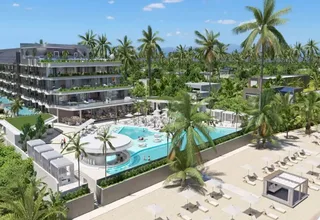
For Magnum Estate, the clearest symbol of this market shift is the AMDAL (Analisis Mengenai Dampak Lingkungan—Environmental Impact Assessment) approval we received for Magnum Resort Berawa in late 2024/early 2025.

An AMDAL is not a quick administrative approval. It is a detailed environmental study that assesses project impact across multiple dimensions: coastal ecology, traffic patterns, noise, water usage, waste management, cultural heritage, socioeconomic effects, and mitigation strategies. For a major beachfront development in a tourism zone, it typically takes 6-12 months and costs $50K-150K to complete properly.

We invested the time and money because we built Berawa with the assumption that strict environmental review would eventually be required. Rather than cut corners or lobby for exemptions, we did the work upfront. The AMDAL was thorough. The environmental impact was managed thoughtfully. The assessment was approved.

What does this mean practically?

First, it means Berawa can move forward without regulatory risk. We are not waiting for environmental approval; we have it. This certainty benefits investors, contractors, and timelines.

Second, it means we have institutional proof that we take environmental responsibility seriously. This matters for positioning, especially as international investors increasingly care about ESG (Environmental, Social, Governance) factors. A developer with approved environmental assessments is not aspirational about sustainability; they are compliant.

Third, it demonstrates that professional development and environmental protection are not in conflict. Many local observers worried that strict environmental enforcement would kill the tourism and real estate economy. Magnum’s Berawa project—approved environmentally and proceeding on schedule—shows that professional development can meet high environmental standards. This is good for Bali’s long-term reputation and for developers like us.

The AMDAL approval is also, frankly, competitive advantage. Not every developer in Bali has complete AMDAL approval for their major projects. Some are still in process. Some chose to build in ways that avoided requiring one (which often means more marginal locations or smaller scales). Having environmental approval is a clear market signal that distinguishes strong projects.

What This Means for the Future: 2026 and Beyond

The regulation trend that crystallized in 2025 will continue and likely deepen.

International investment in real estate is increasingly sensitive to ESG compliance, regulatory transparency, and government alignment. Institutional capital (pension funds, family offices, sovereign wealth funds) that Magnum is starting to attract will not invest in projects with ambiguous environmental or regulatory status. They want documented compliance, third-party verification, and clear governance trails.

This means the future of Bali real estate belongs to developers who:

Built for regulation from the start, not against it. Projects designed with environmental sensitivity, proper zoning compliance, and transparent governance are future-proof. Those designed to exploit regulatory ambiguity are increasingly at risk.

Maintain institutional-grade documentation. Environmental assessments, engineering certifications, legal compliance papers, financial audits; these are not bureaucratic burdens. They are the infrastructure that allows institutional capital to invest with confidence.

Engage proactively with government. Waiting for rules to be enforced is a weak strategy. Better to work with government partners, understand their intentions, and build in alignment. This is what I emphasized in my recent meetings with Denpasar’s Mayor and other local officials.

Invest in community integration. The days of isolated resort developments with no connection to local communities are ending. Projects that integrate with local employment, local architecture, local economic benefit, and local culture will thrive. Those that treat Bali as a playground for external capital will face increasing resistance.

Embrace transparency as competitive advantage. In a mature market with strict regulation, transparency is not just ethical; it is smart business. Developers who openly share environmental assessments, financial audits, construction timelines, and investor returns build trust and attract better capital.

The Uncomfortable Truth: This Kills Some Dreams

I want to be direct about something that is not always discussed in real estate conversations.

Bali’s regulatory maturation in 2025 closed opportunities for a certain type of investor and developer—the one looking for “fast money” in an emerging market. The model of “buy cheap land, build fast, sell high, exit” is becoming progressively harder. Regulatory delays extend timelines. Environmental requirements add costs. Zoning restrictions reduce available land. Compliance infrastructure requires capital and expertise.

For investors or developers pursuing that model, Bali in 2026 is less attractive than Bali in 2015 or even 2020. That is not a failure of the market. It is a sign of maturation.

But for investors seeking legitimate long-term returns from professional development, Bali in 2025-2026 is actually more attractive. Why? Because the weak players are being filtered out. Land availability is shifting from speculators to serious developers. Investor confidence is increasing because marginal developers are disappearing. Regulatory clarity is replacing ambiguity, which means better planning and lower execution risk.

Magnum Estate thrives in this environment because we were never built for the “fast money” play. We were built for long-term, professional, transparent development. The shift that happened in 2025 does not threaten us. It advantages us.

What I Learned This Year

As I reflect on 2025, three lessons stand out.

First: Regulation is not the enemy of good business. It is the framework that makes good business possible. Companies built on genuine quality and compliance welcome stricter rules because the rules eliminate competition from lower standards. For a long time, I worried about Bali’s regulatory environment; not because we could not comply, but because I was not sure consistent compliance would be rewarded. In 2025, I learned that it is. Professional development is no longer a competitive disadvantage in Bali; it is the only path to sustainable advantage.

Second: Investors are smarter about risk than marketers assume. For years, I heard that international investors wanted high ROI and were willing to accept regulatory risk for outsized returns. In practice, serious institutional investors do not work that way. They want solid returns from de-risked projects. They will pay a slight premium for that security. This year, we saw that preference clearly in investor selection and in project valuations. The premium for professional development is real and substantial.

Third: Government collaboration, not lobbying, is the future. For too long, the real estate industry in Bali treated government as an obstacle to be managed or circumvented. Better developers started treating government as a partner to be understood and aligned with. I did this with the Mayor of Denpasar and with provincial environmental officials. The result is not just smoother permitting; it is also genuine alignment on what kind of development Bali needs and how we can contribute to it. This alignment is worth more than any individual project approval.

The Opportunity Ahead

If 2025 was the year regulation caught up with ambition, 2026 will be the year strategic development separates from speculative development.

The market is now clear: Bali is not a place for quick returns. It is a place for professional, long-term, responsibly-scaled development. Developers aligned with that model will flourish. Those hoping for the old frontier days are in the wrong market.

For Magnum Estate, this is a moment of opportunity. Our competitors are disappearing or struggling. Our investors are gaining confidence. Our projects are getting environmental and regulatory approval ahead of most peers. Our capital base gives us the ability to acquire premium sites that marginal developers cannot afford to develop responsibly.

More importantly, Bali’s future is becoming clearer. The island is not going to remain a frontier market. It is going to become a mature premium destination, with environmental protections, thoughtful development, cultural respect, and sustainable tourism. Developers who help build that future; who invest in environmental compliance, who work with government, who respect local communities; will lead Bali’s next growth phase.

Magnum Estate is committed to being that kind of developer.

A Message to Our Investors and Partners

If you are invested with Magnum Estate or considering investment, here is what 2025 and the regulatory shift means for you:

The projects you have invested in, or are considering, are being approved in an increasingly strict regulatory environment. This means the approvals are real, not provisional. The compliance is genuine, not expedient. The timelines may be longer than the frontier-era projections, but they are based on actual regulatory requirements, not wishful thinking.

The regulatory tightening removes speculative upside but also removes speculative downside. You will not hit home runs on a quick flip. But you also will not lose capital to regulatory shutdowns or sudden rule changes. You are investing in genuine long-term assets, not bets on regulatory leniency.

The market maturation we are seeing in 2025 is painful for some, but it is healthy for Bali and profitable for professional developers and their investors. This is the environment we were built for.

The Close

Bali’s real estate market in 2025 proved what I have believed for years: that professional development is not just ethical; it is the most profitable model in the long run.

The frontier days are ending. The mature market days are beginning. For developers, investors, and the island itself, that is progress worth celebrating.

Magnum Estate is ready for what comes next.

To our investors, partners, team members, and the communities where we build: thank you for your partnership in 2025. Here’s to building an even stronger Bali in 2026.

Regards,
Stanislav Sadovnikov
Magnum Estate, Founder