





Written by Stanislav Sadovnikov, Founder, Magnum Estate ·
Reviewed by Magnum Estate legal & investment desk ·
Last updated 3 June 2026
"10-25% Off-plan discount vs ready villa · ~20-25% Target appreciation by handover · 4-6% / 10-15% Net yield: self- vs pro-managed · 12-24m Typical build / payment window"
Key figures (2026)
Off-plan property Bali 2026: summary
Off-plan property Bali 2026, the short answer: it is a smart entry point when you buy in a proven area, from a developer you have verified, on a staged payment schedule tied to construction milestones and protected by a strong PPJB contract. It becomes an unnecessary risk when payments are front-loaded, the developer is unproven, or permits and zoning are incomplete.
- Lower entry price: developers discount 10-25% vs a comparable ready villa, e.g. ~USD 400k, 450k for a unit worth ~USD 500k at completion.
- Construction-phase upside: discount + ~7-15%/yr price growth over a 12-24 month build commonly targets ~20-25% paper gain by handover (a target, not a guarantee).
- The real risks: completion/delay risk, spec mismatch, legal/permit gaps, and market shifts mid-build.
- De-risk it: vet the developer’s track record, tie payments to milestones, use escrow/notary accounts, and check engineering, not just renders.
- When ready wins: if you need immediate rental income, want to inspect the actual build, or can’t carry completion risk.

"Transparency: Magnum Estate develops off-plan property in Bali (Berawa, Sanur, Sky Stars, Sky Royal), so we have a commercial interest. This guide is educational, not investment or legal advice, verify figures independently and consult a certified Indonesian notary (PPAT) and tax advisor before signing any PPJB."
Transparency
This off-plan property Bali 2026 guide answers one question directly: is buying before completion a smart entry point, or an unnecessary risk? The honest answer is “both”, it depends on the payment structure, the developer and the location. Off-plan means buying a villa or apartment before it is finished, from drawings, renders and a staged payment schedule. The upside is a lower entry price and value gained during construction; the downside is that you are paying for something that does not yet exist. Below we map the trade-off against ready property, show the appreciation math, and give you a developer-vetting checklist so off-plan stays a managed development investment rather than speculation.
Why off-plan property in Bali is attractive in 2026
Off-plan remains one of the most popular ways to enter the Bali market, and the structural reasons are real. Bali drew 6,948,754 foreign visitors in 2025, up 9.72% year-on-year, keeping demand for modern, well-located stock high while land values appreciated roughly 15-30% over the past two years. New off-plan supply is concentrated in high-demand zones, Canggu, Berawa, Pererenan, Uluwatu and well-zoned Ubud, where it feeds tourism and long-stay demand. The three core advantages investors cite:
- Lower entry price. Developers typically offer 10-25% discounts versus a comparable completed villa to attract early buyers and co-finance construction. In a hotspot that can mean paying ~USD 400,000-450,000 for a villa worth ~USD 500,000 at completion.
- Capital appreciation during construction. As prices rise and milestones are reached, the asset can gain value before handover, effectively locking in today’s price for tomorrow’s market.
- Modern design and efficiency. Off-plan builds reflect current demand: open layouts, energy-efficient systems, smart-home features and wellness-oriented design that appeal to today’s guests, and you can often customise finishes.
Off-plan vs ready property: the trade-off
The cleanest way to decide is to put both side by side. Off-plan trades immediacy and certainty for a lower price and upside; ready trades upside for inspectable, income-producing reality:
| Factor | Off-plan | Ready (completed) |
|---|---|---|
| Entry price | 10-25% below comparable ready | Full market price |
| Capital appreciation | ~20-25% target during build | Like-for-like ~7-15%/yr only |
| Rental income | None until handover (12-24m) | Immediate |
| What you inspect | Renders, drawings, show unit | The actual finished build |
| Main risk | Completion / delay / spec mismatch | Hidden defects, dated design |
| Customisation | Layout & finishes possible | As-built only |
| Capital deployment | Staged over the build | Lump sum at purchase |
| Indicative 2026 comparison. Off-plan discount and appreciation are area- and developer-dependent. ~IDR 16,000/USD. |
The takeaway: off-plan is a time-for-discount trade. If you have a 12-24 month horizon and can verify the developer, the discount plus construction-phase growth is compelling. If you need yield from day one, buy ready. Pressure-test either route against realistic area returns in our Bali villa investment & ROI guide and current Bali property prices 2026.
Staged payment schedules explained
The single most important risk control in off-plan is how and when you pay. A well-built schedule releases money only as verifiable construction milestones are met, so your capital tracks real progress rather than a developer’s cash-flow needs. A typical Bali staged schedule looks like this:
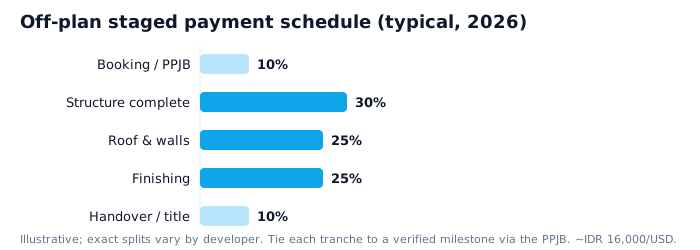
| Milestone | Typical tranche | What to verify before paying |
|---|---|---|
| Booking / PPJB signing | ~10% | Land title, zoning, permits, PPJB terms |
| Structure complete | ~30% | Foundation & frame inspected on site |
| Roof & walls | ~25% | Weather envelope, waterproofing |
| Finishing | ~25% | Materials match spec, not just renders |
| Handover / title transfer | ~10% | Final inspection, snag list cleared, title issued |
| Illustrative schedule. The principle: never front-load. Each tranche should follow a verified milestone, ideally released via escrow or notary. How a developer plan compares with an Indonesian bank mortgage is covered in mortgage in Bali for foreigners. |
Legal: the schedule lives inside the PPJB (Sales & Purchase Binding Agreement), Indonesia’s core consumer-protection tool in pre-project selling. It should specify technical specs, permitted changes, completion dates, penalties for delay, and how each payment is released. Confirm the underlying title and structure with our due-diligence checklist and freehold vs leasehold guide before signing.
Construction-phase appreciation: the math
The headline appeal of off-plan is the gain you can capture between signing and handover. It comes from two stacked sources: the developer’s 10-25% early-buyer discount, plus like-for-like market growth of ~7-15% per year over a 12-24 month build. Stacked, buyers in strong micro-markets commonly target ~20-25% paper appreciation by completion:
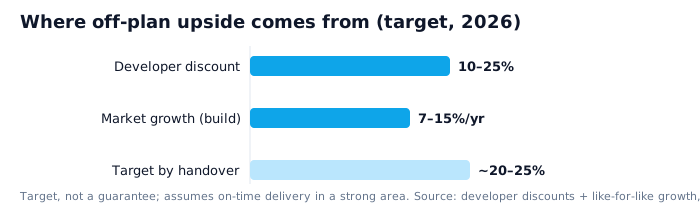
A worked example at ~IDR 16,000/USD: you sign off-plan at USD 400,000 on a unit appraised at USD 500,000 at completion, a 20% discount captured at signing. If the micro-market also grows ~10% over an 18-month build, the comparable ready value rises further, widening the gap. The key word is target: this upside only materialises if the developer delivers on time and to spec, which is exactly why the risk controls below matter more than the brochure.
See off-plan pricing and payment plans, not averages
Magnum Estate builds off-plan in Bali’s strongest corridors. Compare live staged-payment plans and projected net yields across Sky Stars (Uluwatu), Berawa and Sanur.
View Magnum off-plan projects
Book a free consultation
The real risks: developer and escrow
Off-plan’s core risk is simple: you pay for something that does not yet exist. Indonesian and regional studies on housing and resort projects show how often developments face delays, cost overruns and legal issues when risk is not actively managed. The four that matter most:
- Completion risk. Construction delays are common; worst-case, a developer fails to deliver at all due to financing, permitting or management problems.
- Design & quality mismatch. Frequent discrepancies between marketing renders and the final build, different materials, smaller effective areas, fewer facilities.
- Legal & permit risk. Some developers sell off-plan before securing full permits, or build on land with zoning or title issues. A strong, milestone-linked PPJB is the main protection.
- Market & financing risk. Development-cost errors, land-maturity problems, financing gaps and macro variables (interest rates, inflation) are among the most critical risk factors for housing projects.
Escrow is the difference between a deposit and a gamble. Routing each tranche through an escrow or notary-controlled account ties release to verified milestones and limits counterparty exposure. Pair this with title and zoning checks in our zoning risk guide and a disciplined, data-led approach from how to invest in Bali with data, not hype. At completion, run the Bali property handover checklist before you release the final tranche.
How to vet an off-plan developer: a 2026 checklist
These steps do not eliminate risk, but they shift off-plan from speculation to managed development investment:
| Step | What to check | Red flag |
|---|---|---|
| 1. Track record | Delivered projects: delivery times, build quality, occupancy, resale | No completed projects to inspect |
| 2. Legal & PPJB | Clean title (Hak Milik/HGB/Hak Pakai), tourism-appropriate zoning, milestone-linked PPJB with penalties | Vague contract, no delay penalties |
| 3. Payment structure | Tranches tied to milestones; escrow or notary release | Large up-front sum, direct-to-developer |
| 4. Engineering | Real structural design for Bali’s climate & height limits (e.g. 15 m); waterproofing for coastal/high-rainfall sites | “Renders only”, no engineer named |
| 5. Independent DD | Third-party legal, technical and financial review | Developer discourages outside checks |
| Vetting checklist synthesised from Magnum Estate investor playbooks and Indonesian property-risk research. An established full-cycle builder simplifies several of these checks at once, see what buying off-plan from the developer looks like in practice. |
Where off-plan wins in Bali in 2026
Not every area suits off-plan in the current cycle. It works best where long-term demand is visible and zoning is mature, so completion risk is the main variable, not demand risk:
| Area | Off-plan fit | Gross yield | Why |
|---|---|---|---|
| Canggu / Berawa / Pererenan | Strong | 12-18% | Deep nomad & tourism demand, proven ADR; intense competition |
| Uluwatu / Bingin / Pandawa | Strong | 10-16% | Maturing luxury & surf corridor; ocean-view appreciation |
| Ubud (well-zoned) | Moderate | 10-15% | Wellness & long-stay; modern, nature-integrated builds |
| Growth corridors (west of Canggu, Tabanan belts) | Speculative | 6-18% | Higher capital-gain upside if infrastructure expands; longer horizon |
| Gross yields (before costs). Source: Prestige Property Bali 2026. Net yields are lower, see methodology. |
Match the area to your risk appetite: core zones (Canggu, Uluwatu) lower demand risk but cost more; growth corridors offer upside but stretch the horizon. Compare the two coasts in Canggu vs Uluwatu and shortlist with best areas to buy in Bali 2026.
Limitations & suitability
Off-plan is not for everyone. The construction-phase upside is a target, not a guarantee, and it disappears if delivery slips or the market softens mid-build. Off-plan is likely the wrong choice if you need rental income from day one, cannot carry 12-24 months without yield, want to inspect the physical build before committing, or cannot fund independent legal and technical due diligence. The gross yields quoted above are before costs: net yields are roughly 4-6% self-managed or 10-15% under professional management, after fees, tax, maintenance and vacancy, model the net, not the gross, before you decide.
Conclusion
In 2026, off-plan in Bali is a smart entry point under three conditions: a proven location, a verified developer, and a staged payment schedule protected by a strong PPJB and escrow. Get those right and the 10-25% discount plus construction-phase growth is a genuine edge over buying ready. Get them wrong and the same structure becomes an unnecessary risk. Treat it as managed development investment, not a shortcut.
Buy off-plan with a developer you can verify
Magnum Estate builds off-plan residences with milestone-linked payments and transparent net-yield projections. Explore Sky Stars (Uluwatu), Berawa and Sanur.
Uluwatu, Sky Stars
Berawa
Sanur
FAQ: Off-plan property Bali 2026
Is buying off-plan property in Bali in 2026 still a good idea?
Yes, when you buy in a strong location from a reputable developer, on a staged schedule tied to milestones, with a robust PPJB. It becomes an unnecessary risk when payments are front-loaded, the developer is unproven, or permits and zoning are incomplete.
How much cheaper is off-plan than a ready villa?
Developers typically discount 10-25% versus a comparable completed villa, e.g. ~USD 400,000-450,000 off-plan for a villa worth ~USD 500,000 at completion.
What is the construction-phase appreciation on off-plan?
Discount (10-25%) plus like-for-like growth of ~7-15%/yr over a 12-24 month build commonly targets ~20-25% paper gain by handover. It is a target, not a guarantee, and depends on the area and timely delivery.
What are the biggest risks of off-plan property in Bali?
Completion/delay risk, spec mismatch between renders and the build, legal/permit gaps, and market shifts mid-construction. A weak PPJB and large up-front payments amplify all of these.
How do I vet a Bali off-plan developer?
Check delivered projects, confirm title and zoning, insist on a milestone-linked PPJB with penalties, route payments through escrow or a notary, and review the structural design, not just renders.
Off-plan vs ready: which should I buy?
Off-plan for a lower entry price, construction-phase upside and modern design if you have a 12-24 month horizon and can verify the developer. Ready if you need immediate income, want to inspect the build, and prefer to avoid completion risk.
How does off-plan fit a 10-year Bali plan?
It locks in value and modern stock early in the cycle, with realistic total returns targeted around 10-15% per year when paired with strong locations, legal clarity and professional management, see our villa ROI guide.
Methodology & sources
Figures are indicative 2026 ranges, reconciled across market datasets and converted at ~IDR 16,000/USD. The off-plan discount (10-25%) and construction-phase appreciation (~20-25% target) combine a developer early-buyer discount with like-for-like price growth (~7-15%/yr) over a 12-24 month build; both are targets, not guarantees, and assume on-time delivery. Gross yields are rent ÷ price before costs; net yields (~4-6% self-managed, ~10-15% professionally managed) deduct management, tax, maintenance and vacancy. Payment-schedule splits are illustrative and vary by developer. Always commission independent legal (PPAT), technical and financial due diligence and a notary-controlled PPJB before purchase.
References & official sources
- BPS, Statistics Indonesia / Bali: 2025 foreign arrivals (6,948,754, +9.72%), occupancy, bali.bps.go.id
- Bank Indonesia, Residential Property Price Index: official price-growth & IDR/USD data, bi.go.id
- ATR/BPN: land titles (Hak Milik / HGB / Hak Pakai) & zoning, atrbpn.go.id
- DJP / Ministry of Finance: PBB & transaction taxes, pajak.go.id
- Market data (2026): Bali Villa Realty price guide; Paradyse Homes price-per-are study (AirDNA-benchmarked); Prestige Property Bali area/yield analysis; InvestLandBali market report, used for off-plan discounts, yields and area appreciation.
- Magnum Estate portfolio data (off-plan delivery & net yields by project).
About the author
Stanislav Sadovnikov is the founder of Magnum Estate (PT Magnum Estate International), an award-winning full-cycle Bali real estate developer with 8 projects and 575 units since 2019 (Berawa, Sanur, Umalas, Sky Stars, Sky Royal). He writes about Bali pricing, yields, ownership rules and regulation for international buyers.