






Written by Stanislav Sadovnikov, Founder, Magnum Estate ·
Reviewed by Magnum Estate legal & investment desk ·
Last updated 3 June 2026
"7-15%/yr Like-for-like appreciation (strong areas) · 4-6% / 10-15% Net yield: self- vs pro-managed · 6.95M 2025 foreign arrivals (+9.7%) · ~IDR 16k/$ FX rate, the key risk"
Key figures (2026)
Bali real estate to preserve capital: summary
Can you use Bali real estate to preserve capital? The short answer: yes, with caveats. Bali property is a hard asset backed by USD-denominated tourist demand and like-for-like appreciation of roughly 7-15% a year in strong micro-markets, historically ahead of developed-market inflation. The catch is that your cash flow is in rupiah, so currency (FX) risk is real and must be managed.
- Why it hedges inflation: replacement cost (land + build at ~$1,000-1,800/m²) and nightly rates rise with prices.
- Hard-currency demand: most rental income is paid by foreign tourists via booking platforms.
- Appreciation: ~7-15%/yr like-for-like; land +15-30% over the past two years in prime belts.
- Gross ≠ net: net yields are ~4-6% self-managed, ~10-15% professionally managed.
- Biggest risk: the IDR/USD rate, plus leasehold time-decay, oversupply and title issues.

"Transparency: Magnum Estate develops property in Bali, so we have a commercial interest. This guide is educational, not investment or legal advice, verify figures independently and consult a certified Indonesian notary (PPAT) and tax advisor before buying."
Transparency
Using Bali real estate to preserve capital is one of the more durable cross-border strategies available to foreign investors in 2026, but it works for specific, structural reasons, not the headline returns you often see quoted. Bali property is a real, finite asset in a market whose income is driven by hard-currency tourist demand, in a country with stable growth and a young, expanding population. Below we separate the genuine capital-preservation case from the hype, quantify the appreciation and yield you can realistically expect, and, most importantly, spell out the currency and downside risks and how to mitigate them.
Why Bali real estate to preserve capital actually works
The case rests on three structural pillars rather than on any single return figure. First, it is a hard asset: land in the desirable south of the island is finite, and replacement cost (land plus a build cost of ~USD 1,000-1,800/m²) sets a rising floor under prices. Second, the demand side is hard-currency and structural: Bali drew 6,948,754 foreign visitors in 2025, up 9.72% year-on-year, pushing prime-area villa occupancy to 70-85% (island-wide average closer to ~65%). Third, Indonesia’s macro backdrop is supportive, a large, young, growing population and steady GDP growth, which underpins long-run demand.
What this does not mean is guaranteed double-digit dollar returns. The widely-shared claim that Bali prices “rise 60% in three years” or that you earn “12% per annum in dollars” conflates gross rental yield, capital appreciation and currency effects. We unpack each below with sourced ranges.
The takeaway: a capital-preservation buy is about a resilient real asset with hard-currency demand, not a yield chase. Pair a proven hotspot with a sound lease structure, see how location drives durability in our best areas to buy in Bali 2026 guide and the area-by-area pricing in Bali property prices 2026.
The inflation & hard-asset case
Inflation erodes cash and bonds; it tends to lift the nominal value of real assets, because the cost to replace them rises. In Bali, two inflation-linked levers move together: replacement cost (land and build) and nightly rates, which operators reprice with demand. Land values across the island appreciated roughly 15-30% over the past two years, and like-for-like price growth in strong micro-markets has run near 7-15% a year, comfortably ahead of developed-market consumer inflation over the same period.
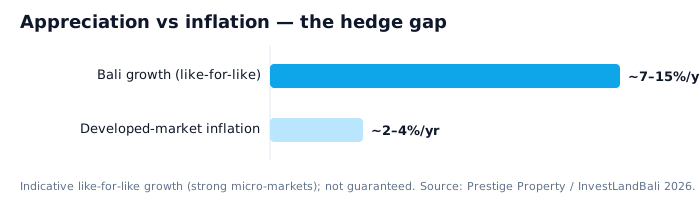
Add hard-currency rental income on top, and the asset preserves and compounds purchasing power. But “growth” and “appreciation” here are like-for-like estimates for strong areas, not a promise, and not the same across every parcel. They are the canonical figures we use throughout our research; see the full area breakdown in our Bali property prices 2026 guide.
USD-denominated demand vs rupiah income, the honest version
This is where most “capital preservation” pitches gloss over the truth. Bali’s rental demand is dollar-linked, tourists book through international platforms and effectively pay in hard currency, but the cash you actually receive and spend is Indonesian rupiah (IDR), converted at roughly IDR 16,000/USD. So you get the upside of hard-currency demand, but you still carry currency (FX) risk: if the rupiah weakens against your home currency, your net return falls when you repatriate it.
FX risk, stated plainly: income and many holding costs are in rupiah. A capital-preservation strategy must price in IDR/USD volatility, not assume “dollar returns.” Foreigners also cannot hold freehold (Hak Milik) directly, most buy via leasehold (Hak Sewa) or a PT PMA (HGB) structure. Understand both before you commit: see buying property in Bali as a foreigner.
Appreciation and yield: the real numbers
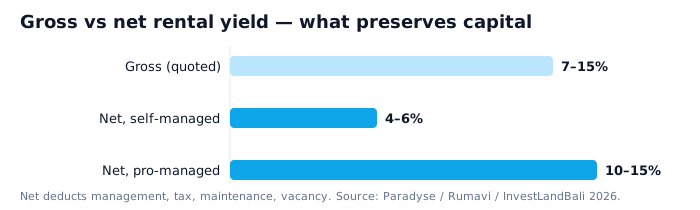
Most “8-15% yield” claims you’ll see are gross, annual rent ÷ price, before costs. What actually preserves and grows capital is the net yield (after management, tax, maintenance and vacancy) plus appreciation. Conflating the two is the single biggest source of disappointed Bali investors.
| Return component | Indicative 2026 range | Notes for capital preservation |
|---|---|---|
| Capital appreciation (like-for-like) | ~7-15% / yr | Strong micro-markets only; land +15-30% over 2 years |
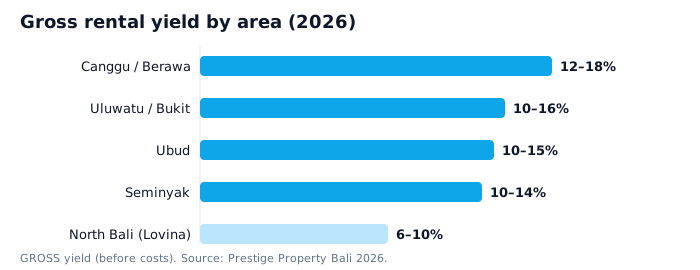
| Gross rental yield (prime areas) | 10-18% | Before any costs, never the take-home number |
| Net yield, self-managed | 4-6% | After management, tax, maintenance, vacancy |
| Net yield, professionally managed | 10-15% | Operations close the gap; verify the operator |
| Annual property tax (PBB) | ~0.1% | Low holding cost vs many markets |
| GROSS figures are area-level ranges before costs; NET is after costs. Appreciation is indicative and not guaranteed. Source: Prestige Property / Paradyse / InvestLandBali 2026. ~IDR 16,000/USD. |
The gap between 4-6% and 10-15% net is operations: data-driven pricing, OTA distribution and cost control. Model holding costs with our taxes & holding costs guide and see how management drives net returns in our villa ROI guide.
See transparent pricing, not headline yields
Compare live pricing and projected net yields across Magnum Estate’s Berawa, Sanur and Uluwatu developments.
View Magnum projects
Book a free consultation
Downside risks & how to mitigate them
A genuine capital-preservation strategy is defined as much by what can go wrong as by the upside. The principal risks, and the practical ways to mitigate each, are:
| Risk | Why it threatens capital | Mitigation |
|---|---|---|
| Currency (FX) | Income/costs in IDR; a weaker rupiah cuts repatriated returns | Treat returns as IDR-based; stagger repatriation; size FX exposure deliberately |
| Leasehold time-decay | A 25-30yr lease loses value as it runs down | Buy longer terms with extension rights, or use a PT PMA (HGB) structure |
| Oversupply / micro-market | New villa supply can compress occupancy and rates | Favour supply-constrained, high-demand pockets; check the pipeline |
| Title & zoning | Defective title or wrong zoning can impair or void value | Independent PPAT notary due diligence; verify zoning before purchase |
| Management execution | Poor operations turn 12% gross into 4% net | Vet the operator’s track record; align fees to performance |
| Risks are inherent to cross-border property; this table is educational, not a guarantee of outcomes. |
Limitations & who this is not for
Bali real estate is illiquid, location-sensitive and exposed to a single foreign currency, it is not a cash substitute or an emergency fund. It is poorly suited to investors who need quick access to their money, cannot tolerate IDR/USD swings, or expect the “guaranteed 12% in dollars” figures that circulate online. Capital preservation here means a multi-year horizon, a well-structured lease or PT PMA, and a professional operator, not a quick flip. Treat any single-number return claim (including those in the original version of this article) with scepticism and insist on the gross-vs-net and FX breakdown above.
Methodology & sources
Figures are indicative 2026 ranges, reconciled across multiple market datasets and converted at ~IDR 16,000/USD. Appreciation/growth is like-for-like for strong micro-markets and is not guaranteed. Gross yields are rent ÷ price before costs; net yields deduct management, tax, maintenance and vacancy. Area yield figures are area-level gross ranges. Returns are rupiah-denominated and therefore carry FX risk versus your home currency. Always commission an independent appraisal and notary (PPAT) due diligence before purchase.
Conclusion
In 2026, the honest case for Bali real estate to preserve capital is a strong one: a finite hard asset, hard-currency-linked demand from a record 6.95M annual visitors, and like-for-like appreciation of ~7-15% a year in the right areas. But preserving capital means respecting the risks, especially the rupiah, choosing a sound lease structure, and judging deals on net returns, not gross headlines. Done that way, Bali property can be a durable store of value rather than a speculative bet.
Build a capital-preserving Bali position
Explore Magnum Estate’s ocean-view residences in Uluwatu, Berawa and Sanur, transparent pricing, sound lease structures and projected net yields.
Uluwatu, Sky Stars
Berawa
Sanur
FAQ: Bali real estate to preserve capital
Is Bali real estate a good way to preserve capital?
It can be, it’s a hard asset with USD-linked demand and ~7-15%/yr like-for-like appreciation in strong areas, historically ahead of developed-market inflation. But it’s not risk-free; returns hinge on location, management, lease structure and the IDR/USD rate.
How does Bali property hedge inflation?
Replacement cost (land + build at ~$1,000-1,800/m²) and nightly rates rise with inflation, while much rental demand is paid by tourists in hard currency, a real asset plus hard-currency income.
What returns can I realistically expect?
Gross yields run ~10-18% in prime areas (before costs). Net is ~4-6% self-managed or ~10-15% professionally managed, plus ~7-15%/yr appreciation in strong areas.
What is the main risk to capital in Bali?
Currency (FX) risk, income and costs are in rupiah, so a weaker IDR cuts repatriated returns. Also: leasehold time-decay, oversupply, title/zoning and management execution.
Is the income really “in dollars”?
No. Demand is dollar-linked via booking platforms, but you receive and spend rupiah at ~IDR 16,000/USD, so you still carry FX risk.
Can foreigners own property to hold long term?
Foreigners can’t hold Hak Milik (freehold) directly; most use leasehold (Hak Sewa) or a PT PMA (HGB) structure, see our foreigner legal guide.
Do property taxes erode the hedge?
Annual PBB is low (~0.1% of assessed value), but transaction and rental-income taxes apply, see our tax guide.
References & official sources
- BPS, Statistics Indonesia / Bali: 2025 foreign arrivals (6,948,754, +9.72%), occupancy & inflation, bali.bps.go.id
- Bank Indonesia, Residential Property Price Index & IDR rate: official price-growth and exchange-rate data, bi.go.id
- World Bank: Indonesia GDP growth & macro indicators, data.worldbank.org
- DJP / Ministry of Finance: PBB & transaction taxes, pajak.go.id
- ATR/BPN: land titles (Hak Milik / Hak Sewa / HGB) & zoning, atrbpn.go.id
- Market data (2026): Prestige Property Bali area/yield analysis; Paradyse Homes price-per-are study; InvestLandBali market report.
- Magnum Estate portfolio data (net yields by project).
About the author
Stanislav Sadovnikov is the founder of Magnum Estate (PT Magnum Estate International), an award-winning full-cycle Bali real estate developer with 8 projects and 575 units since 2019 (Berawa, Sanur, Umalas, Sky Stars, Sky Royal). He writes about Bali pricing, yields, ownership rules and regulation for international buyers.