





Written by Stanislav Sadovnikov, Founder, Magnum Estate ·
Reviewed by Magnum Estate legal & investment desk ·
Last updated 3 June 2026
"$250-1,900 Land $/m² (Ubud, Seminyak) · 12-18% Top gross yield (Canggu/Berawa) · ~$256-299k Island median villa price · 6.95M 2025 foreign arrivals (+9.7%)"
Key figures (2026)
Best areas to buy property in Bali 2026: summary
The best areas to buy property in Bali 2026 depend on your goal, yield, growth, safety or lifestyle. In short: Canggu/Berawa for the deepest rental demand, Uluwatu/Bukit for the fastest land appreciation, Seminyak for blue-chip stability and exit liquidity, Ubud for defensive wellness income, and the emerging belts (Tabanan, Seseh, Cemagi, North Bali) for the most land per dollar.
- Highest yield: Canggu/Berawa 12-18% gross; Uluwatu 10-16%.
- Most expensive land: Seminyak/Umalas ($900-1,900/m²), central Canggu, Uluwatu, Ubud.
- Best value: emerging zones under $250/m²; villas from ~$100k, 179k.
- Most defensive: Ubud, Sanur and Nusa Dua, calmer demand, lower volatility.
- Gross ≠ net: net yields are ~4-6% self-managed, ~10-15% professionally managed.

"Transparency: Magnum Estate develops property in Bali (Berawa, Sanur, Sky Stars, Sky Royal), so we have a commercial interest. This guide is educational, not investment or legal advice, verify figures independently and consult a certified Indonesian notary (PPAT) and tax advisor before buying."
Transparency
Picking from the best areas to buy property in Bali 2026 matters more than picking the right villa: in a maturing market, the area sets your rental demand, your land appreciation and your exit liquidity. This guide compares five zones, Canggu/Berawa, Uluwatu/Bukit, Seminyak, Ubud and an emerging pick (Tabanan / North Bali), on the three numbers that decide returns: land price per m², typical villa price and gross yield, plus a one-line “who it’s for” so you can match an area to your strategy.
How to choose an area in 2026
Independent 2026 reports and Magnum Estate’s own research group Bali into three broad buckets, and the right starting point is your primary goal:
- Yield-focused hubs, Canggu/Berawa, Uluwatu/Bingin, Pandawa/Sawangan.
- Defensive, long-stay markets, Sanur, Ubud, Nusa Dua.
- Growth corridors, Pererenan, Seseh, Cemagi, Kedungu/Nyanyi, parts of East and North Bali.
Before comparing areas, pin down one currency and FX (we use ~IDR 16,000/USD), quote all land in USD/m², and keep gross and net yields separate, most “8-15% yield” headlines are gross, before management, tax, maintenance and vacancy. For the wider price map, see our Bali property prices 2026 guide. Live asking prices for each zone are on our list of villas for sale in Bali’s top areas.
Master comparison: the best areas to buy property in Bali 2026
The table below puts all five zones side by side. Land $/m² and gross yield use one reconciled 2026 dataset (~IDR 16,000/USD) so the ranking stays monotonic, prime central zones cost the most, emerging belts the least.
| Area | Land $/m² | Typical villa (built, leasehold) | Gross yield | Who it’s for |
|---|---|---|---|---|
| Seminyak / Umalas | $900-1,900 | $500k, 1.2M | 10-14% | Safety & exit liquidity (blue-chip) |
| Canggu / Berawa | $530-1,560 | $400-800k | 12-18% | Yield-first, year-round demand |
| Uluwatu / Bukit | $310-940 | $500-900k (3BR ocean view) | 10-16% | Capital growth & pricing power |
| Ubud | $250-750 | $250-500k | 10-15% | Defensive wellness & long-stay |
| Emerging (Tabanan, Seseh, N. Bali) | < $250 | $100-600k | 6-10%+ | Land bank & long-horizon growth |
| Land $/m² & gross yield: reconciled 2026 dataset (Paradyse Homes per-are, AirDNA-benchmarked; Prestige Property Bali; COCO 2026), ~IDR 16,000/USD. Villa ranges: Bali Villa Realty, Paradyse, Prestige 2026. Island median villa ≈ $256-299k; full range $60k, $6M. |
Land price per m² by area (2026)
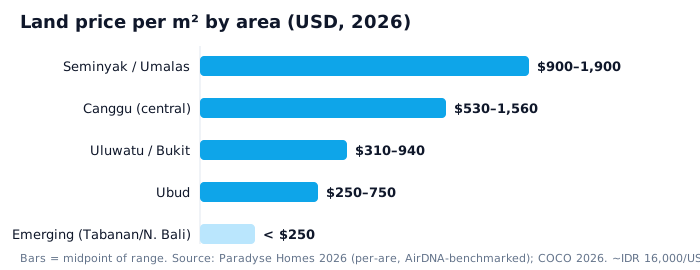
Land is quoted per are (100 m²) in Bali; converted to per-m² at ~IDR 16,000/USD, the ranking is consistent: Seminyak/Umalas is the priciest, then central Canggu, Uluwatu/Bukit, Ubud, and finally the emerging belts. For the same budget you secure far more land in Uluwatu or Ubud than in Seminyak or central Canggu, the trade-off is short-term rental demand, not just scenery.
Gross yield by area, and why net is what matters
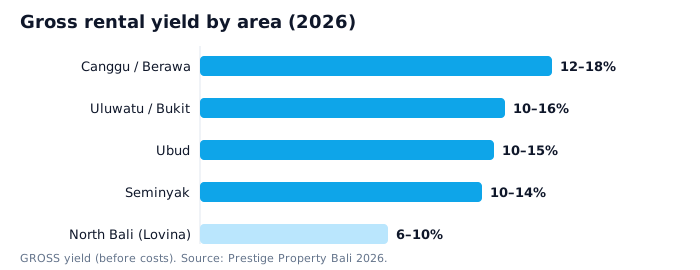
Canggu/Berawa leads on gross yield, then Uluwatu, Ubud and Seminyak, with North Bali the lowest. But gross is annual rent ÷ price, before costs. What you keep is the net yield, and the gap is large enough to flip an area ranking:
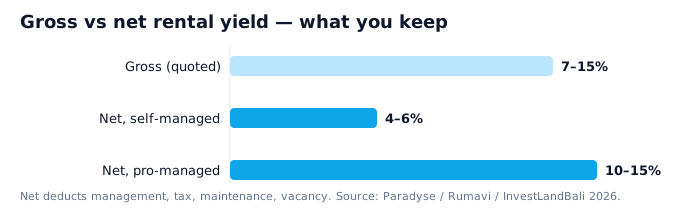
The gap between 4-6% and 10-15% net is operations: data-driven pricing, OTA distribution and cost control, not the area alone. See how management drives returns in our Bali villa ROI guide and the area-by-area numbers in our Bali property prices 2026 guide.
Canggu & Berawa, the cash-flow core
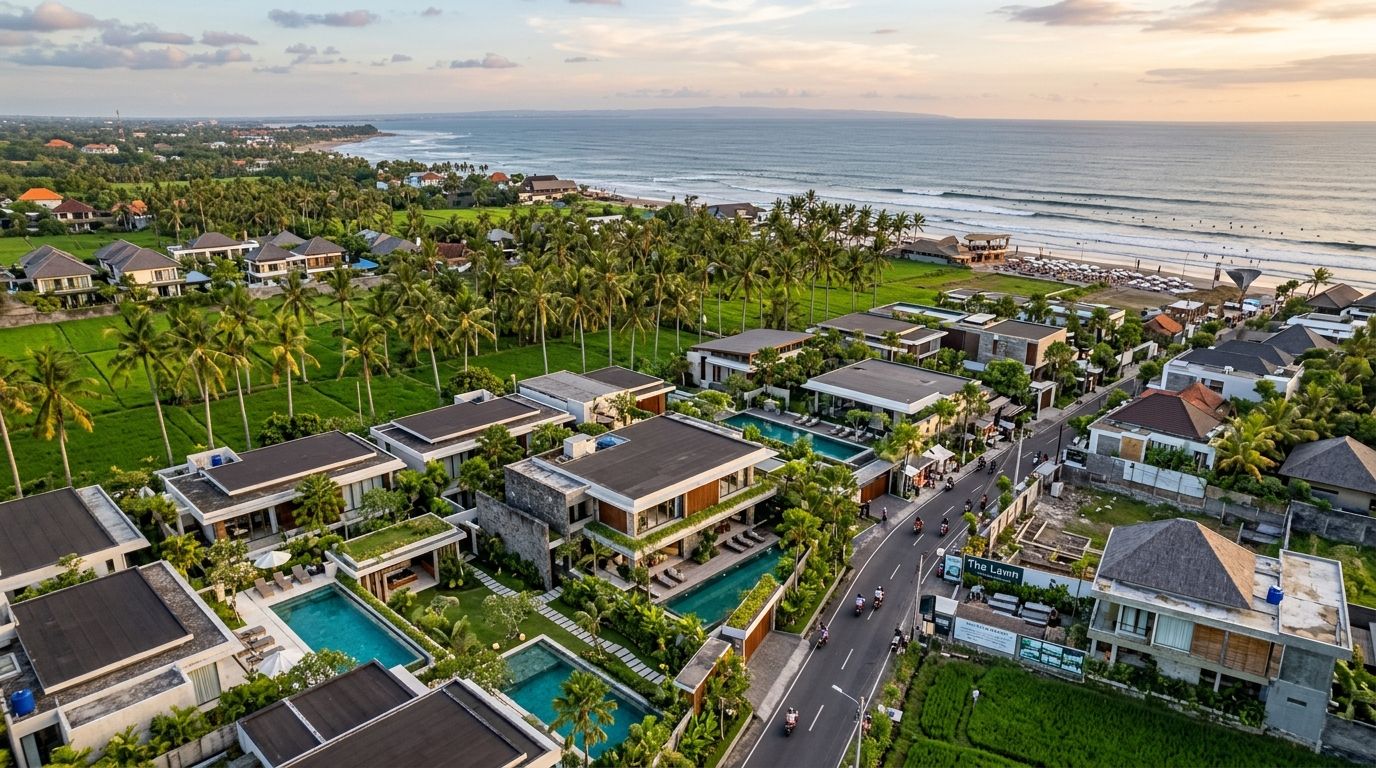
Most comparison guides rank Canggu/Berawa as the most visible, most liquid investment hub in Bali 2026, with the deepest year-round rental demand. Land runs $530-1,560/m², typical villas $400-800k, and gross yield is the island’s highest at 12-18%.
- Magnum Estate’s 2026 ROI benchmarks show ADR around USD 220-320, 45-55% occupancy and 9.5-13.8% net ROI for well-managed 2-4 bedroom villas.
- Independent 2025-2026 comparisons (Bali Home Immo, Balitecture) put Canggu occupancy at 70%+ and 2-bedroom villa revenue at IDR 100-150M/yr, above Ubud, near Seminyak.
Who it’s for: yield-first investors who want diversified, year-round demand and easy resale. Compare the two coasts head-to-head in Canggu vs Uluwatu.
Invest in Berawa with Magnum Estate
See live pricing and projected net yields on our Berawa development, the heart of Canggu’s rental market.
Explore Berawa
Book a free consultation
Uluwatu & Bukit, the view-driven growth leader
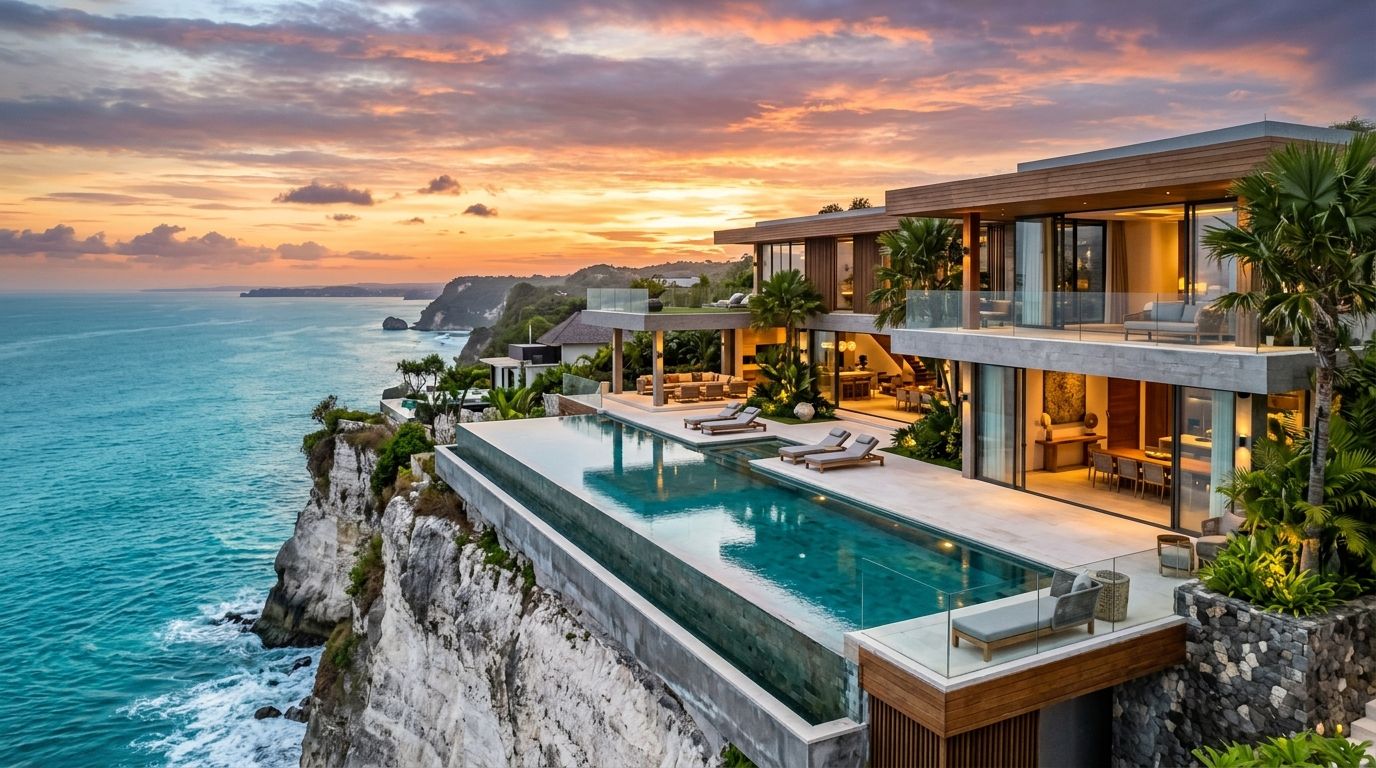
If Canggu is the engine, Uluwatu/Bukit is the runway for premium growth. Land is cheaper than Canggu at $310-940/m², ocean-view 3BR villas run $500-900k, and gross yield is 10-16%, but it carries the fastest land appreciation on the island.
- Magnum Estate and Villaaudit highlight cliffside ADR of USD 280-420 and gross yield around 12-18% where design, access and management are best-in-class (net is lower after costs, see the gross-vs-net note below).
- Bali Villa Realty’s 2026 hotspot study cites 25-35% land-price growth in recent years, outpacing mature Seminyak from a lower base.
Who it’s for: growth-oriented buyers who want pricing power and capital-growth optionality and can handle higher volatility and operational complexity.
Own an ocean-view residence in Uluwatu
Magnum Estate’s Sky Stars development sits in Bali’s fastest-appreciating area, transparent pricing, projected net yields.
Uluwatu, Sky Stars
Book a free consultation
Seminyak, premium, safe, established
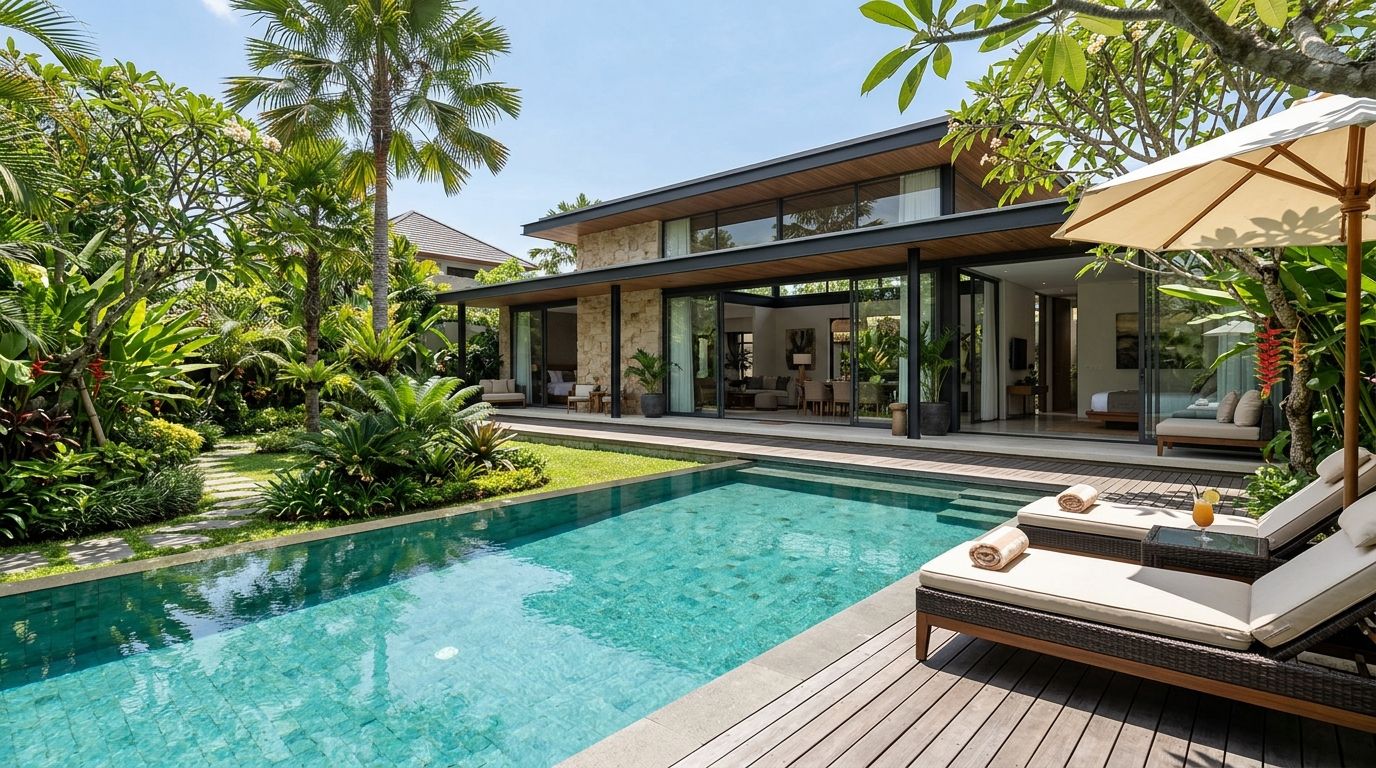
Seminyak/Umalas is Bali’s most established upscale district and remains a blue-chip area in 2026, with the highest land cost on the island at $900-1,900/m², villas at $500k, 1.2M and gross yield of 10-14%. Net is lower after costs (≈4-6% self-managed, 10-15% professionally managed); Seminyak’s edge is liquidity and stability, not headline yield.
- Bali Villa Realty’s 2026 guide rates Seminyak best for safe, premium investment, with among the highest ADR levels on the island and strong resale liquidity.
- Bali Home Immo reports ~IDR 8.3M ADR and IDR 140-180M annual revenue for 3-bed villas at ~64% occupancy, especially strong for higher-end units.
The takeaway: Seminyak is the capital-preservation play, pay the most per m², get the best exit. For a macro view of how it fits a diversified portfolio, see our Bali property prices 2026 guide.
Ubud, wellness, culture and long-stay stability
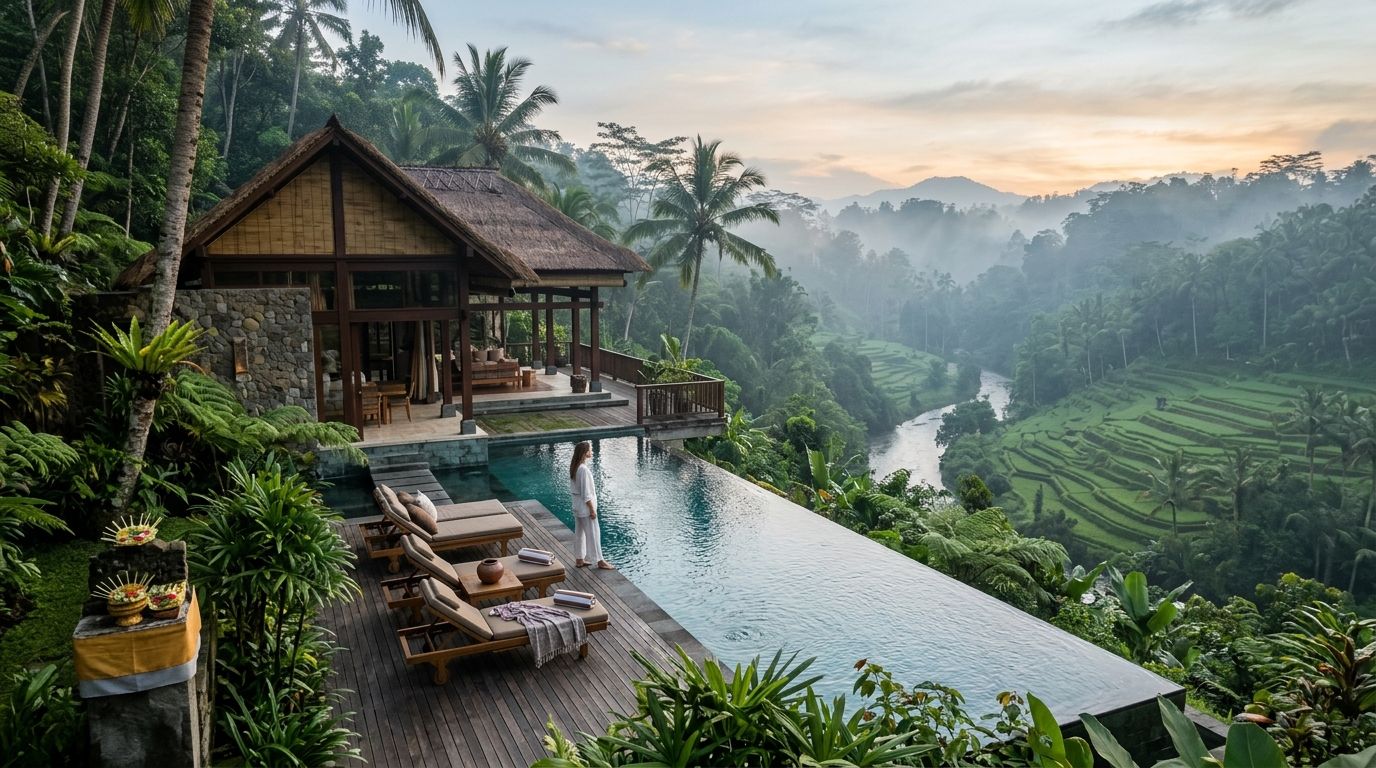
Ubud and its wellness belts (Tegallalang, Payangan, Penestanan) anchor Bali’s retreat economy. Land is the most affordable established option at $250-750/m², villas run $250-500k, and gross yield is a robust 10-15% at materially lower land cost than Canggu.
- 2025-2026 comparisons report ~64% occupancy for 3-bed villas, ADR ~IDR 4.4M and IDR 80-130M annual revenue, slightly below Canggu but steadier and less nightlife-dependent.
- Villaaudit and Magnum Estate classify Ubud as a defensive market: culture- and nature-driven, attractive for long-stay guests and semi-residents.
Who it’s for: buyers who value green views, culture and wellness positioning, and want lower volatility over maximal upside.
Emerging pick, Tabanan & North Bali (plus Pererenan/Seseh/Cemagi)
The “next wave” west of Canggu, Pererenan, Seseh, Cemagi, plus Tabanan and North Bali (Lovina) offer the most land per dollar. Land is typically under $250/m², villas run $100-600k, and gross yield is 6-10%+ (North Bali at the lower end; western Canggu-fringe belts higher as infrastructure arrives).
- Propertia’s 2026 guide notes entry villas in Pererenan from ~USD 179,000, well below central Canggu, with growing infrastructure and proximity.
- Balitecture calls Pererenan “best value” at 12-16% yields and Cemagi an emerging coastal gem; North Bali is the most defensive at 6-10%.
- On the calmer east coast, Sanur and Nusa Dua are family-friendly, infrastructure-rich defensive markets (6-10% gross), with Sanur’s Tourism & Health SEZ supporting steady growth.
Who it’s for: patient buyers building a land bank or seeking the highest risk-adjusted upside over a longer horizon.
Before you buy anywhere: foreigners can’t hold freehold (Hak Milik) directly, use Leasehold (Hak Sewa) or a PT PMA (HGB). Verify zoning and title before committing; start with our price & ownership overview and a certified PPAT notary.
Prefer a defensive coastal play?
Magnum Estate’s Sanur development pairs SEZ-backed growth with calmer, family-friendly demand.
Explore Sanur
View all Magnum projects
Limitations & suitability
These are indicative 2026 ranges, not appraisals. Individual parcels vary widely by road access, zoning, view, lease term and build quality, and operator ADR/occupancy figures reflect specific, well-managed stock, not every villa achieves them. Bali property is not a good fit if you need liquid, hands-off, freehold-style ownership: leasehold terms expire, management quality varies, and the IDR can move against you. Treat the high gross-yield headlines with caution and underwrite on conservative net yields after fees, tax, maintenance and vacancy.
Conclusion
Among the best areas to buy property in Bali 2026, there is no single winner, only the best fit for your goal. Yield-first buyers lean Canggu/Berawa; growth seekers lean Uluwatu; the safety-minded lean Seminyak; defensive income leans Ubud and Sanur; and land-bankers lean the emerging belts. The strongest portfolios often pair a proven hotspot with an emerging-zone position, and always underwrite on net, not gross, yield.
Ready to match an area to a real project?
Explore Magnum Estate’s residences in Berawa, Uluwatu (Sky Stars) and Sanur, transparent pricing and projected net yields, and see how the areas fit into a wider Bali property investment plan.
Berawa
Uluwatu, Sky Stars
Sanur
FAQ: best areas to buy property in Bali 2026
What are the best areas to buy property in Bali in 2026?
Canggu/Berawa (deepest demand, 12-18% gross), Uluwatu/Bukit (fastest appreciation, 10-16%), Seminyak (most established, 10-14%), Ubud (defensive wellness, 10-15%) and emerging belts like Tabanan, Seseh, Cemagi and North Bali (most land per dollar, 6-10%+).
Which Bali area has the highest rental yield?
Canggu/Berawa leads at ~12-18% gross. Uluwatu follows at 10-16%. Net is lower everywhere: ~4-6% self-managed or ~10-15% professionally managed.
Which area is cheapest to buy?
Emerging belts (Tabanan, Seseh, Cemagi, North Bali): land under $250/m², villas from ~$100-600k. Ubud is the cheapest established area at $250-750/m² land.
Is Canggu or Uluwatu better for investment?
Canggu offers elasticity of demand and stable, diversified income; Uluwatu offers pricing power, the fastest land appreciation and capital-growth optionality with higher volatility. See Canggu vs Uluwatu.
Where is property still affordable for growth?
Pererenan, Seseh, Cemagi, Tabanan and North Bali, land below $250/m², villas from ~$100-179k, with infrastructure migrating west from Canggu.
Which areas suit families and long-term living?
Sanur, Nusa Dua and parts of Ubud, calmer beaches, schools and healthcare, with respectable 6-10% gross yields in well-located properties.
Do taxes and costs change which area wins?
Annual PBB is low (~0.1% of assessed value), but management, income tax, maintenance and vacancy can halve gross yield, model net returns before choosing. See our villa ROI guide.
Methodology & sources
Land $/m², typical villa price and gross yield by area use one reconciled 2026 dataset converted at ~IDR 16,000/USD; land is stated per m² (from per-are data, 1 are = 100 m²) and the area ranking is monotonic by design (prime never cheaper than emerging). Operator figures (ADR, occupancy, net ROI) come from named 2025-2026 market guides and Magnum Estate portfolio benchmarks and describe well-managed stock, not market averages. Gross yields are rent ÷ price before costs; net yields deduct management, tax, maintenance and vacancy. Commission an independent appraisal and PPAT notary due diligence before purchase.
References & official sources
- BPS, Statistics Indonesia / Bali: 2025 foreign arrivals (6,948,754, +9.72%), occupancy, bali.bps.go.id
- Bank Indonesia, Residential Property Price Index: price-growth data, IDR/USD, bi.go.id
- DJP / Ministry of Finance: PBB & transaction taxes, pajak.go.id
- ATR/BPN: land titles (Hak Milik / Hak Pakai / HGB) & zoning, atrbpn.go.id
- BKPM / Invest Indonesia: PT PMA & foreign-ownership rules, investindonesia.go.id
- Market data (2026): Bali Villa Realty price guide; Paradyse Homes price-per-are study (AirDNA-benchmarked); Prestige Property Bali area/yield analysis; Balitecture area comparison; Bali Home Immo; Propertia regional guide; InvestLandBali market report.
- Magnum Estate portfolio data (net ROI / ADR / occupancy by project & area).
About the author
Stanislav Sadovnikov is the founder of Magnum Estate (PT Magnum Estate International), an award-winning full-cycle Bali real estate developer with 8 projects and 575 units since 2019 (Berawa, Sanur, Umalas, Sky Stars, Sky Royal). He writes about Bali pricing, yields, ownership rules and regulation for international buyers.