






Written by Stanislav Sadovnikov, Founder, Magnum Estate ·
Reviewed by Magnum Estate legal & investment desk ·
Last updated 3 June 2026
"4-6% / 10-15% Net yield: self vs pro-managed · 12-18% Gross yield, prime areas · 6.95M 2025 foreign arrivals (+9.7%) · ~0.1% Annual PBB property tax"
Key figures (2026)
Bali real estate investment tips: summary
These Bali real estate investment tips distil what separates a profitable villa from an expensive mistake. The single most important rule: underwrite on the net yield (~4-6% self-managed, ~10-15% professionally managed), never the headline gross figure of 10-18%. Get the area, the title and the management right, and Bali’s demand does the rest.
- Match area to goal: Canggu/Berawa for demand, Uluwatu for appreciation, Sanur/Ubud for stability.
- Gross ≠ net: quoted yields are gross; what you keep depends on operations.
- Title first: foreigners use Leasehold (Hak Sewa) or PT PMA (HGB), never freehold directly.
- Due diligence pays: verify certificate, zoning and access with a PPAT notary.
- Management makes returns: a professional operator is the gap between 4-6% and 10-15% net.
- Price & exit: don’t overpay on emotion; check resale liquidity and lease term before you buy.

"Transparency: Magnum Estate develops property in Bali, so we have a commercial interest. These tips are educational, not investment or legal advice, verify every figure independently and consult a certified Indonesian notary (PPAT) and tax advisor before buying."
Transparency
A 12% return in hard currency sounds tempting, and in Bali it is genuinely achievable. But the figure comes with conditions, and most disappointed buyers ignore them. These Bali real estate investment tips are a practical, do-this checklist for 2026: how to pick the area, read the real yield, secure the title, run due diligence, choose management, budget tax, and plan the exit. For the full market picture, pair this with our Bali property prices 2026 guide and the Bali real estate playbook.
Why Bali still works in 2026
Demand is the backdrop that makes these tips worth following. Bali drew 6,948,754 foreign visitors in 2025, up 9.72% year-on-year, pushing prime-area villa occupancy to 70-85% (island-wide closer to ~65%). There is effectively no off-season, only about 10% of the island is zoned for development, and land values appreciated roughly 15-30% over the past two years. Indonesia is also on track to become a top-five global economy by 2030. The opportunity is real, the tips below are about capturing it without the common errors.
Tip 1, Match the area to your goal and target yield
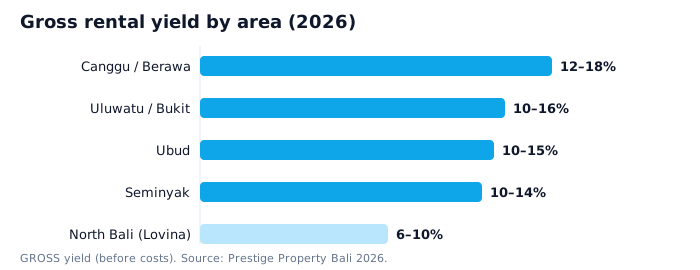
Location drives occupancy, and occupancy drives return. Don’t buy scenery; buy a rental thesis. Each prime area pulls a different tenant and a different gross yield band:
| Area | Gross yield | Best for |
|---|---|---|
| Canggu / Berawa | 12-18% | Deepest year-round demand; digital nomads |
| Uluwatu / Bukit | 10-16% | Ocean-view premium; fastest land appreciation |
| Ubud | 10-15% | Wellness & long-stay; low volatility |
| Seminyak | 10-14% | Established demand; best exit liquidity |
| Sanur / North Bali | 6-12% | Steadier, family & long-term infrastructure plays |
| Gross yield ranges, source: Prestige Property Bali 2026. ~IDR 16,000/USD. |
The takeaway: a cheaper villa in a low-demand area is rarely the better investment, one of our clients chose Canggu over a cheaper northern villa and saw ~85% occupancy versus a projected ~40%. Compare the coasts in Canggu vs Uluwatu and shortlist with our best areas to buy in Bali 2026 guide.
Tip 2, Underwrite the net yield, not the gross
This is the most valuable of all Bali real estate investment tips. Almost every “8-15% yield” you see is
gross, annual rent ÷ price, before costs. What you actually keep is the net
yield, after management, tax, maintenance and vacancy. The gap is large enough to make or break the deal:
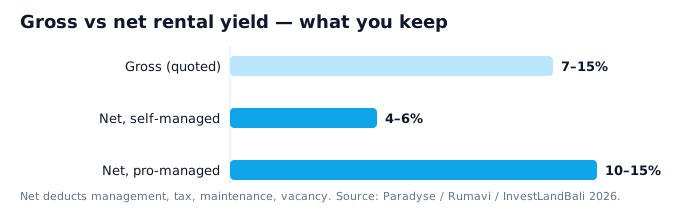
The jump from 4-6% to 10-15% net is operations: data-driven pricing, OTA distribution and cost control, not a different building. Model the full picture with our villa ROI guide before you commit.
Tip 3, Get the title and legal structure right
The fastest way to lose an investment in Bali is a title problem. Foreigners cannot hold freehold (Hak Milik) directly. The two compliant routes are a long-term leasehold (Hak Sewa) or a PT PMA foreign-owned company holding Hak Guna Bangunan (HGB), the right to build. Each has different cost, term and exit implications.
Before any deposit: confirm the structure that fits your goal and have a licensed notary (PPAT) verify the certificate. Start with our
legal guide to buying in Bali as a foreigner
and the breakdown of freehold vs leasehold.
Tip 4, Do real due diligence, not a quick look
Whether you buy land or a finished home, a superficial inspection invites legal disputes, hidden defects and zoning conflicts. A villa priced well below the area average is a flag, not a bargain, one client’s “cheap” villa turned out to be built in violation of zoning. Check, at minimum:
| What to verify | Why it matters |
|---|---|
| Land certificate authenticity & type | Confirms ownership and your legal route |
| Zoning & building permit (PBG/IMB) | Illegal builds can be demolished or unrentable |
| Legal access roads & community consent | Avoids disputes and blocked construction |
| Developer track record | Completed projects signal delivery and clean title |
| Engage an independent local attorney for full due diligence. Reputable developers resolve these at project stage. |
Want the legal and yield work done for you?
Magnum Estate delivers clean-title, professionally managed residences in Berawa, Sanur and Uluwatu.
View Magnum projects
Book a free consultation
Tip 5, Buy with professional management
Management is the difference between the 4-6% and 10-15% net bands. Running a villa yourself means staff, utilities, repairs, marketing, reviews, accounting, across a language barrier and a rainy season. A client who self-managed for six months hit constant breakdowns, weak occupancy and costs above income; a management contract reversed it. Favour projects with an in-house operator (every Magnum Estate project has one), so your income stays passive.
The takeaway: treat management quality as a buying criterion, not an afterthought. See how operations drive returns in our Bali villa management guide.
Tip 6, Budget taxes and holding costs upfront
Annual land-and-building tax (PBB) is low, around 0.1% of assessed value, but it isn’t the whole bill. Transaction taxes and rental-income tax both bite into net yield, and they belong in your model from day one, not as a surprise at completion.
Fold every recurring cost into your net-yield math with our Bali property taxes & holding costs guide.
Tip 7, Don’t overpay, and check the exit before you enter
Overpaying lengthens your payback period and erodes resale upside. Compare like-for-like prices in the area, check the recent price trend, and decide on numbers, not the view. One client dropped a villa priced ~30% above the area average for a promising, less-hyped location and gained both savings and growth potential. Equally important: plan the exit. On a leasehold, the remaining term drives resale value, so a clean, liquid area (Seminyak, central Canggu) protects your exit.
Ground your offer in real figures with the Bali property prices 2026 data, land per m², villa ranges and appreciation by area.
Tip 8, Define your own brief before you shop
Most ineffective purchases start with an undefined goal. Before viewing anything, decide: budget and target return; pure rental vs personal-use-plus-rental; self-manage vs delegate; and time horizon. A buyer wanting occasional personal use plus income is best served by a managed unit in a complex; a pure-yield buyer should weight high-demand Canggu or Seminyak; a long-horizon buyer can look to infrastructure-led Sanur or an emerging belt.
The 8-point Bali real estate investment tips checklist
| # | Tip | The one thing to get right |
|---|---|---|
| 1 | Match area to goal | Buy a rental thesis, not a view |
| 2 | Underwrite net, not gross | Net ~4-6% self / ~10-15% pro-managed |
| 3 | Title & structure | Leasehold (Hak Sewa) or PT PMA (HGB) |
| 4 | Due diligence | Certificate, zoning, access, via PPAT |
| 5 | Professional management | It’s the gap between the yield bands |
| 6 | Taxes & holding costs | PBB ~0.1% + transaction & income tax |
| 7 | Price & exit | Don’t overpay; protect resale/lease term |
| 8 | Define your brief | Goal, horizon and management decided first |
| A practical pre-purchase checklist. Pair with a notary (PPAT) and independent appraisal. |
Methodology & sources
Figures are indicative 2026 ranges, reconciled across multiple market datasets and converted at ~IDR 16,000/USD. Gross yields are rent ÷ price before costs; net yields deduct management, tax, maintenance and vacancy. Area land/villa pricing is quoted per m² (from per-are data, 1 are = 100 m²). Individual parcels vary by access, zoning, view and lease term. Always commission an independent appraisal and notary (PPAT) due diligence before purchase.
Limitations & suitability
These tips suit foreign buyers seeking rental income or capital growth with a 5+ year horizon. They are a weaker fit if you need guaranteed short-term liquidity, can’t tolerate currency and regulatory risk, or want a hands-off freehold asset, Bali offers leasehold/PT PMA structures, not direct foreign freehold. None of this is personalised financial or legal advice.
Conclusion
The best Bali real estate investment tips are unglamorous: pick the area for demand, underwrite the net yield, secure clean title, run real due diligence, insist on professional management, budget the tax, and protect your exit. Do that, and a 10-15% net return in hard currency is a realistic target rather than a sales line.
Ready to apply the checklist?
Explore Magnum Estate’s clean-title, professionally managed residences in Uluwatu, Berawa and Sanur, transparent pricing and projected net yields.
Uluwatu, Sky Stars
Berawa
Sanur
FAQ: Bali real estate investment tips
What is the most important Bali real estate investment tip?
Underwrite on net yield, not gross. Quoted 10-18% figures are gross; net is ~4-6% self-managed or ~10-15% professionally managed, after fees, tax, maintenance and vacancy.
Where should I invest in Bali in 2026?
Canggu/Berawa for demand (12-18% gross), Uluwatu for appreciation and ocean views, Sanur/Ubud for stability, emerging belts (Tabanan, Seseh) for more land per dollar over a longer horizon.
Can foreigners legally own real estate in Bali?
Not as freehold (Hak Milik) directly. Use a leasehold (Hak Sewa) or a PT PMA company holding Hak Guna Bangunan, and verify the title with a notary (PPAT).
How much tax do you pay on a Bali villa?
Annual PBB is ~0.1% of assessed value, but transaction taxes and rental-income tax also apply, see our tax guide.
Do I need a management company?
For passive income, yes. Professional management is the main difference between ~4-6% and ~10-15% net yield; self-management often underperforms after costs.
Is Bali real estate still a good investment in 2026?
Yes, with discipline: 6.95M arrivals in 2025 (+9.7%), 70-85% prime occupancy and ~15-30% two-year land appreciation support demand, but returns depend on area, net yield, title and management.
References & official sources
- BPS, Statistics Indonesia / Bali: 2025 foreign arrivals (6,948,754, +9.72%), occupancy, bali.bps.go.id
- Bank Indonesia, Residential Property Price Index: price-growth data & IDR rate, bi.go.id
- DJP / Ministry of Finance: PBB & transaction taxes, pajak.go.id
- ATR/BPN: land titles (Hak Milik / Hak Sewa / HGB) & zoning, atrbpn.go.id
- BKPM / Invest Indonesia: PT PMA & foreign ownership rules, investindonesia.go.id
- Market data (2026): Prestige Property Bali area/yield analysis; Paradyse Homes price-per-are study; Bali Villa Realty price guide; InvestLandBali market report.
- Magnum Estate portfolio data (net yields by project).
About the author
Stanislav Sadovnikov is the founder of Magnum Estate (PT Magnum Estate International), an award-winning full-cycle Bali real estate developer with 8 projects and 575 units since 2019 (Berawa, Sanur, Umalas, Sky Stars, Sky Royal). He writes about Bali pricing, yields, ownership rules and regulation for international buyers.